



Prior to 2021, I had never really attended a big fan convention. The one exception was Super Soap Weekend, a Sat/Sun extravaganza of panels, meet and greets and more with the soap opera stars of the ABC network. It happened at Walt Disney World’s Hollywood Studios on a weekend in November every year from 1996-2008. The event simply happened inside the park without attendees having to buy any extra tickets beyond their theme park entry pass. I was able to attend once or twice which was exciting, but admittedly I was already in Orlando, FL for other reasons and didn’t plan my trip around the event.
Aside from working at BookCon as a professional in the publishing industry, I cannot remember ever buying a ticket to a convention and planning a trip around it prior to attending a Gilmore Girls festival in 2021. Of course I have long been familiar with the convention landscape prior to 2015 like San Diego Comic-Con and New York Comic Con, but I also knew these events were all encompassing and huge, attracting hundreds of thousands of fans across many franchises every year.
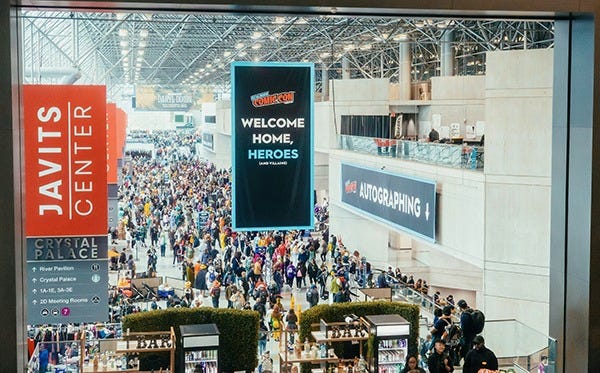
One thing giant cons have always proven: fandom can be really meaningful when experienced with others. Con attendees don’t just come to see their favorite creators, buy merch and listen to panels; they come to commune with others who love the things they do. But because so many mega brands are present, there are hundreds of activities, panels and autograph sessions. One certainly cannot see or do everything; you need to plan your visit and zero in on the fandoms you want to engage with.
But since 2015, smaller, focused fan festivals have been on the rise. Niche and singular fandoms have converged around specific, in-person events in many markets all over the globe, but in the U.S. in particular. Social media platforms certainly perfected a way for fans to come together online, but is social media also the reason that folks want to get offline and into community with others?
Social media and niche fandom
Social media at its best is a digital meeting place. For years, fans could converge around Twitter, Facebook, and other platforms’ communities. I remember in the earlier days of Facebook, one could collect digital “buttons” for their “flair wall.” I thought I was alone in my Gilmore Girls fandom until I started seeing buttons others had made with some of my favorite Gilmore quotes on them. I remember seeing one with “Oy, with the poodles already!” written on it and gasping; someone else liked that quote as much as I did?! As much as putting it on a digital collectible? I snatched it right up and displayed it on my page proudly. On social media, I found others who liked what I liked. And so did millions of other people on various platforms in various fandoms. Today, a quick search for Gilmore Girls fan groups on Facebook will yield many results with thousands of members. I’m not sure that was the case around 2008.
In 2014, Gilmore Girls began streaming on Netflix. The show, which aired from 2000-2007, had always had a small and dedicated fandom when it aired on the WB and CW networks. It gained new fans in syndication when it aired on the ABC Family Channel. But the Netflix addition changed everything. It was one of the most streamed shows ever on the platform, and led to a Netflix revival show, Gilmore Girls: A Year in the Life.
The same day that Gilmore Girls was released on Netflix, comedians/writers Kevin T. Porter and Demi Adejuyigbe started the podcast, Gilmore Guys, chronicling a watch of the series episode by episode that became very popular–enough to feature interviews with the show’s biggest stars and solidify their roles as extras in the revival series. The ATX TV Festival in Austin, TX in 2015 boasted a reunion of the cast for its 15-year anniversary, and fans all over the world watched in envy. What was once a small, niche fandom was on its way to becoming larger than anyone expected it would be. More podcasts have popped up from rewatches and discussions like Gabbing Gilmore to deep dives into the culture around the show to comparison shows. Every autumn, fans proclaim that it’s Gilmore season, and do a yearly rewatch.
Social media, combined with the show’s addition to Netflix, helped Gilmore Girls become the enormous fandom it is today. And in the fall of 2016, the very first fan festival around Gilmore Girls, hosted by the Fan Fest Society, took place in Washington Depot, CT, the creators’ location inspiration for the show itself. In a weekend complete with cast interactions, panels, and overall small-town fun, the festival made headline news and is still going today in different locations each year.
Fan festivals as resistance to social media
Over the last decade, fandom on social media has changed. Fans still converge online, but the landscape is very different from the 2008 world where I collected digital flair for my Facebook page. With creators and brands having direct access to their fans and vice versa, the social media landscape has increasingly blurred the lines between fandom and fan. This can be really fun, and in many cases new brands and fandoms grow around native web creators as opposed to previous generations where our fandoms were only based on traditionally published content. Now, anyone can make a YouTube show, have a podcast, or become a social media personality that develops an entire community and fandom around their created content.
But this new world has a darker side. Algorithms sort fans into boxes, and the hottest takes and posts with high engagement float to the top. Comment sections on a post containing otherwise exciting updates for a fandom can become quagmires of in-fighting, and arguments over content, characters, creators and more play out online in spaces that were once celebratory.
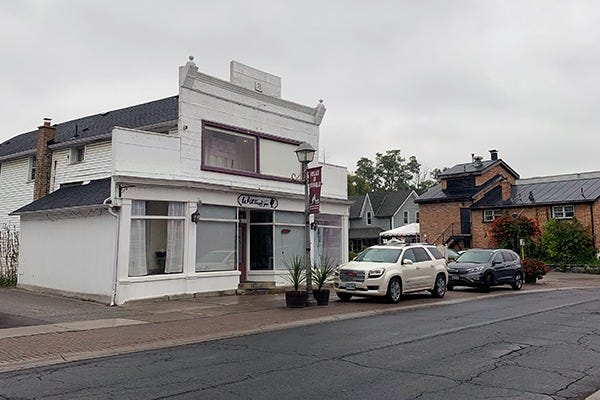
The 2016 Gilmore Girls themed festival by the Fan Fest Society, now dubbed “The Firelight Event,” in Washington Depot was proof of a new concept: getting folks offline and into the real, actual “world” of Stars Hollow, CT was what fans longed for. The event became annual, and moved to nearby Kent, CT for subsequent years, with a 2019 stint in Unionville, Canada–the location where the pilot of the show was filmed.
When a global pandemic threatened the future of live events, it was unclear how fans would converge in real time and place to capture that community feeling that happens when you get offline and out into the real world. Like many other events, the festival went digital, hosting a weekend long slate of live chats and panels with cast and crew from the show.
In the meantime, social media fan convergence soared online during the pandemic. And while that may have been beneficial in some ways, it also supercharged toxicity in fandom online. A 2022 piece by Melanie McFarland in Salon chronicled the rise of what she called the “Fandom Menace” in the wake of Gamergate in 2014. Fans have been using social media in toxic ways for many years: to flood the internet with bad reviews, to try to deplatform creators they disagree with, and to object to casting decisions especially with big franchises.
Social media took fandom mainstream, and this is partly why it turned toxic. While access to a fandom used to be extremely niche (there’s even a joke in a Gilmore Girls episode where Lorelai teases Luke for being a Trekkie and asks if he goes to conventions), TikTok and Instagram took over where LiveJournal and Tumblr used to be safe havens for fans. Now, anyone can crowd a fandom space online with negativity, and negativity tends to hijack the algorithms on places like X, driving infighting and backlash. So where can fans really go to enjoy their fandom without cynicism and toxicity?
As pandemic protocols lifted and folks were able to venture out into the world again, the fan festival answered that question. Between 2019 and 2021, the phrase “touch grass” became popular online and it was used in conversation to suggest that maybe someone might be spending a little too much time online, getting sucked into all kinds of dramas that maybe only exist there. Getting out into the world and talking to others is profoundly different from typing online, especially when you disagree. And in fandoms, having conversations in person or in live virtual spaces with others as opposed to just text chats proves more emotional and rewarding than text chat alone. And there is no replacement for meeting someone, even someone you’ve chatted with for years virtually, in real life. Conventions and festivals provide that opportunity.
The single event as a fan festival
In the wake of the pandemic, we saw singular fandom festivals and events take over the zeitgeist. Taylor Swift’s Eras Tour was a festival unto itself, probably rooted in the fact that her 2020 limited live appearance schedule, called Lover Fest, was cancelled. When Swift announced she would be hitting the road in 2023, what followed was a massive quest by fans to score tickets, and the shows themselves were so big that thousands of fans who couldn’t get to the shows partied outside in droves.
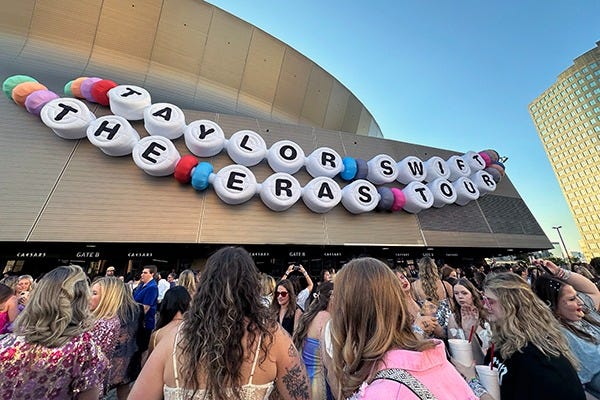
Estimates of twenty-thousand fans would gather outside venues where possible, dressing up in Taylor-themed outfits and trading friendship bracelets, a hallmark of the Eras era entirely created by fans and embraced by Taylor herself. Taylor Swift dance parties, where organizers would simply play music for fans to dance to, popped up in bars, clubs, and venues all over the world. Inside stadiums, fans stood, sang, and cried for the entirety of the three-plus hour sets. And online, creators like Tess Bohne facilitated livestreams of every concert, working with fans inside at each event, to create an online presence for those who wanted to participate. Each concert wasn’t just a tour stop for the seventy thousand fans inside a stadium for three nights; it was a major Taylor Swift festival that millions around the world enjoyed.
It’s not new to converge with other fans at a concert, get dressed up, and fully immerse oneself in the event, but Eras set the stage for a unique concert-going experience. Beyonce’s Cowboy Carter tour, Lady Gaga’s Mayhem tour, Sabrina Carpenter’s Short N’ Sweet tour and others encouraged fans to treat a night out for a concert like a major event, complete with costumes and rituals. The Backstreet Boys’ Into the Millennium residency at Sphere Las Vegas is its own mini fan festival. Anyone can attend their pop up shopping and activation experience at the Venetian Resort for free, even if you don’t have tickets to see the concert. The experience is themed around the band’s Millennium album from 1999, and it is set up like a futuristic airport terminal. Fans can come to take pictures at activations, pose on a mock-up of the TRL studio at MTV from 1999, shop almost an entire floor of exclusive merchandise, and generally celebrate nostalgia. A true perk? A Backstreet Boy just might pop in for an hour. And at the concerts themselves, the band asked audiences to “wear white with a touch of blue” to honor the “I Want It That Way” video. The fans responded.
Gilmore Girls as the ultimate festival IP
In the wake of the pandemic, and as popularity for Gilmore Girls only increases every year, several festivals dedicated to the series have been established. While the Fan Fest Society continues to host a weekend-long event every fall and have also hosted cruise outings with Gilmore Girls cast members, Gilmore fans can find different local experiences.
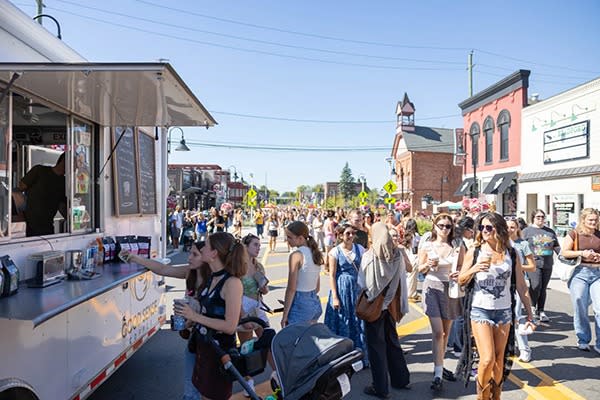
Here’s a list of Gilmore themed fan fests. Some have already announced 2026 dates:
Small Town Convention, A Weekend in the Life
New Milford CT; September
Not your typical convention experience, this event mixes small town charm in New Milford, CT (which served as inspiration for the show) with cast member meet and greets and panels.
Destination Stars Hollow
Brighton, MI; September
A town transforms into Stars Hollow for a weekend! Come for shopping local, small town charm, and meet some cast members from the show.
Gilmore Girls Weekend in Versailles
Versailles, KY; September
Downtown Versailles, KY transforms into a Gilmore-themed small town with local businesses serving up coffee, special menus, and fun for the whole family.
The Fan Fest Society, The Firelight Event
Guilford, CT; October
The well-established Gilmore-themed fan festival has been in operation since 2016 and boasts meet and greets with cast and crew, panels, and a healthy dose of small-town charm. Locations have varied over the years, from Washington Depot, CT, Kent, CT, Ogunquit, ME, Unionville, Canada and Guilford, CT.
Smells Like Snow Coffee Festival
Akron, OH; November
Local coffee shops from all over the Akron and surrounding vicinities set up coffee trucks with special Gilmore-themed menus and tastings, alongside a craft and merch fair for fans and cast member appearances.
Stars Hollow Autumn Festival
Berea, KY; November
Themed snacks and coffee, crafts, and photo-ops hosted by local Madison Public Library.
Stars Hollow Days
Middleton, WI; October
Stone Horse Green hosts a Gilmore-themed event complete with bonfire, s’mores, a lookalike contest, live music and more.
Stars Hollow in Nazareth
Nazareth, PA; November
Downtown Nazareth participating shops offer themed food, drinks, merch and giveaways and as well as a Luke-A-Like contest.
Stars Hollow Saturday
Hartford, CT; October
Pratt Street turns into Stars Hollow with a pedal pub crawl, trivia, a lookalike contest, and live music inspired by Hep Alien.
Stars Hollow Saturday
Ann Arbor, MI; October
Small business Rock Paper Scissors hosts an annual Star Hollow Saturday featuring the Gilmore to Say podcasters, custom merch, trivia, contests, and more.
Strasburg is Stars Hollow
Strasburg, PA; November
This town celebrates Small Business Saturday with a coffee crawl and a retail roundup with local small businesses.
Stars Hollow Snow Festival
Manchester, CT; February
The Lutz Children’s Museum hosts a night of Stars Hollow themed activities like a dance-a-thon, a knit-a-thon, a snowman dressing contest, Doggi Swami, a Bid-a-Basket to benefit the museum, trivia, crafts, and lots of coffee.
Stars Hollow Valentine’s
San Antonio, TX; February
No better way to spend Valentine’s Day than with your favorite cast members from Gilmore Girls at this quirky, fun convention.
A quick search online yields results for many niche fandom festivals and events all over the world. You don’t have to attend a convention in a big city to find others who love what you love. If you can’t make it to Comic-Con in San Diego or NYC, try MarsCon in Bloomington, MN or Sci-Fi Valley Con in Altoona, PA. Whatever your fandom, you’re bound to find a place in the real world to meet with like-minded folks. While sometimes smaller fests without proof of concept can be risky, there is no doubt that fans are craving opportunities to get off of social media and into the real world to celebrate their fandoms in real life. And if you can’t find an event for your fandom? Maybe it’s time to put one on yourself!
Want more? Our Discord is where you’ll find everything you need to know about our ecosystem at Remarkist! Don’t forget to follow us on Instagram, tumblr, and Spotify for more insights on fandom—and hit that subscribe button so you never miss a thing at rmrk*st Mag!

Well done, Diana, great points and info on upcoming events