



There are few things I love more, in terms of sporting events, than an Olympics year. Whether it’s the Summer or Winter Games, I have always been riveted. Mary Lou Retton was the first Olympian’s name I learned as a little kid. And as I grew up, I was fascinated by the stories. The drama, the drive to be the best, the trials and tribulations of being an athlete who gets to go to the Olympics…for me, it’s always been the best reality show on TV. In the winter, it’s such a personal thrill to sit inside, warm and probably enjoying delicious snacks on my couch, watching the best athletes in the world compete in the cold for gold and glory. I find it exhilarating to become an expert on figure skating, or skiing, or curling for a night, or even a few days. Despite rarely–or never!-doing any of those things myself. But I know I’m not alone.
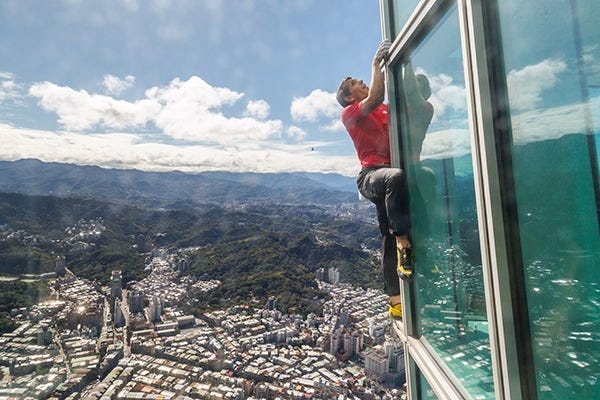
Collective experiences like watching the Olympics or any sporting event demonstrate how shared attention can temporarily dissolve boundaries, create emotional unity, and reinforce cultural identity in ways few other events can. With so many different things happening in the world, it feels like a miracle that we can create a community around a single event where everyone involved, whether an athlete or a spectator, is hoping for the same outcome. Sporting events can be monoculture moments that bring many people from different places and cultures together. Alex Honnold’s free solo climb of the Taipei 101 skyscraper, broadcast live on Netflix, had everyone riveted for a night and talking about how crazy it was for days afterward. Suddenly everyone was united around a singular event. In a world where our attention is siloed so much, it felt pretty good to have a true “watercooler” moment.
A stadium without walls
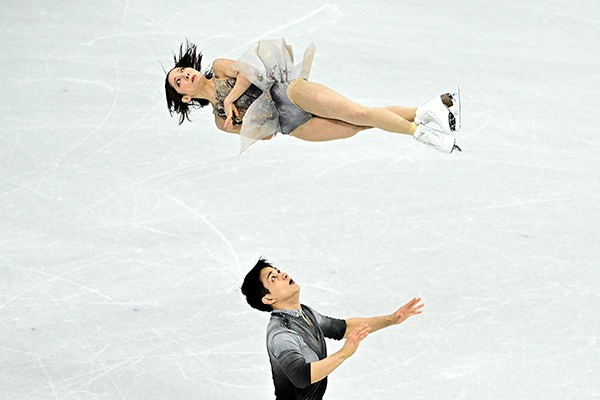
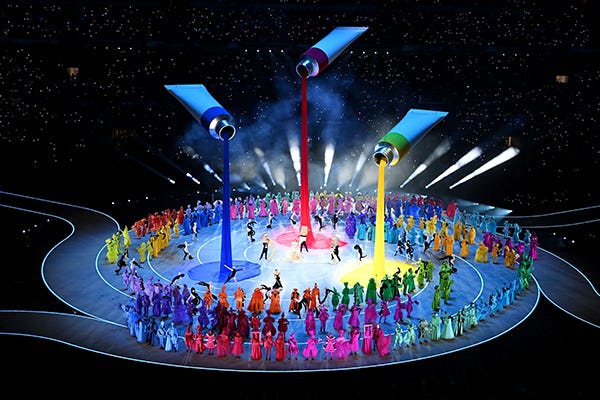
Experiencing these events together but apart creates a stadium without walls. I have been traveling for most of February, and so I have been catching the Olympic games in several different cities. I watched the opening ceremonies from a hotel room in central Florida. I held my breath watching women’s ski jumping while on a plane. And I glimpsed the pairs figure skating final on TVs inside a Las Vegas casino. Wherever I was, so were the Games.
Having access to so much technology means we never have to be in the same room to experience events happening thousands of miles away. Whether we’re all watching the same thing and texting our friends, live-commenting on social media, or using a watch party app to experience content in the same “room” with others, the collective experience is made possible with technology. The first ever televised games were the 1936 Olympics in Berlin, Germany. But they weren’t broadcast to individual TVs; they were shown over closed circuit TV at public viewing spaces like beer halls in Germany. They were the first true watch parties! The 1948 Olympics in London were broadcast to individual homes throughout London via the BBC, and the 1956 Games were the first to be broadcast internationally, though not to the United States. That would come in 1960, when CBS bought the rights to broadcast the Summer and Winter Games to an American audience. NBC started carrying the Olympic Games in 1964 with the Tokyo Summer Games, and they’ve been airing them ever since throughout their network.
When I was a kid, we would tune into the singular broadcast on NBC in prime time to watch the most popular events: ski jumping, figure skating, bobsled. Everyone found out the winners at the same time. Now, watching any event live in another timezone versus a prime time broadcast of events that happened earlier in the day is hardly an issue with streaming. This does mean that sometimes the outcomes are spoiled by the news, or social media posts. It takes a little bit of that collective hold-your-breath experience away.
But because of modern technology, we have social media: we can watch behind the scenes content from the athletes, commentators, and family members that we never got to see in the past. This week I’ve seen so much coverage on Instagram of Jordan Cowan, the former ice dancer-turned-cameraman who films the ice skating events for broadcast. His is a job description I never thought about, but more people know his name in this Olympics than we have any production personnel in the past. The ice rink on another continent is no longer the real boundary; we can see what he sees because of tech.
A modern global ritual
Rituals and ceremonies are a cornerstone of community. Religious services, gatherings for personal and collective milestones, holidays, and more are filled with ritual and customs that help us define who we are in a collective sense. We look to these ceremonies and rituals to help us feel like we belong to something bigger than ourselves.
Think of how it feels to rewatch your favorite show. If you’re a Gilmore Girls fan, you might fire up Season 1 as soon as the air turns a bit crisp and fall approaches–and you know you’re not alone. There’s a ritual to the experience, and a collective one at that. Memes abound on social media, articles come out about the best episodes, and you might find a festival celebrating the fandom throughout the season. Even if you watch the show alone on your couch, you know that fans everywhere are celebrating the season with you.
I feel the same way every two years when it’s time for the Olympic Opening Ceremonies. While each host country gets to choose how they represent themselves in a show that highlights their culture, the Parade of Nations, lighting of the cauldron, and raising of the Olympic flag and rings are always part of the event no matter where it takes place. The ritual is what unites everyone; though the athletes and nations are competing, Opening and Closing ceremonies, as well as presentation of medals at the podium at the end of each event, are the events that bring everyone together.
Shared Emotions and Storytelling
We are all capable of feeling emotions, but there is a fascinating psychology to collective emotion. Joy, heartbreak, and pride are amplified when experienced together; collective viewing intensifies individual emotion and creates lasting memory so that even when you meet a stranger years after the fact, you remember the same event similarly. As viewers, we are often introduced to athletes on the spot and they turn into household names overnight. We invest in these stories, sometimes early on if we follow a sport whose season culminates in an Olympic Games, or we get on board quickly as the broadcast itself showcases athletes and stories through pre-taped packages and docu-style narrative pieces. The docuseries Glitter & Gold: Ice Dancing dropped on Netflix in early February just a week before the 2026 Games. It is a portrait of the competitive world of ice dancing and follows several of the athletes that would compete against one another.
Story is essential in the collective experience. I still viscerally remember watching Kerri Strug do a spectacular vault in the women’s gymnastics team final during the Summer 1996 Atlanta Games to win Olympic gold–with an injured ankle. Watching her be carried off the mat is burned in my–and many other Millennials’-brains. We felt the combination of pain and elation in that moment together and still reference it in pop culture today. Similarly, my family and I all held our collective breath watching Lindsey Vonn crash mere seconds into her comeback in alpine skiing after multiple injuries during the 2026 Games. It seemed everyone was invested in her overall career, her path to the Olympics this time around, and had many opinions about her competing. But whether you were rooting for her or not, it’s no question the story of her return dominated the Games.
And who could forget the emotional rollercoaster of the 1994 Winter Olympic figure skating competition? Great stories need heroes and villains, and that was what audiences got in this situation. Nancy Kerrigan, heralded as America’s sweetheart, was horrifyingly attacked by an assailant hired by the boyfriend of competitor Tonya Harding, a dramatic story we are still litigating in the court of public opinion. The 2017 film I, Tonya, told in a drama with documentary-style interviews with all of the people involved, dives into the complicated sport that rewarded beauty and polish over skill in many instances. While in 1994, all eyes were on Tonya Harding, probably the most pitied and hated skater following Kerrigan’s attack, the movie offers a different perspective of a woman with incredible skill and a competition element only she could do who defied many obstacles including abusive relationships and lack of funds to get to the top of her sport. The film shows how her difficult upbringing and choices versus those of other skaters lead to a stunning clash of competition, social class, and power. It’s still an amazing story I find myself deeply invested in and reflecting on as I watch Olympics figure skating today.
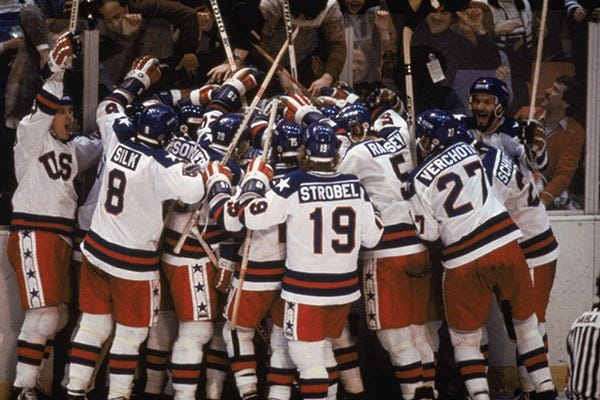
But elation is a collective emotion too. Watching a team pull through to win gold is felt by everyone watching. The critically acclaimed and fan favorite film Miracle, about the U.S. hockey team’s win over the Soviet team in the 1980 Lake Placid Olympics, is a classic because it captures the journey to the absolutely stunning win. And in the 2026 Winter Games, the U.S. hockey team won their first gold since that incredible showdown 46 years ago. Netflix also dropped a stunning documentary in 2026, Miracle: The Boys of ‘80, about the team and its unlikely journey to win on U.S. soil as the Cold War raged on. The story still resonates.
I recently watched Cool Runnings, the fantastic Disney movie based on the first Olympic Jamaican bobsled team in 1988. It’s a great rewatch, but the part that I felt most connected to was how much I might have rooted for the real team if I’d known their story. We are conditioned to root for our national athletes, but I would have been emotionally caught up in the Jamaicans’ race because their story is so moving. While artistic liberties were taken for dramatic effect, the fact that a team from a tropical island might attempt to compete in a winter sport on a national stage is moving no matter what. It is a testament to the spirit of an athlete: they can push themselves so far outside their comfort zones and far beyond everything they’ve ever known in pursuit of a dream. Who wouldn’t be uplifted by that?
In this recent Games, U.S. figure skater Alysa Liu won Olympic gold in the individual ladies competition. Watching her skate was a collective moment of joy–and it was even more meaningful than I realized as I watched live. Liu approached the competition in a completely new way and might have changed Olympic figure skating forever. After retiring from skating in 2016, Liu returned to the sport with a laundry list of demands: she would only wear costumes that she herself approved, she would choose her own music, she would not deprive herself of fun and experiences outside of training. In short, she would do everything on her own terms. Consequently, watching her skate joyfully and calmly on the biggest stage of her career was so moving, the media hasn’t stopped talking about it. The lack of nerves and stress any athlete would feel in that moment is what won her the gold medal.
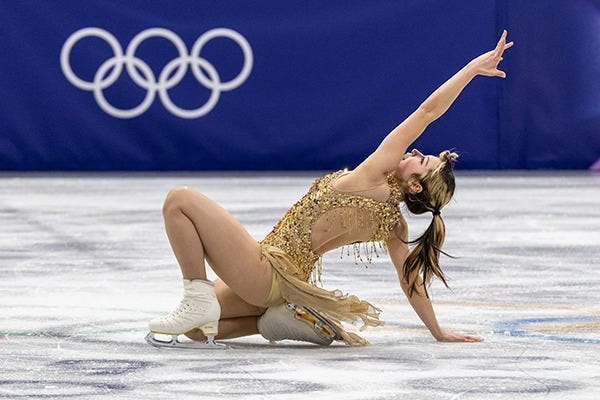
Every generation, we face a national conversation about what it means to succeed: steady job vs. hustle culture; work/life balance vs. getting ahead; burnout vs. boredom. Liu’s approach showed athletes–and anyone looking to excel in any endeavor–that joy and freedom can and probably should be part of any equation for success. Culturally speaking, it’s a paradigm shift from how we usually think of what it takes to be the best that I believe will seep into our collective mindset moving forward.
Why We Still Gather to Watch
Collective viewing is a reminder that attention itself is communal power. Whether we’re gathering around a television in a crowded bar or someone’s home to watch an event, or watching alone at home and participating in the conversation on social media and in texts and phone calls with friends, the way the world seems to stop for the Olympics or the Super Bowl is a rare moment where the collective experience feels bigger than the event itself. It’s no wonder that the Olympic Games have been witnessed by generations for hundreds of years, from the Ancient Olympic Games to the modern Olympic Games moderated by the International Olympic Committee–even if the consumption itself has changed drastically with technology. The tradition has held because people need to connect over shared experiences. When we watch an event collectively, we create our own memories around the experience, which in turn creates community. Our connection to the stories of the athletes–while witnessing pain and defeat, exceptionalism and glory–makes us feel like humans can be superheroes. We ourselves can be superheroes in our own lives. It’s a rare, grounding moment where we can awe at the limits of both the human body and the human spirit. And in a fragmented media and content landscape, where at any hour of any day we can consume the exact story we want individually, we are reminded that shared moments are special and matter.
Want more? Our Discord is where you’ll find everything you need to know about our ecosystem at Remarkist! Don’t forget to follow us on Instagram, tumblr, and Spotify for more insights on fandom—and hit that subscribe button so you never miss a thing at rmrk*st Mag!
