



Every February, one singular event dominates the first couple of weeks in pop culture: the Big Game. I’ve never particularly been into most sports, both playing or watching. I sometimes enjoy a baseball or basketball game as a spectator. But if I’m being honest with myself I like attending those games or watching on TV for the vibes and the snacks. I feel the same way about the Super Bowl. I’ll come to your party if there’s an array of fun food and you won’t actually make me watch. But I’ll root for whatever team you want me to; it means very little to me.

In asking myself why I have a bit more passion for other sports and certainly massive sporting events like the Olympic Games, it comes down to one thing: understanding the rules. I don’t quite understand the rules of football, and therefore, I find it pretty boring. The stakes don’t really register with me because I often cannot comprehend what’s actually going on. By no means am I throwing shade to the football fans out there; whether or not I enjoy football is neither here nor there. I have made a powerful observation: in games and gaming, rules and structure matter and make play meaningful, both to the players and viewers.
Think about when you were a kid and played a board game with a sibling or friends. If one person did something that was “against the rules,” it sort of ruined the whole experience for everyone. In life, we don’t like the concept of cheating, no matter what the scenario, game or otherwise. That someone might go outside the boundaries of a particular set of rules is destabilizing. The idea of play is freeing; it’s an opportunity to have some fun (even if the particular game is your job and televised for millions of people). But while that might feel limitless, games collapse without a strict set of boundaries at any given moment. It’s a paradox, but limits create the possibility of meaningful play. And often, those limits inspire creativity, innovation, resourcefulness, and imagination.
What do Rules Do?
Like many other folks, I’ve been watching The Traitors. Every week I wait for the new episode drop with baited breath. For those who aren’t aware, The Traitors is a popular psychological game show with many versions across the world, but in the U.S. it is hosted by Alan Cumming.

Up through Season 4, which is currently airing, the cast is all celebrities, athletes, and general pop culture famous people from different shows and mediums. On the first day, the group arrives at a grand Scottish castle and are faced with immediate challenges. At a Roundtable meeting, several Traitors are anonymously tapped (literally by Alan with a tap on the shoulder) and the rest are designated Faithfuls. Each day, the Traitors pick one of the Faithfuls to “murder” or, toss from the game, and the Faithfuls try to figure out who the Traitors amongst them are and banish them with a vote. In between murders and banishments, the whole group competes in physical challenges for cash to add to a pot that in the end only a Traitor or Faithful can win.
What do I like about this twisty game show? Personalities. Drama. Strategy. Putting myself into the shoes of the players and wondering how I’d fare, if I’d be able to lie, or discern who might be lying. I love recognizing a good strategy by one of the players, and seeing how things change on a dime with one sentence, one look, or just groupthink.
What’s fantastic about this game is that it’s at once simple and complicated. The objectives are different depending on which side you’re on. If you’re a Traitor, 1) don’t get found out 2) stay in the game and don’t get banished 3) try to murder and banish all the Faithfuls and 4) do your best in challenges to bank more money. If you’re a Faithful, 1) don’t get found out 2) stay in the game and don’t get banished or murdered 3) try to banish all the Traitors and 4) do your best in challenges to bank more money. This is a game of psychology: can you present yourself in such a way that earns others’ trust, even if you have to lie? Can you figure out who you can and cannot trust, and does trust even have meaning if you yourself are lying?
The rules of the game and each challenge are pretty solid; any timed challenge is extremely strict and running one millisecond over won’t cut it. These rules create massive amounts of tension, and throw the stakes into a game of trust versus betrayal. Without these rules, there is no reason to care. It would look like every other reality show on any given network.
Rules Define the World
In any game, the rules establish the boundaries. Adults of a certain age will remember the McDonald’s PlayPlace, a section inside a McDonald’s where kids could play in ball pits or on playground equipment inside a firmly designated play area, away from the restaurant portion. A football field has endzones, a baseball stadium has outfield walls. The boundaries are physical. Rules of gameplay itself create conceptual boundaries, and define the play area. Consider any fictional world in movies, TV shows, or books: when we’re introduced to the rules of a particular universe, we can accept how the characters operate within it and storytellers can imagine all kinds of scenarios that make sense inside that world. In a sci-fi movie a DeLorean can be a time machine and also fly; in a fantasy world you can have a dragon as a pet.
In The Traitors, the rules define the parameters of the show, but there’s a twist: new rules are often introduced, especially on daily challenges, which adds to the drama. In the beginning, the rules are pretty straightforward and everyone knows there are Traitors and Faithfuls. The world is defined. Success and failure are defined by staying alive and in the game, or being thrown out of the game by either your peers or the Traitors. Actions have consequences. But as the rules shift, so does the gameplay–and so does the viewing experience. For instance, usually late in the game, a new Traitor is tapped, allowing them to switch sides from Faithful to Traitor, which may impact how they play. But that rule shift is part of the game itself: trust is still something that might mean nothing.
Rules Create Stakes, and Make Choices Matter
Because of the rules on The Traitors, no conversation can be innocent or simple. If you chat with one person you can be assumed a Traitor by others who observe or even the person you’re speaking to. You could be assumed a Traitor if you flub a sentence and misspeak accidentally. You might not be believed when you’re telling the truth. The rules of any game casts players in a particular light: their actions are considered against the boundaries of the game. The stakes are defined.
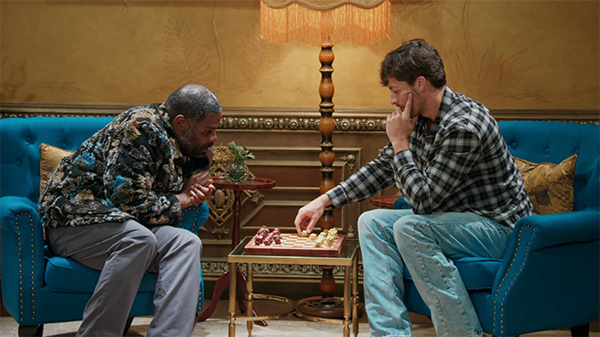
There is rarely only one way to play any game. But rules limit options, which forces strategy. In a game of chess, the best players think several moves ahead. They consider multiple move choices and play out what their opponent might do in their next turn, and how they themselves might respond. This is strategizing at its best. But, strategy creates tension. In The Traitors, every player is faced with many choices per day both in and out of challenges, at the Roundtable, and in the Turret as Traitors decide who to murder. These choices create dramatic tension for the players of course, but also for viewers as we consider whether or not their strategies are sound.
Rules Dictate Social Structure and Human Behavior
One of the reasons people watch The Traitors is because they already know some of the players. If you’re a Real Housewives or Bachelor franchise fan, you might see some of the personalities you already know there. If you love shows like Big Brother and Survivor, you might see some of those gamers. Maybe you’re a sports fan or love the Food Network–you’ll see some familiar faces. The cast is diverse, and all hail from different realms, so viewers come from different fandoms. Coming into the game, you might have preconceived notions about some of the players, but not al–just like the players themselves (raise your hand if, like me, you’re wondering how on earth Season 4’s contestants are completely unfamiliar with the best friendship of figure skating Olympians Tara Lipinski and Johnny Weir!). And things get interesting when those preconceived notions about the players are mixed with gameplay and the roles those contestants are asked to take on.
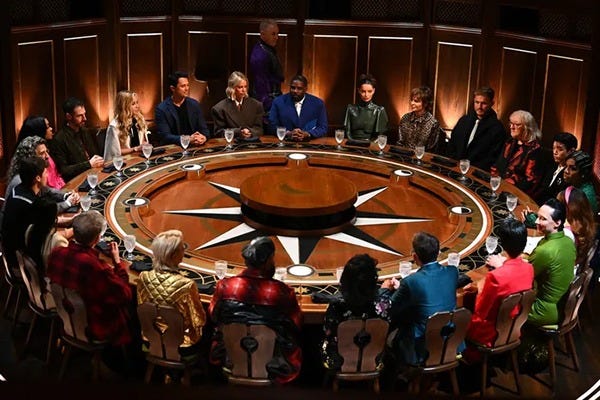
The rules of any game determine human behavior. In a sport, the position you play dictates your actions. An offense player is going to act differently than a defense one. The rules dictate how you take action or not. And in The Traitors, the parameters of the game can make you do something you wouldn’t normally do, like lie.
Rules also frame societal structure. Because there are different kinds of players, there’s an imposed hierarchy, and with that hierarchy comes power for different people. Traitors have the upper hand in the Turret because they hold the power to murder. But at the Roundtable, their power is diminished by the presence of Faithfuls–unless they can convince them to vote other Faithfuls out and level the playing field.
Without rules, there can be no cheating, betrayal, or unfair gameplay. Because the framework sets expectations for everyone in the game, the system itself defines parameters of true loyalty. While players might be friends, the structure of the game allows friends to betray each others’ trust (or ignore one another, like Tara and Johnny), especially if you’re a Traitor. In the wildly popular series Heated Rivalry, Shane Hollander and Ilya Rozanov navigate a secret personal relationship, but as they play on rival hockey teams, the world of the sport requires they not only compete against each other, but maintain open indifference or even hostility in public. In their situation, the rules of the world they belong to make it ok for them not to speak fondly of or show intimacy in public.
Breaking the Rules
In American sports, being the best at baseball means you win the World Series (even though only North American teams compete). Winning the Super Bowl means you get to go to Disney World. Either way, the integrity of the win means a great deal to players, teams, and fans–it’s why the Sunday on which the Big Game occurs is a bit of an unofficial national holiday. And it’s why any cheating is regarded as a scandal of the highest degree.
If rules are broken, the game collapses. And that’s not fun for anyone. It’s equally important for spectators as it is for players. I’ve definitely heard folks in the stands at a baseball game argue over what’s fair gameplay and not. And when referees make the calls that viewers don’t think are right, people get angry. We get emotional when the rules are broken because it throws the integrity of the game into disarray. If the game is rigged, play stops being meaningful and feels more like a manipulation. Imagine if at the end of The Traitors, all Traitors were eliminated by Faithfuls but they got the prize money anyway? It’s possible that nobody would ever watch or play again. We lose interest in games without honest stakes, whether playing or observing.
In the end, games reveal something quietly profound: structure is not the enemy of freedom, but the condition that makes meaningful action possible. The rules create a world where trust can be earned or shattered, where risk has weight, and where identity forms under pressure. Without those boundaries on The Traitors, there would be no strategy, no betrayal, no suspense–and no real reason to watch (except for the fashion). Without those boundaries during a football game, there could be no true winner and right to claim being “the best.” Gameplay is a carefully bounded system that turns human behavior into story. That’s why we watch, why we care, and why the outcome matters. Rules don’t shrink the experience of play; they give it shape, stakes, and consequence–transforming chaos into drama and participation into meaning.
Want more? Our Discord is where you’ll find everything you need to know about our ecosystem at Remarkist! Don’t forget to follow us on Instagram, tumblr, and Spotify for more insights on fandom—and hit that subscribe button so you never miss a thing at rmrk*st Mag!
