



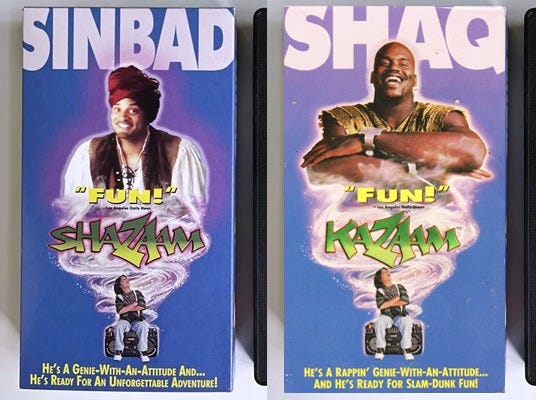
If you were a kid in the 90s like me, you might remember a movie starring Sinbad about a genie granting wishes called Shazaam. I remember when the music-finding app Shazam came out, I recalled the movie title. And while I’d never watched it, I remembered ads for it, maybe a still photo from promotions. I had the distinct memory of it being on TV, not in theaters. And I just never got around to watching it. But, we had a genie-forward culture in the 90s thanks to Disney’s Aladdin, so I was probably a little tired of the genre.
If you also remember this movie, you also have likely experienced the shock and awe of an entire generation when we recently learned that… this movie never existed. It is a figment of our collective millennial imagination. This is a Mandela Effect: when a group remembers something incorrectly but are sure of it based on the community experience. Shazaam is so strongly “remembered” that Sinbad even poked fun at it in this episode of Pablo Torre Finds Out. Perhaps we’re confusing it with the (very real) movie Kazaam, starring Shaquille O’Neal in the genie role. Or the superhero movie Shazam! based on a comic book series. Or maybe because Sinbad was everywhere back then, hosting Sinbad the Sailor movies on TNT where he wore baggy “genie” pants (thanks to MC Hammer and also Aladdin, the 90s was all about baggy genie pants). Or maybe it’s because he played a genie called Sinboo on Nickelodeon’s All That.
Regardless of the reason, the movie never existed and yet, it’s so strong in our collective memory that even writing this, I have to keep double checking to make sure of the facts. I remember it so, so clearly. And knowing it doesn’t exist makes me feel particularly unsettled about everything I think I remember. But the Mandela Effect also speaks to the power of fandom and collective consumption. An incorrect collective memory reveals how fans engage with stories: through emotions and cultural osmosis rather than a careful close reading of the text. While some fans are really into details, groups of fans might rely more on the collective experience of a story rather than the story itself. A Mandela Effect might tell us what fans want to remember or draw meaning from rather than what is actually presented. Fandom cultures are born through community adventure.
Cognition and collective memory
Where does the term “Mandela Effect” come from? In 2009, a researcher named Fiona Broome discovered that she–along with many others–had vividly “remembered” South African president Nelson Mandela dying in prison in the 1980s. I myself can admit this: I “remember” his “death” too. But actually, Mandela was very much alive at the time and died much later in 2013. Broome coined the phenomenon, and looked into the ways a group of people might remember an event so incorrectly.
An article from VeryWellMind plainly explains some of the cognitive reasons a Mandela Effect occurs. Neuroscience states that the brain produces a schema, and false memories can occur when the brain places similar things together. VeryWellMind uses this example: lots of people mistakenly believe Alexander Hamilton was an American president when he never won an election (and could not be, as an immigrant). But because he was an influential founding father and his face is on the ten dollar bill, our brains might associate him with other U.S. presidents.
Our brains fill in blanks when there are holes in a story; this is called confabulation. And information we receive after an event can actually influence our memory of it; we know this if we watch a lot of true crime documentaries where eyewitness testimony is unreliable (*raises hand*). Priming is a brain function by which our memory is influenced with a preceding word or idea before we experience it. So in an investigation, a witness might be led with a very small tweak to a question like “Did you see a bicycle?” vs. “When did you see the bicycle?”
Social media also exacerbates this: one major fandom event covered by many different angles can influence your memory of the same event. I personally feel this when I remember attending the Eras Tour: I watched so many videos and snapshots from Taylor Swift’s massive show in different cities that the memories I have are conflated with my own experience of being in the stadium I was in. That feeling is shared, making it more powerful. And, it’s tied to emotion: elation, happiness, excitement. Emotion tied to memory is extremely strong. It’s why hearing a song you loved with an ex can make you sad, or a scent you loved in high school can bring back a flood of memories.
And if you’re a fan of reality bending narratives this might appeal to you: quantum physics suggests there could be alternate realities and dimensions where things are happening and we “remember” them in this one. If you’re a skeptic, it seems unlikely. But hey, we can’t rule anything out!
Fandom and memory distortion
I’ve already mentioned this, but social media–and all kinds of experiences of fandom–contribute to memory distortion. When we engage with source material and stories, it’s often both intensely and indirectly. We watch our favorite shows, sometimes over and over, but we spend more time talking about them with friends, other fans, or consuming content about them online or in other places.
Fandom content is derivative, and repeated exposure with anything can overwrite memories we have of the original. We experience fandom through memes, fanfiction, parody and discussions–all which have the capability of shaping our memories. And since fandom is a collective experience, we create echo chambers of community that can scale a misremembered piece of content into a widely held belief.
Examples in Fandom
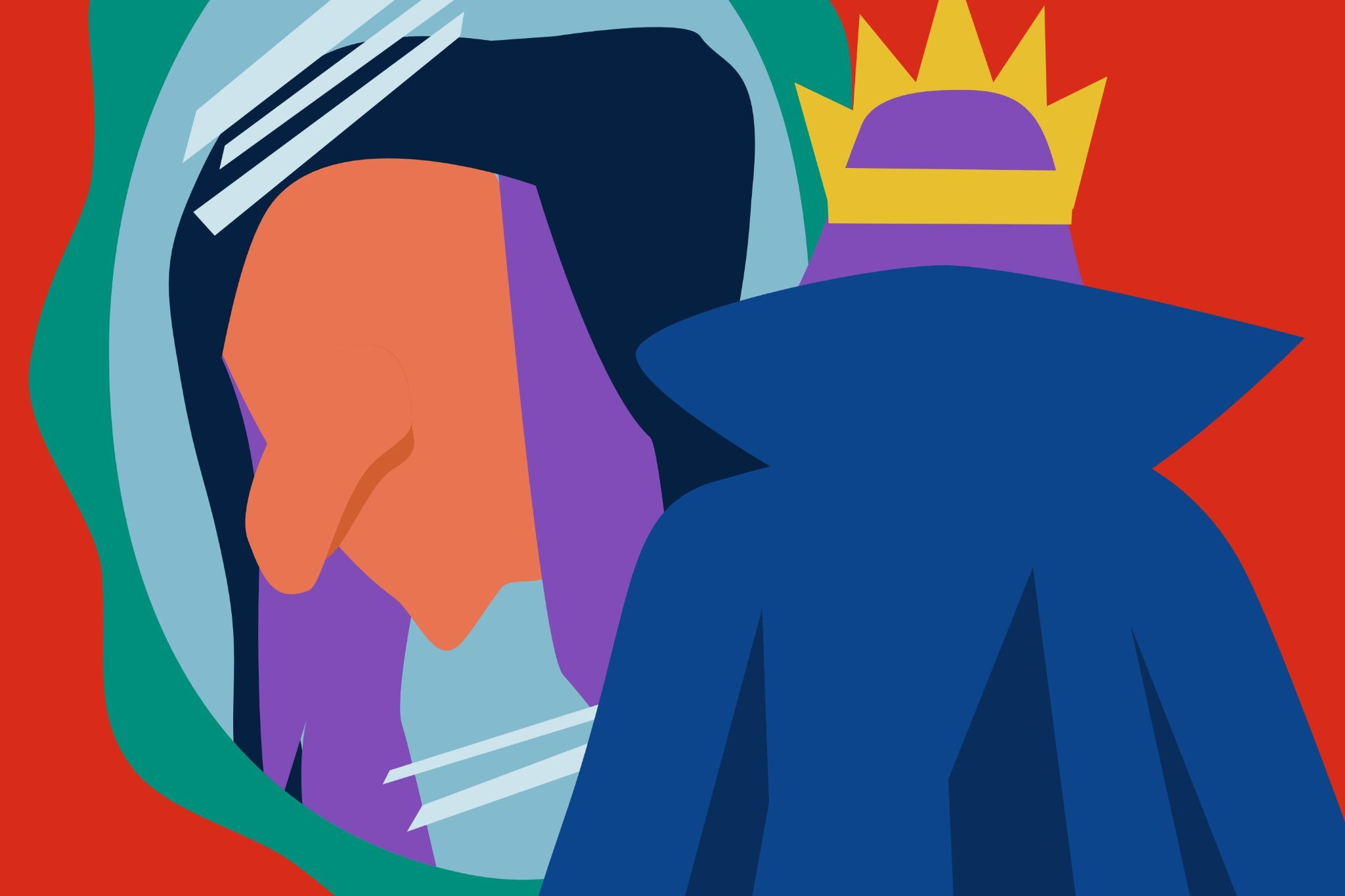
The Shazaam Mandela Effect is just my favorite one, but there are many well-known Mandela Effects in fandom. One big one is from Snow White and the Seven Dwarfs, the Disney animated film from 1937. A pop culture phrase we feel we know is “Mirror mirror, on the wall: who is the fairest of them all?” The evil queen is jealous of Snow White’s beauty, and the man in the mirror tells her so. But the quote is actually, “Magic mirror on the wall, who is the fairest one of all?”
A quick search on Reddit provided me some fun answers for why we might remember it this way, and Disney perhaps is a bit at fault. The Disney Channel Original Movie Descendants, a franchise about the children of all the heroes, heroines and villains of Disney classics, is known for a song called “Rotten to the Core” in which the lyric is: “Mirror, mirror on the wall/Who’s the baddest of them all?”. This movie premiered in 2015, and the misremembered quote predates it for sure. But the lyrics may be indicative of how strong this Mandela Effect is in our collective culture.
Another explanation suggested that maybe we remember it alongside other fairytale lines, like “Rapunzel, Rapunzel, let down your hair” and that repetition fits with our cognitive understanding of fairytale language, or, schema (as mentioned earlier). But keep in mind: because these fairytales come from Brothers Grimm, original versions said “mirror mirror.” The original German text indeed says,
„Spieglein, Spieglein an der Wand:
wer iſt die ſchoͤnſte Frau in dem ganzen Land?“
So, perhaps it’s not a misremembrance at all, just a conflation with the extremely commodified Disney version that exists in mainstream culture. And that makes it a Mandela Effect, because the fandom is piecing different memories together collectively.
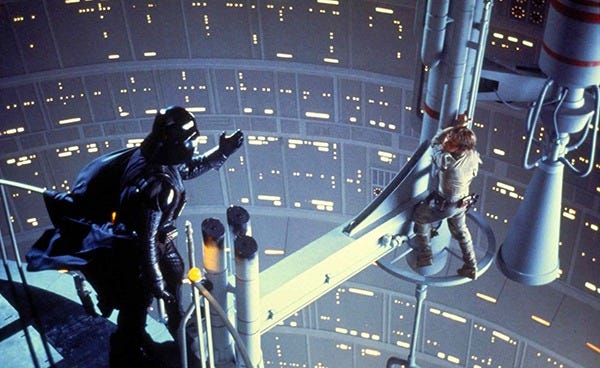
Another great Mandela Effect is from Star Wars. The biggest twist of the original trilogy is the reveal that (spoiler alert!) Darth Vader is Luke Skywalker’s father (though, in Pitch Perfect, Beca is unimpressed with the “twist” and thinks we all should have seen it coming). The line, “Luke, I am your father” was known to me as a touchstone of pop culture long before I ever saw the movies or knew what it was from. But actually, the line is different. Darth Vader actually says, “No, I am your father.”

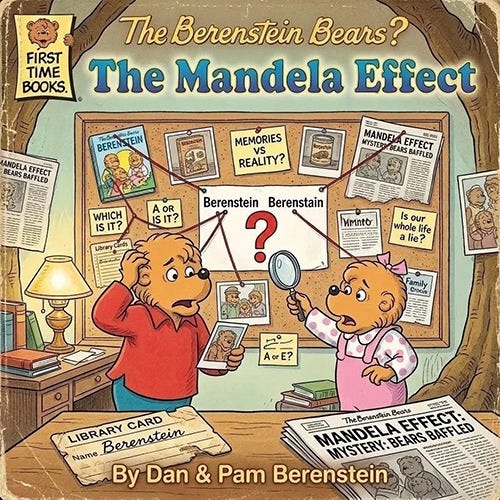
A third great example, for my fellow millennials, is the Berenstain Bears children’s book series. Didn’t everyone remember it as “Berenstein”? I was absolutely obsessed with these books as a child; every time we went to the library we came home with at least four or five editions from the series. And I probably couldn’t read that well when my mom started reading them to us, so if I heard “Berenstein,” that’s how I remembered it. But I also remember putting together those letters on the cover with the sound of the name, learning that “stein” sounds like “steen” or “stine” depending on the word. So in my twenties, when someone posted the news online that in actuality, it was “Berenstain,” my jaw dropped. I stared at those covers for hours as a child and remembered them incorrectly.
Emotions and fandom
Why does the Mandela Effect make us so uneasy? For one thing, fandom is intertwined with identity. Our deeply personal connections to our fandoms and content we love help us define who we are. So, when we realize that we remembered something wrong or incorrectly, especially about something we love so much, it can shake that foundation of identity. It’s all the more unsettling when there’s a contingent of sticklers in the fandom who are more particular about details and point out that we’re wrong about deeply held memories. That’s when fandoms can fracture, when the individuals involved aren’t aware that there are all types of fans–some that are more analytical, some that are more imaginative. If you’ve ever proclaimed that you’re a fan of a band but can’t name five songs they put out at the request of another devotee, you know the feeling that comes with being labeled a “bad” fan. The reality is, there is no one way to be a fan.
Another way to look at the effect of the Mandela Effect, though, is that fans can be united in their incorrect memories. I have felt a particular kinship to strangers in my general age range on a nostalgic level who remember Shazaam as much as I did. There’s no feeling quite like being wrong as a community; it’s a unifying mistake on the part of an entire generation, and we can laugh about it together.
Fandom is an interpretive space
The Mandela Effect exposes the gap between canon and “fanon,” the canon that fans decide exist, regardless of what the creators intended. In a way, it is collaborative fan fiction: fans are writing the story they wish happened versus the one that did, even if subconsciously.
I’m not really a big sports fan, but I am a New Yorker. And recently, the New York Knicks have gotten themselves into a historic run for the NBA title. The last time they won was before I was born. I have never been to a Knicks game, and only watched a handful on TV over the years. But as the Knicks draw closer to a championship win, I find myself wrapped up in the frenzy taking over the city. It almost feels like I’ve been watching with everyone all season, even though I absolutely have not. But I am swept up in the feelings of comradery, joy, and excitement of the moment. I find myself telling others the story of what it means to be a New Yorker, that this is what it’s all about, watching and cheering with strangers on a shut down street or on the subway. I, along with millions of others, have assigned a story to the events of what is actually happening, which, to be honest, are just basketball games. The players are doing their jobs; New Yorkers and Knicks fans are writing an emotional narrative about what’s happening, and participating in collective memory-making together.
We do the same thing with all of our fandoms; we extract meaning from a text that might not actually be there. We create mythologies because they help us believe in something bigger than ourselves. If we remember the line as “Luke, I am your father” vs. “No, I am your father” the meaning changes slightly. Maybe fans want Darth Vader to have said his name, Luke, in a fatherly way instead of with a detached sense of villainous energy to get him to do what he wants.
Being part of a fandom itself implies that we are active participants, engaging with stories in a way that makes us feel seen, not only for ourselves but in community with others. Remembering something wrong together tells us so much more about how fandom functions in society as a communal ecosystem than it does about our abilities as humans to get things right all the time. The Mandela Effect shows us how we rely on one another in community, and how much each of us can affect a collective vibe.
So, what are some Mandela Effects in fandom that you were shocked by? Tell me in the comments!
Want more? Our Discord is where you’ll find everything you need to know about the Remarkist ecosystem including Folkic, our community app and Masslore, our fandom knowledge database! And be sure to hit that subscribe button so you never miss a thing at Rmrk*st Mag!
