



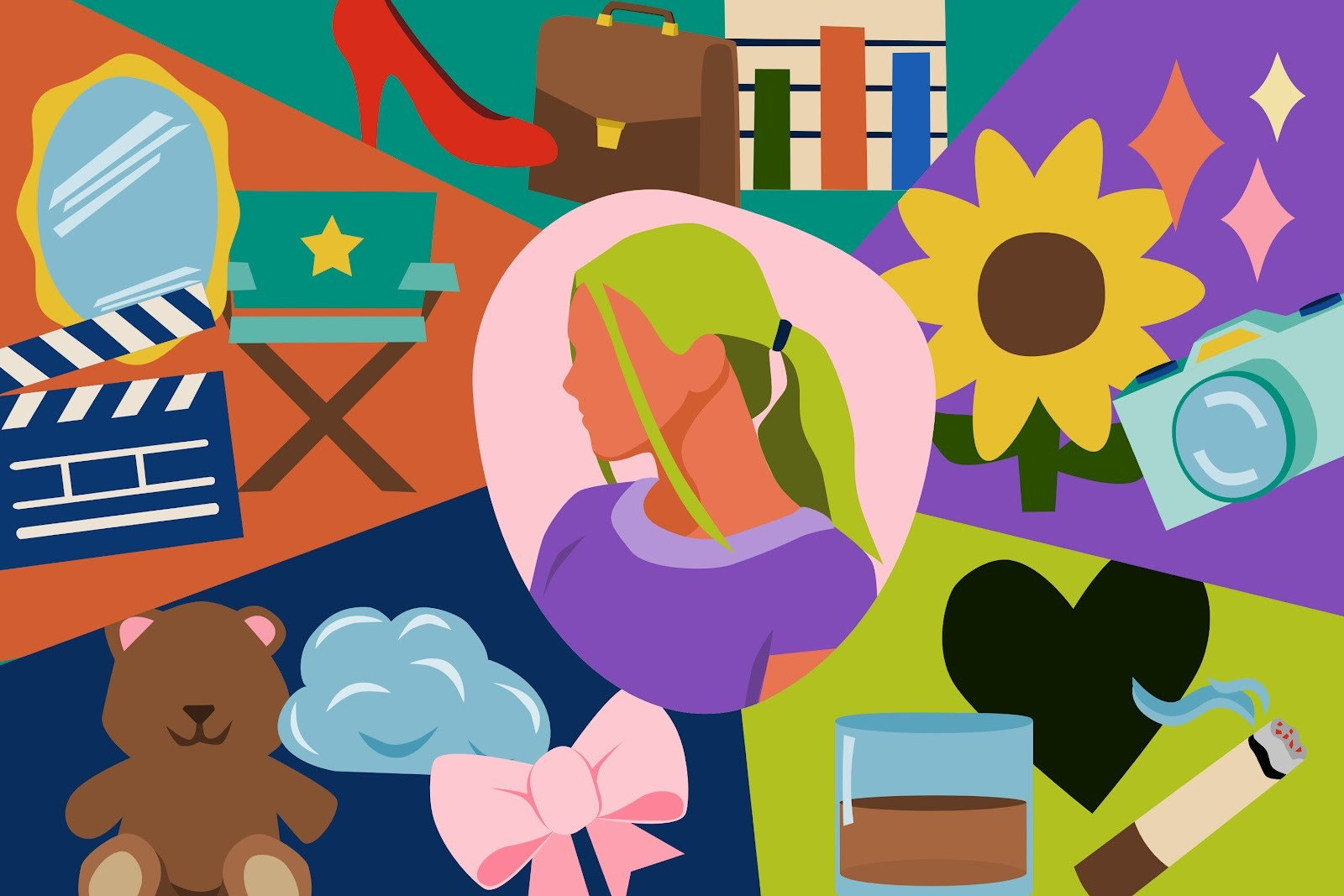
It’s possible we all remember the first time we connected with a character that represented a kind of archetype. We might have found representation on screen or something to aspire to. The Manic Pixie Dream Girl, the Cool Girl, the Ingenue, the Tortured Artist, even the Himbo–these are all tropes that help us understand character and plot. But these archetypes aren’t just tropes we see onscreen and in books: they become templates that we build taste around, and our relationship to them reveals our identity formation around them.
Take “The Main Character” or “Main Character Energy” for instance. The term circulated in the late 2010s, but it wasn’t until 2020 that it became an oft-used term on TikTok. But when Ashley Ward put up a video of her and some friends on her feed with her own voiceover saying, “have to start romanticising your life. You have to start thinking of yourself as the main character,” it exploded. Not only did the tone of the archetype change to a more favorable one, the idea became an aesthetic to aspire to, and a guiding principle for many creators on social media. And, at the height of the pandemic, perhaps it was the perfect time for it to talk off. We were all living as though we were the main character in a story; the world in general felt surreal.
Ward claimed her inspiration came from Ferris Buller’s Day Off. In that classic film, Bueller is the main character, and he is iconic because he’s so unapologetic. He speaks directly to the camera with a striking boldness, knowing the audience is there. He arranges an entire day around his own personal agenda, rather than his obligations. He gets his friends into trouble because he persuades them to follow his lead. Ferris Bueller is the ultimate “Main Character,” and for decades, he has been beloved.
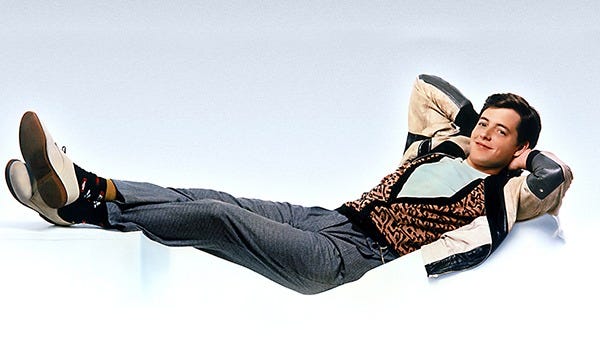
A promotional poster from Ferris Bueller hung in my dorm suite my junior year, a decoration put up by one of my younger suitemates. I remember when an older cousin of mine visited me; she saw it and said, “you guys are too young to be fans of that movie! That’s my generation!” signalling her Gen X status over us Xennials and Millennials. But she was wrong. My suitemates had adopted Ferris as a hero, an aspirational figure who represented something that they aspired to be. Irreverent, successful, charming. Archetypes are observed by critics, but adopted by audiences as a form of identity and taste.
From character tropes to aesthetic
There really are so many character archetypes that it would be its own essay collection to get into all of them. But there are a few that we all can recognize and dig a bit deeper into in terms of how popular culture has influenced our collective aesthetics.
Where were you when you heard the term Manic Pixie Dream Girl? It is a cultural event so specific, it’s firmly cemented in pop culture of the mid-aughts in many ways, from movies, to music to fashion. Critic Nathan Rabin coined the term when writing about Kirsten Dunst in the 2007 film Elizabethtown, a term to describe a whimsical female character: sexy, chaotic, bubbly, and a bit magical. Rabin later apologized for the naming of the trope, realizing the archetype existed in many ways only to save depressive male characters from their emotional turmoil, a woman who flits into his life to make him feel special and then right out again, as if she has no agency or innate purpose.
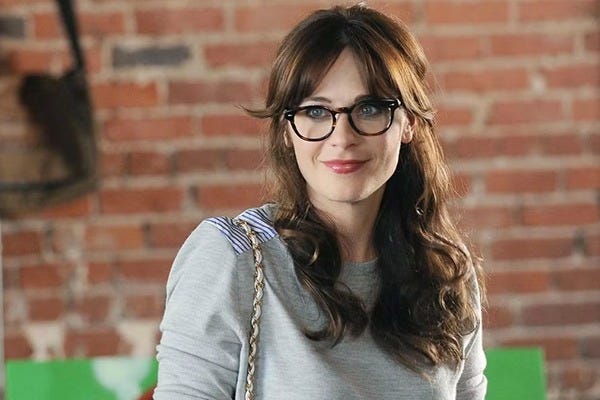
I remember the MPDG era quite well: Zooey Deschanel was (is) charming in everything she touched, from 500 Days of Summer to New Girl. The MPDG was so… “adorkable” (yikes, I hate that word, btw) that I wanted to be like her. My on-screen role models had been Sarah Michelle Gellar as Buffy (the Chosen One trope), Katie Holmes and Michele Williams as Joey Potter and Jen Lindley respectively (the Ingenue trope), and pretty much any movie whose cast included Judy Greer (the Best Friend trope). Suddenly it felt ok to be a little “weird,” to say the thing you’re thinking but don’t for fear of retribution, the dangers of which Mean Girls had illustrated so well (as if I hadn’t learned that in real life high school).
The MPDG trope was definitely sexist, but at the time, claiming the aesthetic felt powerful. The “not like other girls” feeling so eloquently performed by actresses like Kirsten and Zoey was also echoed in the music of late-aughts Taylor Swift (“You Belong With Me”) and continues with artists like Phoebe Bridgers. I definitely think Weird Barbie in the 2023 Barbie movie was a reclamation of sorts of the MPDG.
In the early 2010s, the MPDG gave way to the Cool Girl–popularized by the release of the book Gone Girl and later the movie adaptation–and the Hysterical Woman. Crazy Ex-Girlfriend and Fleabag showed us how to empathize with a woman who has a lot more going on than it seems. Currently, the hit FX series Love Story, the fictionalized love story story of JFK Jr. and Carolyn Bessette, has made Cool Girl popular again: a light internet search about the series will render all sorts of positive discourse on Bessette’s effortless 90s “cool girl” style: her wardrobe, hair, clothing–an aesthetic that is coming back into fashion as a result. All of a sudden women on social media are loving 90s era basics in muted colors to echo the Calvin Klein aesthetic of the day, all the way down to plain headbands over long, effortless hair.
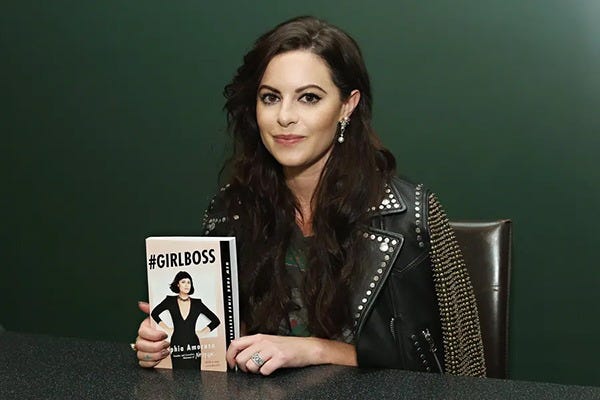
There’s also the Girlboss, a trope coined by Sophia Amoruso in 2014, whose memoir of the same name chronicled her rise to corporate prominence with her clothing brand, Nasty Gal. Amoruso’s take on entrepreneurial feminism in the workplace drew on other prominent figures, like Cheryl Sandberg whose book, Lean In, caused a stir amongst the female corporate landscape. But the trope exploded into pop culture: Succession’s Shiv Roy is the epitome of the Girlboss. But it wasn’t entirely new, as a Time Magazine piece from 2021 asserts: movies and TV shows of the 80s and 90s showed us modern shoulder-pads-wearing working women who were the Girlbosses of their day: Working Girl, 9 to 5, Who’s the Boss? and even Sex and the City solidified the idea before the Girlboss trope took hold in the mid-aughts. Hermione Granger (Harry Potter franchise), Olivia Pope (Scandal), Annalise Keating (How to Get Away With Murder) and even Leslie Knope (Parks & Recreation) are all certifiable Girlbosses, and fans absolutely adopted their aesthetics in style and personality. The Limited even produced a line of businesswear inspired by the incredible outfits seen on Scandal.
What became a cultural aesthetic was also true of its downfall. Comedian Caroline Timoney posted a TikTok video in 2021 in which she proclaimed she had “girlbossed a bit too close to the sun,” sparking a viral trend. Even Taylor Swift used the phrase in her 2025 song, CANCELLED!” off of The Life of a Showgirl. Cultural commentary suggests the opposite of Girlboss is the Soft-Girl, as the nature of work shifts from hustle to anti-burnout. On social media and in cultural discourse, we have seen an emphasis on slowing down, making sourdough, pursuing meaningful work where the focus is on making the world better rather than making a lot of money, and generally enjoying life. These are all lifestyle choices that a pandemic and other socio-economic-political realities have influenced alongside character tropes in media.
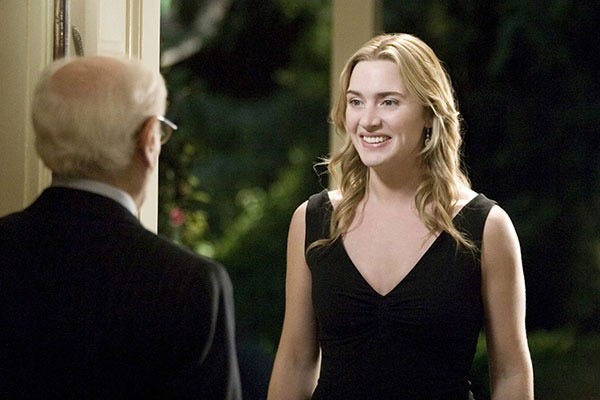
We already have Soft Girl characters in pop culture to look to: Beth March in Little Women, or Iris in The Holiday. Many male characters in recent pop culture inhabit the Soft Boy trope: Ted Lasso (Ted Lasso), Jimmy Laird (Shrinking), David Rose (Schitt’s Creek), and Kip Grady (Heated Rivalry), just to name a few. And in a time where many are talking about the rise of the Manosphere, the Soft Boy trope is one that I believe many are seeking out, and hoping it seeps into pop culture aesthetic as facets of masculinity is debated in the grander cultural landscape.
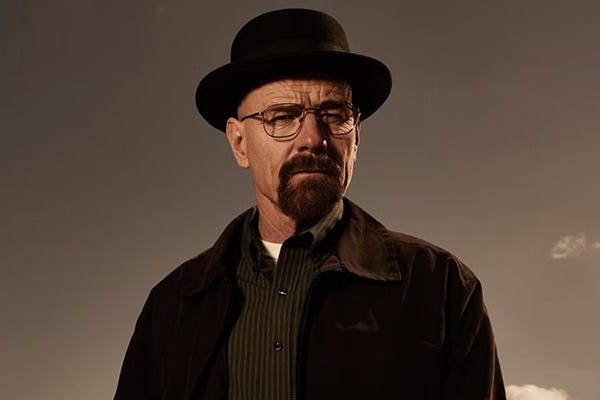
The Soft Girl/Boy trope also stands in opposition to the Antihero, and the popular characters of the last couple of decades that inhabit it. Walter White (Breaking Bad), Tony Soprano (The Sopranos) and Severus Snape (Harry Potter franchise) inspired a generation to root for protagonists that we shouldn’t, to find the humanity in a complex character. As kids, we tend to classify characters as good or bad, and certainly the media aimed at children lacks much nuance in this way. But as adults, we learn that people contain multitudes; they aren’t always all good or all bad. We have compassion for an Antihero because we see ourselves in them: some days we are doing our best and falling short, or making choices that are really tough, but get us from point A to B.
Tropes as mood boards
Fans have always had ways of performing aesthetics they adopt from tropes. Before the internet, we had fan zines and Star Trek conventions. In my high school days, my friends built fan pages dedicated to their favorite TV show characters like Buffy the Vampire Slayer on GeoCities. Blogs, tumblr, chatrooms, message boards, and MySpace took over the early aughts, and today we have multiple advanced social media networks that have dominated so much of our consumption, as well as conventions, festivals, and creator tools like Remarkist.
On TikTok and Instagram, there is more opportunity than ever for fans to perform their aesthetic, and lean into tropes. Creators adopt all kinds of trope styles to anchor their content. A creator might perform Main Character Energy if they’re showing the world their incredibly exciting life through cinematic videos on their feed: think solo coffee dates, exploring nature, and travel. Soft Girls are making sourdough and decorating their homes in cottagecore pastels. The Best Friend (male and female) is talking directly to the camera giving life advice and tell-it-like-it-is reality checks. I would argue many influencers fall into the Best Friend category across a spectrum of lifestyle accounts.
We respond to these tropes in content creation and curate our feeds around them because we recognize them from pop culture and storytelling. And we end up performing them ourselves: who hasn’t seen a random person making bread on the internet and thought, “I can do that!”? Of course, this is where we see irony performed as well: the #nailedit trend on social media–where folks would try to make something they saw so effortlessly made on the internet and failed spectacularly–inspired a hit Netflix show.
How archetypes function in our lives
The development of taste and personal identity around tropes in characters we see on screen is inherently flawed, but nevertheless helps us make meaning out of the events of our own lives. Tropes cannot be wholly divorced from race and class; access to certain life experiences or circumstances are often baked into character tropes. For just one example, if your taste leans toward Soft Boy/Girl, access to leisure time and the financial means to create a world around you that is comfortable is often at play.
Taste is a social language, and how we incorporate our aesthetics into our daily lives helps us relate to those around us, and vice versa. To bring it back to Mean Girls, one key point about the movie and the book it was based on, Queen Bees and Wannabes by Rosalind Wiseman, is that every individual in a teenage female friend group plays a role. The same is true for how we show up in our families, friend groups, workplaces, and even as fans. How we perform our fandoms is often governed by taste: do we love to analyze a text or simply celebrate it? Do we want to argue canon or create fanfiction involving the characters we love? Our tastes inform the roles we play in different situations, and socially, these roles play off of one another. We consistently strive to locate ourselves in any story, to make meaning of our own choices and circumstances. And as long as there are tropes, and changing trends in tropes, we will consistently build aesthetics around them even as the world changes around us.
Want more? Our Discord is where you’ll find everything you need to know about our ecosystem at Remarkist! Don’t forget to follow us on Instagram, tumblr, and Spotify for more insights on fandom—and hit that subscribe button so you never miss a thing at rmrk*st Mag!
