



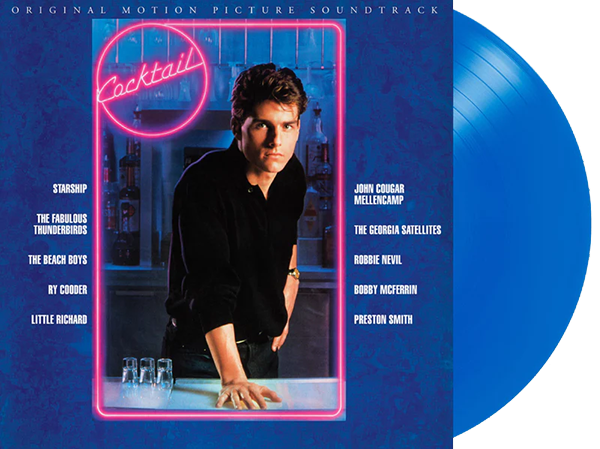
One of my earliest music memories was listening to my mom’s favorite albums in the car. She was a teenager in the 70s, so by the time I was ten, I was intimately familiar with Fleetwood Mac’s Rumours. I asked my mom what a “b*tch” was because she was a superfan of Elton John and she particularly loved “The Bitch is Back,” singing it at the top of her lungs while driving. (I was partial to “Honkey Cat”; something about that delightful song just connected with my young ears.) And we are New Yorkers so it would have been sacrilege not to educate me on the music of Billy Joel. I requested “Movin’ Out” and “Allentown” often. Don’t even get me started on the Dirty Dancing and Cocktail soundtracks; I loved the music from movies I wasn’t even allowed to watch. The Beach Boys’ “Kokomo” was a huge hit, so from that movie soundtrack I learned about yet another legendary band whose music predated my existence.
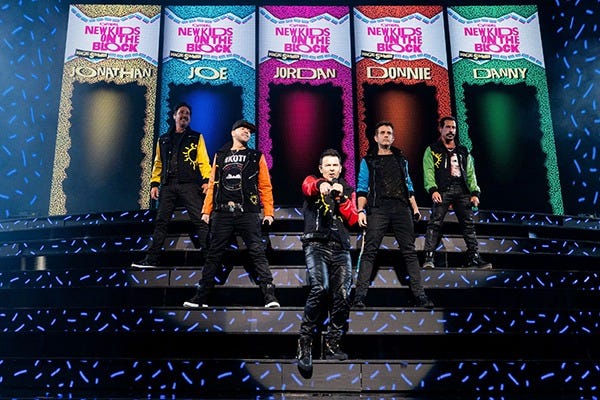
The popular podcast “Las Culturistas,” hosted by Bowen Yang and Matt Rogers, hinges on a central question the two ask every guest: “What was the culture that made you say culture was for you?” It’s a hilariously worded inquiry that leads to a great conversation. It pinpoints something we all experience: at a certain moment in our lives, we are exposed to art–a particular song, an episode of a TV show, a movie–that truly speaks to us. I for sure loved the music my mom listened to, but it wasn’t like I had any other choice in her car on my ride to school and various road trips. But when I heard New Kids on the Block’s “Step By Step,” I felt something very different. This music felt like it was just for me, not my mom too (although she did buy me the cassette tape of the album). It was a shift I recognized from something I enjoyed being “hers” to something feeling like “mine.” And that would continue to happen, as it does for all of us as we get older. Taste might begin as inheritance, move through rebellion and experimentation, and eventually solidify itself as an autobiography of preference.
Early imprints and nostalgia
Nostalgia is a funny thing. You can have a fond memory for art you experienced in your youth, but do you consider yourself a fan now? I think the answer can be complicated. I was sitting in a bar recently and Fleetwood Mac’s “Gypsy” wafted over the speakers. I was transported to another time and place; the song was released when I was a baby and was part of my young life through my mother’s enthusiasm for the band. But, here’s the thing: I LOVE that song. I could listen to it 10 times in a row over the loud speakers of a dark bar and never be sick of it. Conversely, my father introduced my brother and I to Star Wars as teenagers, his favorite movie of all time. I can feel nostalgia for the day he got really excited to pop it into the VCR, and remember the experience of watching as a family fondly. I even finished watching the original trilogy that same week with a boy I liked at the time, who became my first boyfriend; we always credited The Empire Strikes Back for our first date. Star Wars figured to be kind of important in my adolescent life. But, I could never consider myself a fan of the franchise. It simply didn’t stick to me in the same way my mother’s music did.
So what about the art I discovered myself as a child? It’s a bit of a blur, but I know I loved: Sesame Street, Rainbow Brite, Full House. I graduated to New Kids on the Block, musicals like The Secret Garden, Oklahoma!, and Grease, the Sweet Valley Kids and Babysitter’s Club book series’, and the movie Curly Sue was my most-rented from the video store. To this day, I will get really excited about early 90s hits from Color Me Badd and C+C Music Factory (don’t judge!) I have intense, fond nostalgia for all of these things, but as far as my personal taste today, I’d say only a few enthusiastically remain (hint: I saw NKOTB in concert within the last month). So what’s that about?
Nostalgia connects us to earlier versions of ourselves, and of communities we were a part of without knowing it. It’s why a meme account on Instagram like Flashback 90s has almost a million followers; we feel connected to others who experienced the same pop culture we did. Shared experience with strangers is a delight, and drives so much of the nostalgia we see in media today with reboots, rewatch podcasts, and more.
Remembering the parts of ourselves that liked different content as kids helps us connect to the person we are today. We can look back on art we enjoyed as younger versions of ourselves and recognize our current differing opinion as a signifier of growth. We’ve all rewatched a show we loved a long time ago and realized that in a modern context, the messaging of that show might not hold up to our current standards or beliefs. A great example is taking a look at how a sitcom of the 80s or 90s might have covered a serious topic like alcohol abuse for only 22 minutes. It may have really impacted us at the time, but nevertheless as an adult we have more evolved thoughts and understanding of a complex situation.
Rebellion and Experimentation
It happens to all of us: at one moment in our lives, we were maybe told that the thing we liked was “uncool” or even “bad.” In adolescence and young adulthood, we all grapple with whether to conform or forge our own paths, and personal taste is part of that journey.
Recently my niece, a pre-teen, got a bedroom makeover. Along with new furniture and color palette, gone were the trappings of a lot of her childhood interests. American Girl Bitty Baby dolls and strollers and outfits, stuffed animals and a dollhouse that she outgrew…all long gone. I took note of the fandoms I could find traces of, the new books on her shelf and records (yes! records) next to her new turntable. I asked her about the Taylor Swift album she had and she confidently said, “I like Taylor Swift, but I’m not a Swiftie.” The declaration was important: she rebelled against a cult of fandom, but not as a fan entirely. She’s deciding how to present her identity as a fan of this particular artist. I hoped, in the moment, that maybe her anxiety about being labeled a certain kind of fan would dissipate as she got older (though, I’ll let you know if I ever become completely immune myself).
At her age, I had no concept of anything but music I heard on the radio or in dance class, as well as my growing collection of Broadway cast albums. I remember the first time someone said to me “I only listen to ‘indie’ music.” I had absolutely no idea what that even meant. Same for indie films. I did, however, recognize rebellion: those other teens were separating themselves from a mainstream idea of popular culture. From my view, though, I saw all the lovers of “indie” sticking together too in a way that just transferred their loyalty to a new fandom community. I have a love for a particular South Park episode that aired in 2013, long after my teenage years: “Goth Kids 3: Dawn of the Posers.”
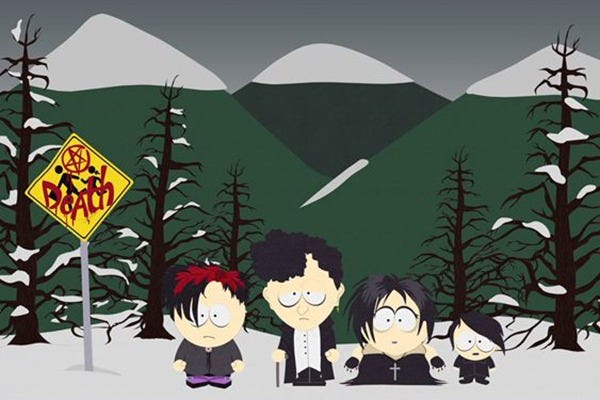
In it, the so-called “Goth” kids at school pressure the South Park main characters into becoming “nonconformist,” meaning that they should dress in dark clothing just like they do and speak just like them. The irony is very amusing. Rebellion and experimentation is absolutely necessary for figuring out what you yourself like, but often rebellion just ends up helping you find a new group to find belonging. This is where snobbery, loyalty to genre, etc. can hinder experimentation.
Exploration is possibly one of the most fun parts of developing one’s own taste. Access is key to this phase. It might be a friend lending you an album you never would have picked up yourself, a walk through a public library looking to see what catches your eye, or a plethora of streaming platforms to watch anything and everything at any given moment. In decades past, there were only so many TV channels, movie releases, and access to music for which we shelled out lots of cash. Discoverability was more difficult without gatekeepers in those industries actively marketing to consumers. Recently, Kate Kennedy marveled on her podcast, “Be There in Five,” how crazy it is that we used to have to go to the Virgin Megastore to hear even just a chorus of a song that we weren’t sure we wanted to buy at one of their little listening booths. I remember thinking those listening booths were the absolute height of try-before-you-buy access! My, how things have changed; in two seconds I can find and listen to a full song I didn’t know existed a minute before.
But now, our tastes can develop in siloes because we have so much access to media at any given moment and for a fraction of the cost. Gone are the days where you’d have to scour a record store for an international band’s export; for better or worse, streamers and other places on the internet make discoverability and access so much easier with a few clicks.
I discovered one of my favorite musicians, Sara Bareilles, in the early days of iTunes Genius. I had bought a different piece of music, once I can barely remember now, and I was recommended Little Voice, her debut. Within a year or two I saw her play a live show at Webster Hall, and now she’s an international superstar. But I can count myself amongst one of her earliest fans, because I was willing to experiment with a recommendation based on something else I liked. I wasn’t alone, of course.
Experimentation also leads to some embarrassing phases, or so we might think. Sometimes I’ll rewatch a TV show I loved in the early 2000s and cringe at the horrible dialogue or flimsy storylines, things I can pick apart now as a more experienced consumer. But that’s just part of the process. The earlier version of you was working through content, seeing what you liked and didn’t, growing an appreciation for different work across mediums and constantly reworking the formula. Just as our palate might mature as we age and find different foods more interesting, so do our tastes in art.
Taste as identity
There’s a great scene in the Friends episode, “The One With the Embryos.” If you’re unfamiliar, it’s the episode where Monica and Rachel get into a spat with Joey and Chandler over which duo knows the other more deeply (resulting in the girls losing their apartment to the boys). Ross takes on the challenge of building out a game to see who knows who best. One of the questions is, “Rachel claims this is her favorite movie” and Chandler replies, “Dangerous Liaisons.” The answer is correct, but Ross goes on, “Her actual favorite movie is?” And Joey answers, “Weekend at Bernies.” The joke is funny because our tastes tell a story about our identity, one that we might want to portray versus the truth. Those who know us well might see a more accurate picture.
While we experiment throughout our lives, more and more we return to the things that truly move us, and add to that list when we find new content that similarly generates that feeling. Taste becomes a form of self-knowledge; having a hunch that a movie might be something you would like, or opting not to see a play that you don’t feel will be interesting to you. Expanding taste requires taking risks, and allowing yourself to try something you assume won’t suit you. But nevertheless we both perform taste and have private taste. Have you ever walked around a museum just feeling unmoved? Or heard a song others love that just doesn’t grab you? You might have no real opposition to those things, but saying you like or dislike them could potentially identify your taste one way or another. It can be tough when you’re working out what you want to portray about your identity.
At a certain point, though, when our confidence about our taste wins over a desire to perform, a “guilty pleasure” can turn into an unabashed “pleasure.” Case in point: We decide what fandoms to publicly join based on taste. Being a fan of something could look different person to person, and fandom to fandom. Some fan communities are passionate enough to call themselves something, like the Beyhive for Beyonce fans, Trekkies for Star Trek fans, and the Whovians for Doctor Who. You might wear your fandom on your sleeve, literally, with fan created or official merch. Maybe you’ll attend a convention or activation. Your taste influences fandom, and that fandom can become part of your outward identity, and something you organize your life around. And it can be freeing when you’re not super worried about what your fandom says about you.
Can taste ever really be your own?
While our tastes evolve and solidify over time, it’s hard to imagine that they are ever fully ours, or that they never change. Sometime in my 20s, I heard a cover of a song I somehow, curiously, knew all the words to. I couldn’t even place why, but the song itself moved me almost to tears because it was so beautiful. It was Eva Cassidy’s cover of “Songbird,” a track off of Fleetwood Mac’s Rumours. It hadn’t been amongst my childhood favorites; it lacked the joy of “Don’t Stop” or the haunting melody of “Gold Dust Woman,” so it never stuck with me. But at a moment in my life when I was ready to hear this version, it found me, and I quickly dug out the original and fell in love with it too. Now, as an adult, “Songbird” might be my favorite of Rumours, and the cover by Cassidy might be one of my favorite recorded tracks of all time. So is this my taste? Or am I still influenced by my mom’s? (I felt similarly when Mandy Moore covered “Mona Lisas and Mad Hatters” by Elton John on her 2003 album, Coverage.)
We also share our tastes with others, and through mutual introductions, we learn more about what we like. We might have fixed ideas of what our tastes are, but all it takes is one off-brand piece of content to move us into another direction and question what we thought we knew about ourselves. I tend to believe that our tastes center around content pillars rather than genre. For me, I know I like: great dialogue, stories rooted in realism (which doesn’t always root out fantasy or animation), and poignancy. I can find all of those things in a Bravo reality TV show, an epic drama series on HBO, a romance book, or a Taylor Swift song. Taste can have range. And finding meaningful communities around these tastes, as different as they may be, offers joy and mutual understanding with others that is hard not to get excited about.
Want more? Our Discord is where you’ll find everything you need to know about our ecosystem at Remarkist! Don’t forget to follow us on Instagram, tumblr, and Spotify for more insights on fandom—and hit that subscribe button so you never miss a thing at rmrk*st Mag!
