



I’m a huge fan of live entertainment. I prefer concerts and live theater to most other things. Every time I catch a Broadway or off-Broadway show, about halfway through the first act I’m already thinking about a repeat experience. When can I come back and see this again? How much will it cost? Is the ticket price doable? Are there any discounts?
This week, I saw the international sensation Titaníque for the 5th time. It played an historic off-Broadway run in NYC from 2022 through 2025, which played over 1200 performances, winning multiple awards and inspiring international transfers all over the world. And in March 2026, a limited run opened on Broadway. I saw the off-Broadway production twice, and the Broadway production three times. You could say I’m a superfan of this spoofy musical about the Titanic (the boat), Titanic (the movie) and exactly what Celine Dion would think of it all had she been there (on both the boat and in the film). Sounds zany? Yes. Is it box office gold? Also yes.
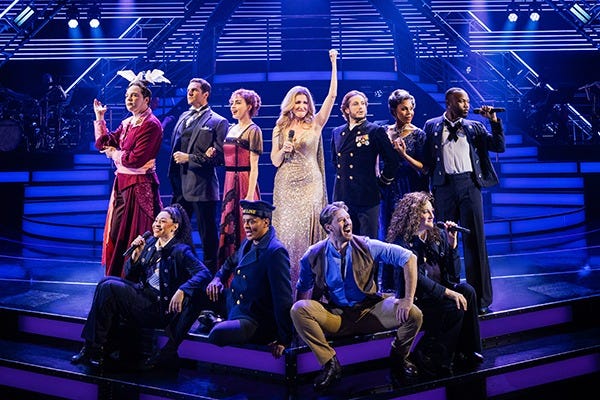
Every time I bought tickets, I paid a different price. Off-Broadway tickets were under $100, but I bought tickets when the show became a bit buzzy, so I paid quite a bit more than I might have a few months earlier. Beying late to the game can cost you. A few months later, I told a friend about it and she agreed she needed to see it, and we paid a slight premium again.
When the production opened on Broadway, the theater ran a promotion to celebrate the box office opening: the first 97 people on line would only pay $19.97 per ticket, to honor the year that Titanic was released in movie theaters (a winter I remember all too well; I saw it more than once, of course). I arrived hours early at the St. James Theatre and was amongst one of the first 40 or so people in line. I thought I was a superfan, until I got to talking to the women behind me. They had attended the off-Broadway production over 100 times! I couldn’t fathom how much they’d spent on tickets–let alone traveling to NYC every time as they both lived out of town.
Since then, I have won a lottery rush ticket (around $45) and bought tickets during a promo sale for around $65. All in all, I’m not breaking the bank on any of these tickets. But, I could have spent all of that collective ticket money on only one performance if I wasn’t gaming the system as a superfan. Or, I could have taken those small amounts and put it towards tickets to other shows I haven’t seen over and over. But superfandom is its own kind of devotion, and when practiced can get expensive. And yet, we gladly pay for it. Are we overpaying for these experiences, or are they a necessary investment in our fandoms?
It was rare, I was there
When I was younger, if you missed a concert that came through your city, or a live show, you missed it for good. Forever. I’ll consistently be mad at myself for not attending an NSYNC or Britney Spears concert circa 2000. But these days, since the dawn of YouTube and social media, if there’s a concert tour happening, chances are someone has posted footage somewhere. Taylor Swift’s Eras Tour was absolutely marked by a new wave of millions of fans who watched the shows entirely online through social media streams from fans who were there. This was a great thing: if you couldn’t go because the tickets were too expensive (they were), unavailable, or the cities were too far from you, every fan could at least watch the show.
We have much more access to live entertainment and happenings than we ever did before. Live events are often recorded, and we can watch streams from our devices; we can be anywhere and access an experience virtually. While this ubiquity democratizes experiences, it somehow doesn’t make up for the real thing. And the real experience of a thing feels like it’s becoming more and more scarce–and therefore, more special.
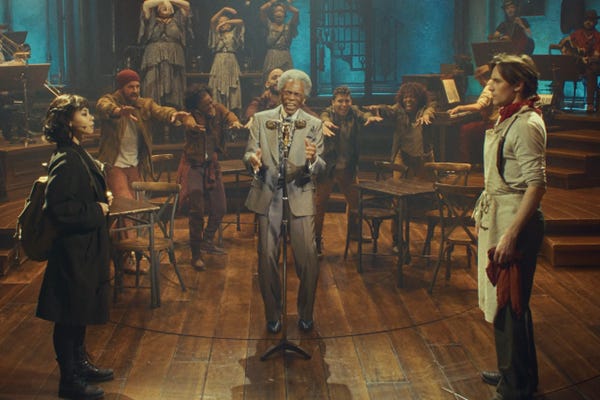
The live theater industry has long pushed back against pro-shot films: live capture of a theater production, like a Broadway show. Notable pro-shots in recent years include Hamilton, Waitress, Merrily We Roll Along, and the most recent, Hadestown. The pro-shot of the musical Six opens this month, and it remains to be seen how well it will do in movie theaters. But if we can rely on the data for the previously mentioned films, demand might be high. The filmed pro-shot from the West End production of Hadestown was a box office hit, and not only extended it’s limited U.S. release, it has surpassed Hamilton’s theatrical release revenue (though Hamilton streamed on Disney+ for several years first). And: it hasn’t even hit the movie theaters in Europe yet.
The Broadway and live theater industry has always claimed exclusivity as their biggest asset: you have to be in the theater to experience it, making it a premium experience to have. But the untapped market of folks who don’t live near New York City or even a regional theater is huge; those fans enjoy cast albums and snippets of both promotional and bootleg videos (affectionately called slime tutorials by fans in the know) of those productions. Theater producers have worried that pro-shots would cannibalize their IRL audiences, and ticket sales would dip.
But a fascinating thing happened instead: when Hamilton was released on Disney+, it helped build a more global audience for the live productions on Broadway and on tour. Ticket sales for the “real thing” soared. Not only that, a person who sees a pro-shot might develop a fandom that expands to merch sales, experiences like fandom cruises and conventions, and more content-adjacent activities in addition to saving up to go see it in person. In short, pro-shots are likely to help create superfans who might have had a passing interest otherwise; now they’re more willing to invest in the content and spend a lot to experience more of it.
You can find anything you want on the internet; it’s almost too easy to find some kind of footage of an experience you might be interested in. Heck, I even watch rider POV rollercoaster videos on YouTube from theme parks of coasters all over the world that I’ll never ride! But because we can find a rendering of an experience so easily, it makes the in-person experience that much more valuable, and rare.
Proof of humanity
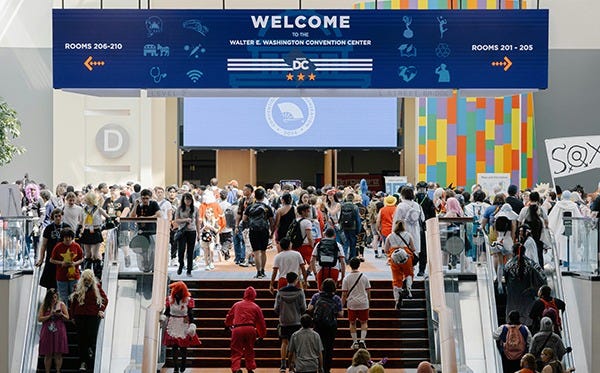
In our current culture, the combination of social media, algorithms, and AI have increased the value of a human-verified experience. And we put a premium price on that. So whether it’s paying upwards of $20 for a cinema ticket to watch a film with strangers even though it will be on a streamer in a few months, showing up at a theater more than twice to see a show, buying concert tickets to hear our favorite artists play, or attending conventions to commune with other fans and meet casts and creators, the live experience of fandom is an economic hurdle. But it’s the only way to have an experience with our fandom that cannot be faked. In a world where “pics or it didn’t happen” no longer applies because you can render any kind of photo you want with a few words in a prompt, fans have to go a bit further for an authentic experience.
The convention circuit has long been a subculture of fandom, where fans gather at themed cons where they can meet their favorite creators and celebrities, get autographs, and take pictures with their heroes (literal and figurative). From big cons like San Diego Comic-Con to smaller festivals like the Gilmore Girls-themed Small Town Convention in CT, fans pay a premium to travel to cities where they can meet their faves. Some plan visiting cons as a vacation like any other: they gather their friends or families and make a whole weekend out of it. Others might choose to attend a smaller festival closer to their hometown.
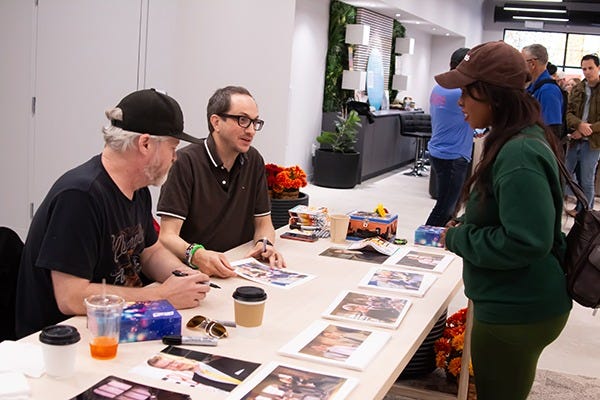
The economics are staggering. If you grab a friend to attend a convention and it’s out of town, for the two of you the cost of gas/flights/train tickets can already cost several hundred dollars. Add in a hotel for 2-3 nights and it can cost you upwards of $500 at minimum. And that’s before you’ve bought convention tickets which can cost anywhere from $50 to $100 just to attend, before any meet and greet add-ons which range from $20 to $30 to over $100 for a celebrity, depending on who they are.
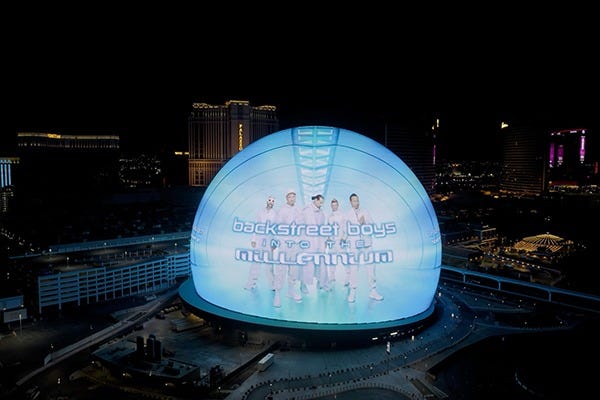
I have spent about $1,500 to $2,000 on a single fandom weekend in a small town, and more if I have to fly. I could spend a week in a European city, like Paris, for only a little more than that (provided I shop for the best deals). But I’ve happily spent a similar amount on a long weekend in Las Vegas to see the Backstreet Boys at the Sphere and New Kids on the Block at Dolby Live. I could see both bands in my home city (I have, several times), or watch videos of those exact concerts on social media, but the lived experience of being inside the incredible venues offered in Las Vegas–along with attending themed pop-up shops and activations around those shows, and meeting other fans–could not be matched without getting on a plane. In fact, seeing social media posts about those shows moved me to make a plan to go. It wasn’t enough to watch through a screen; I had to see it, and feel it, for myself.
Fans could watch their favorite show on a streamer, and chat with friends online. But nothing really compares to the experience of participating in fandom together, in real space and time. Ephemerality is fleeting, and that’s the exact reason we crave it. But we also crave an imperfect, uniquely human experience to make sure we know it’s real.
The R&B/pop singer JoJo spoke on the pressure for live music to be perfect in a recent Instagram reel. JoJo became famous for her singles “Leave (Get Out)” and “Too Little Too Late” in the early 2000s, and since then has consistently pursued singing and acting. Her voice is truly awe-inspiring (and I’ve seen her sing live), even landing her on a Broadway stage in Moulin Rouge! The Musical. In her reel, JoJo laments that even live musicians now often use technology to fake perfection on stage at concerts. While many fans know backing tracks and lip synching have long been a staple of live performance, one of the best things about hearing someone perform live is their inherent humanness. But because more and more musicians use tech to their advantage, fans have come to expect perfection. In the video JoJo says, “A missed note, a human moment, a run that doesn’t quite land, all those things start to feel and sound like a failure when it used to just feel live.”
Have you ever been at a concert where the musician forgets the words to their own song? Or coughs in the middle of a verse? These moments are deeply human, and reason enough to buy a ticket for any show, because you never know what might happen. I love live musicals because of the humanity involved: sometimes someone drops a prop or flubs a line, or an understudy goes on at the last minute which could introduce you to an entirely new artist.
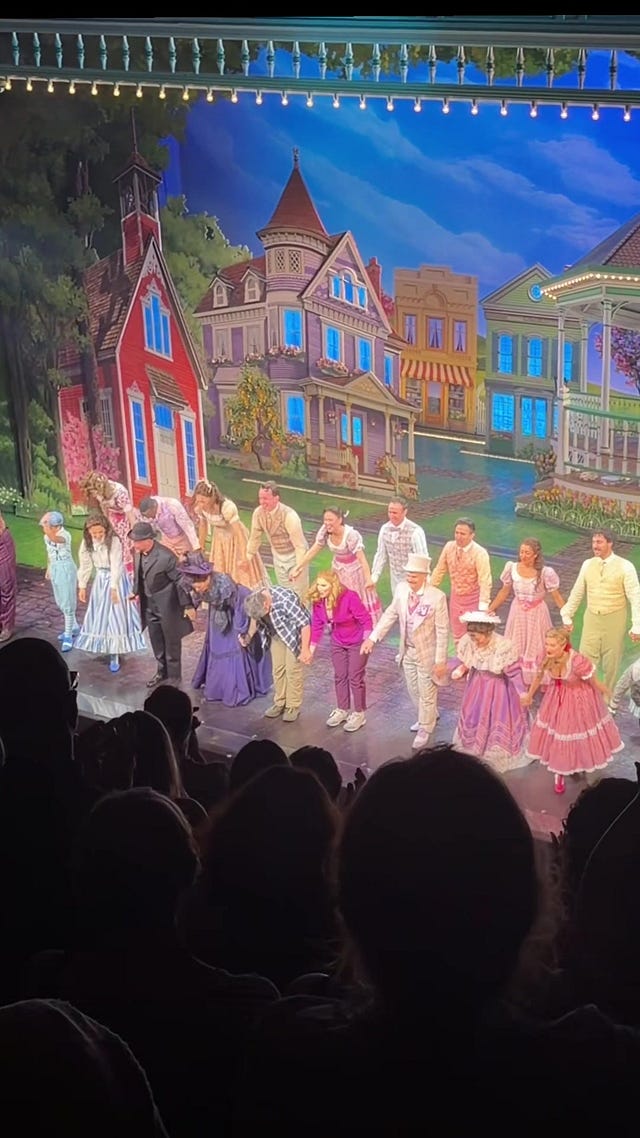
Recently at a performance of Schmigadoon! on Broadway, actress Ana Gasteyer took a bit of a fall during a scene and recovered pretty quickly. But during the curtain call, the entire cast made a big show of falling down, one by one, after they took their bows.
 Tiktok failed to load.
Enable 3rd party cookies or use another browser
Even though these actors perform eight shows a week, and they’re all one of a kind, that show was uniquely special. And if you were one of those lucky audience members, you got a special treat of human comeradery when things go wrong on stage.
Real fan? Or getting scammed?
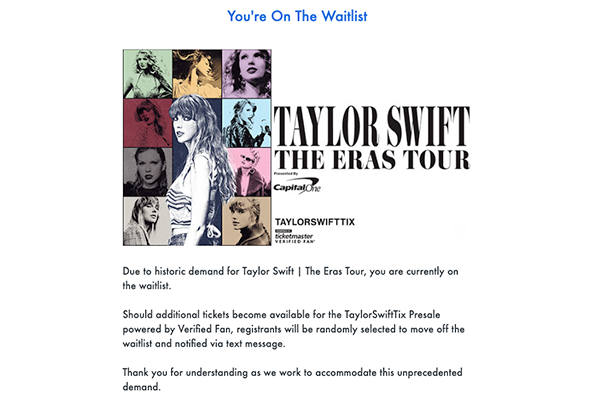
It is not news to any superfan that concert tickets are at an all-time premium price. When Taylor Swift was promoting her reputation album with the Reputation Stadium Tour in 2017, I was absolutely floored by her methods to make sure tickets got into the hands of real fans. Through Ticketmaster’s then-new Verified Fan system, fans had to sign in and complete certain challenges that would get them a better place in line when it came time to buy tickets.
While the system garnered controversy, I can say firsthand that it worked incredibly well (and with the benefit of hindsight, looking at how impossible it was for fans to afford Eras Tour tickets, it seems almost charming). Fans would sign into their Ticketmaster account and stream her music videos, or order merch to boost their account and place in line. I ended up with tickets to the show, for a very reasonable price (just over $100) in incredible lower bowl seats at Met Life Stadium in East Rutherford, NJ. While I had to “work” for my place in line by doing anything a superfan would already do, like stream her videos, my ticket-buying process was incredibly smooth.
It was not the same for Eras. While I had secured tickets for Swift’s canceled Lover Fest shows that should have happened in 2020, I was told that holding those tickets granted me a better chance to receive a code to buy tickets for Eras. I did receive a code to buy, unlike all of my friends. But when it came time to buy, I was let into the site just to see all the tickets gone before I could snag any. And the prices were outrageous. Within minutes, the fandom erupted: the site shut down for hours, and when it was back up, all venues sold out during the presale in seconds. The same day, tickets popped up on resell sites for outrageous amounts of money. This felt like a betrayal: my superfandom got me easy tickets to two previous tours; what was going on?
A few months later, Ticketmaster contacted me with an offer: I could pick a price point, and they would sell me tickets at that price if available. In the weirdest way I’ve ever done business with the site, I was granted tickets. They were more expensive than I ever imagined I would pay. Friends of mine were left with the resale market, spending upwards of $600 per ticket, so I considered myself lucky. Still, I knew the whole thing felt like a scam, preying on people who just really love the music.
The ordeal was absolute chaos and resulted in many lawsuits, as well as a lot of discourse over how fans secure tickets to any live shows. Thousands of Swifties spent tons of money on marked-up tickets to see the Eras Tour, precisely because they knew it was a one in a lifetime experience. But unfortunately, the ordeal set a new standard: ticketing systems regularly use dynamic pricing, allow scalping, increase fees and allow tickets to be sold at astronomical markup to take advantage of fans who really want to be in the room. Just this week, StubHub reported $2.6 million in lobbying expenses in California, where a bill was introduced that would curb resale pricing at 10% over face value. StubHub is fighting the bill, and customers might have to continue to pay the price–literally. And maybe they will, because the live experience is precious to a superfan.
When devotion pays off
Superfandom doesn’t always have to be super expensive. When it comes to my Broadway habit of seeing a show a minimum of twice, sometimes three to five times, my superfandom actually makes me a more thrifty spender. Because I was a superfan, I noticed that Titaníque would be selling those first tickets at under $20 apiece. I’m following the show and its creators on Instagram, and I pay attention to industry news and announcements, which gave me a leg up on promo news. All I had to do was show up and hope for the best. It paid off: my friends and I sat in the center mezzanine for the show’s first preview. And not only did we get to experience this new run with so many other superfans, but we also got an audience gift. It was an unforgettable night: the crowd was raucous, the set had been updated for the Broadway stage, the cast was electric–and we were the first to see it.
Your fandom might also work to help more fans secure access. A resale ticketing platform I love is Theatr, an app developed by fans where folks can offload their tickets to shows or pick up last-minute deals from resellers. Theater tickets are always final sale, and that’s a risk for a buyer, so the app is a game-changer for superfans. The app does not allow sellers to list tickets for higher than face value, so if someone in your party gets sick or you get pulled into a late work meeting, you can sell your ticket pretty fast to a waiting fan who wants your seat at the price you paid. And because of that competitive spirit, superfans have alerts set for shows and price points, look at the app often, and are always ready.
Theater superfans also utilize rush tickets (day-of ticket sales for a very low price) and lotteries. Superfandom is key here: you cannot be a casual fan if you want to find the best deal. You have to be uniquely engaged. Superfans know exactly what shows have in-person or digital rush, are overtly familiar with the policies, pricing, and probability of getting a ticket depending on the show. The first show to ever offer in-person rush was the 1996 smash hit Rent, a show about poor twenty-somethings struggling to pay, well, rent. It made sense that this show would offer a very low ticket price to the clientele who connected with the material the most–provided they showed up, got there early, and waited. It’s not uncommon for fans to appear outside box offices at 6 a.m. to guarantee their ticket.
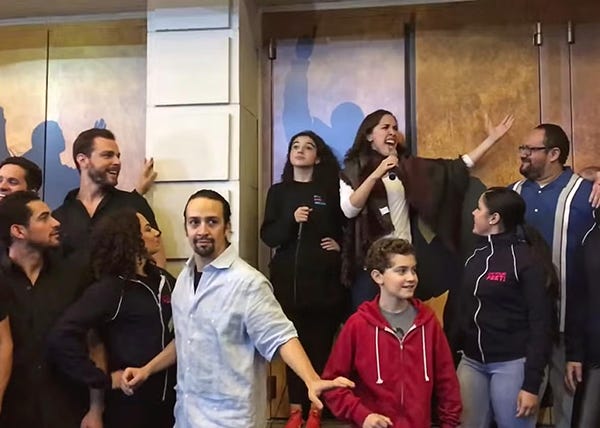
In 2015, Lin-Manuel Miranda, star and creator of Hamilton, introduced Ham4Ham, a $10 ticket lottery for the first row of every show (as in, a “Hamilton” for a Hamilton ticket). When demand was overwhelming in person at the box office, he began enlisting cast and friends to give quick free shows on the steps of the Richard Rodgers Theater. If you showed up for the lottery, you probably wouldn’t win. But you would get a free comedic, musical, or touching performance from the Hamilton cast or friends of the show. Later, the franchise would build an app for digital lottery entries for all of the Hamilton productions all over the world, and the app includes games and other activities that boost your chances of winning. You have to be a superfan to get a deal. But superfans were also instrumental in the phenomenon of the Ham4Ham live shows. Just by being dedicated enough and wanting that cheap ticket. This one might be my favorite:
I believe we should invest in the experiences we want to have, because they are precious and unmatched. And whether you spend a lot or a tiny bit to have those experiences is up to the individual. But as long as there are live experiences to be had, the economics of superfandom will always play a part.
Want more? Our Discord is where you’ll find everything you need to know about the Remarkist ecosystem including Folkic, our community app and Masslore, our fandom knowledge database! And be sure to hit that subscribe button so you never miss a thing at Rmrk*st Mag!

Such a thoughtful and well researched piece, as always! I love this discussion about the integrated experience, and virtual vs. in-person actually not being at odds with each other, but maybe complimentary to each other. As someone deep in the Gilmore Girls fandom, I think about this a lot. Conventions can get pricey, and sometimes the interactions can feel transactional, depending on the spirit of the event and the people in attendance.
Also, am currently reading American Fantasy by Emma Straub and I think y’all would really like it. It’s about a middle aged woman who reluctantly goes on a cruise with a fictional, popular boy band from years ago - think NKOTB or Backstreet Boys, depending on your micro-generation. It explores some of the concepts you’re discussing here and it’s been interesting so far!