



In the spring of 2019, I stumbled upon a series on Netflix that hooked me from the first episode and captivated me for a fairly short, intense binge. The show was The Society, a teen drama about a group of high schoolers who go on a field trip, and upon returning everyone in their town has completely vanished. Scared and abandoned, the teens come together to form a new society, and natural leaders and villains emerge while they pool resources and make rules for how they’ll continue living in a new reality. The show pulled me in immediately, forced me to confront questions about what I might do in that situation, gave me quite a few jump scares, and ultimately ended on an incredible cliffhanger. I couldn’t wait for a second season.
I asked friends about it. “Surely, you’ve watched The Society?” Nobody I knew had. More than that, there wasn’t any conversation in my social media feeds or online in any obvious ways. I had had an intense experience, but nobody to share it with. It was genuinely weird, and lonely.
The show was renewed for a second season, but the global pandemic got in the way and it was never filmed. Until recently, I didn’t even know that it was respected or even remembered by others; the recent consensus amongst those who did watch it is that it was a masterful show that ended too soon. So at least now, I can rest easy knowing I wasn’t totally alone in my fandom, and it’s validating to learn it had critical acclaim and enthusiasts despite getting canceled.
When we experience great content, we feel a natural inclination to share it with others. One of my favorite things is when I watch something by myself that blows my mind, then ask a friend if they’ve seen it, and feel that moment of connection when they respond, “YES! I LOVED it! We MUST discuss!” Fans have an inherent urge to debrief and/or celebrate something they’ve discovered. So what do we do when we experience love for something alone? What happens to a fan without a fandom?
Why community around fandom works
Validation is important to the human condition. We want to feel understood, and known, by others. In the very center of Maslow’s Hierarchy of Needs is Love and Belonging, and community around fandom provides a sense of belonging that can also lead to deep friendships and love. We all know how good it feels to be part of something, whether it’s enjoying music with other fans at a concert, going to a book signing and author chat, or attending a fandom convention. It is validating to know that what we choose to engage with is important not only to us, but to others.
There’s also pride in loving something that others love too. When you become a fan of something, and see others are fans too, it feels like a marker of having good taste. When we recommend a book, movie, music group to a friend who in turn loves it, we can feel pride in either knowing what’s “good” or knowing our friend well enough to make a recommendation, or both. For those who love celebrating content, showing others a great time in that celebration is essential.
When community fails to emerge
Do you remember the last time you made a recommendation and it was rejected? Maybe you said to a friend, “I loved this movie–did you see it?” and that friend says “Yeah, I saw it, I didn’t love it” and you feel crushed? A disagreement over liking something can feel like disconnection. While fans within a fandom might debate facets of story or character, the one thing those fans absolutely have in common is the agreement that the content is worth engaging with. Within that fandom, lots of different personalities will emerge, but everyone is essentially on the same page.
It’s worth breaking down why some might not follow your fandom, and examine why that feels like a kind of rejection:
A Genuinely Uninterested person might hear your passion, note it, and say “nope, I don’t think I’d like it” and move on without any drama. While the rejection is not at all personal, this can be deeply frustrating. We are all guilty of this; a friend of mine is often telling me I’ve really missed out not watching Game of Thrones, but I simply am not interested.
A Perpetual Promiser heeded your recommendation and is always meaning to get to it. They heard you, they noted your passion, but something is always getting in the way of them following through. While it’s not usually personal, this rejection feels hollow: you might be so eager to hear what they think of the content, because you’re anticipating a celebratory discussion with them. And if they seem too busy, it doesn’t feel dissimilar to a friend blowing you off.
The Partial Convert has taken your recommendation, watched a couple of episodes, and simply stopped engaging. It’s agonizing because you know deep down they don’t share the same enthusiasm, because if they did they would have completed it. Furthermore, you understand that they didn’t feel the same compulsion to love it as you did.
An Active Resister makes you feel like you’re overselling the content you ride or die for, and that can feel uncomfortable. It also defeats the purpose of the recommendation in the first place. Maybe they would have loved the content on their own if you weren’t pushing it so hard all the time. This paradox is often evident in pop culture; I remember in my college days seeing absolutely everyone on the subway reading The Da Vinci Code. If everyone was reading it, I decided it couldn’t possibly be good, and actively resisted it for years. When I finally did read the book, I had a great time, but I remember flat out resisting it so much. When content has to “live up to the hype,” it might fail with a would-be fan regardless of the predication that they might like it otherwise.
You might have recommended content to The Wrong Audience, which is again a form of rejection in and of itself. Not considering your pitch wouldn’t have worked regardless of how passionate it is feels like a failure of understanding who the content is for, and challenges those relationships. I often find this with content that has a strong point of view on a sociological or political issue; recommending content that makes an overt argument can be polarizing, and isn’t for everyone.
Finally, a Delayed Convert shows up late to a fandom, or the content you recommended. Fandoms tend to treat a Delayed Convert in different ways; they either embrace them outright or impose a hierarchy of who got there first, determining “real fans” from “bandwagoners” the way a band’s fandom might treat others when the band breaks out from indie to commercial popularity. In an interpersonal relationship, you might not have the same passion you did three years ago for a movie you watched then, so the delay impacts how you can celebrate it with a new fan.
The unexpected joy of solo evangelism
We talk a lot about fandom communities and how they can be inclusive or exclusive, healthy or toxic. When fan communities primarily meet online, it can feel like finding one’s tribe for a while. But without a real world element there is a limit to those interactions. Consistently experiencing fandom through a screen can feel lonely, unless you can find meetups and fan fests, or some way to actually meet one another. In the same way, solo fandom can be isolating. But there are some ways it can be fulfilling.
There is something to be said for keeping something for oneself and not sharing it with others, whether that’s because they’re uninterested or you simply want to keep it private. There is one TV show that I am always hesitant to recommend, and it’s because I love it intensely in a way that feels too personal. I once recommended it to a very close friend, and she gave it a lukewarm review. It crushed me; I realized I couldn’t handle any criticism of the show at all, because a part of me needed it to stay as perfect in my mind as it did during my first viewing. I devoured it when it first released in April of 2020, in a time that was extremely isolating and scary, and the show was a lifeline of joy for me.
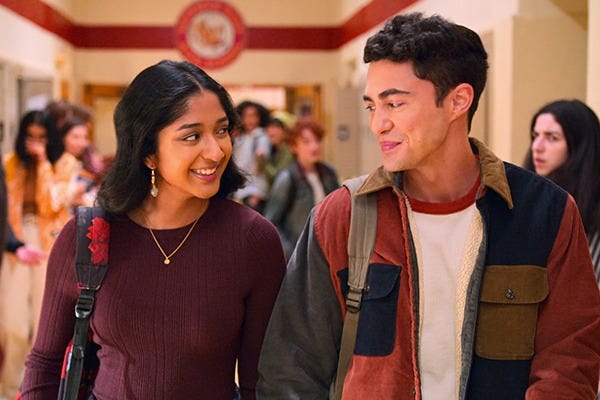
In an admittedly vulnerable move, I will divulge here that the show is Mindy Kaling’s Netflix series, Never Have I Ever. I have watched the first season, which I deem a perfect season of television, probably more than 30 times, even just to listen to in the background of my waking (or sleeping) hours. I can’t even fathom watching it in the same room as others, much less recommending it to friends whose opinions I care about. (Please go watch it if you haven’t; just don’t tell me your thoughts unless they’re extremely positive!)
When you love something alone but publicly, it can be taxing. You might find yourself in a constant state of defense. But you can choose not to let criticism get in the way of building your own relationship with something you love.
On their podcast, Las Culturistas, hosts Matt Rogers and Bowen Yang always ask their guests one essential question: “What was the culture that made you say that culture was for you?” It’s a revealing question that asks guests to remember their earliest brushes with content that spoke to them. Our early, private fandoms often inform how we interact with content in general.
We were all young once, consuming content by ourselves, often alone, until something resonated with us. The things that captured our attention when we were young are foundational texts that shape our perceptions. These formative experiences set the stage for our future fandoms and participation in fandom communities.
But a private fandom in adulthood helps shape who we are as well. Without the noise of criticism or even blind excitement, we can deeply get to know what we love. When a piece of content is entirely yours, it can be separated from any sense of communal history with an established fandom, or influence from others.

Being alone in your fandom also means you never have to defend it. Any Taylor Swift fan has been through something like this: when the artist says or does something that nonfans don’t understand, or appears “overexposed” in pop culture, there’s a lot of vocal criticism in the ether. Fans of hers not only feel compelled to explain, but they are often asked to defend their fandom in those moments, which is both exhausting and feels unfair. After all, being a fan doesn’t mean standing for everything a piece of art says or everything an artist believes. But if you love something privately, you never have to answer for it.
When you finally find a community
Community exists for everything, somewhere. Chances are you’ll eventually find a Discord server, a Substack article, a social media account, a podcast, or a watch party group at some point. There is a particular joy in finding another fan of something you love and who also felt alone in loving. Recognizing a fan of an obscure show or band builds an immediate bond; you both carried the same private enthusiasm and built strong relationships to the content on your own.
What are some books, movies, or TV shows that you love and are struggling to find other fans like you? Put them in the comments! Not only do we want to know what we might be missing out on, but let’s help you crowdsource some fandom communities!
Want more? Our Discord is where you’ll find everything you need to know about our ecosystem at Remarkist! Don’t forget to follow us on Instagram, tumblr, and Spotify for more insights on fandom—and hit that subscribe button so you never miss a thing at rmrk*st Mag!
