



We’ve all been in this situation: A friend asked my group chat if any of us were watching the new season of The Traitors. These particular gal pals tend to be immediately chatty over text, so I typed as quickly as I could: “I am but I’m way behind so no spoilers!!!” They let me talk first so they could gauge how much I know, and what was “safe” to discuss. And once they protected my experience, they implored me to watch soon so we could all talk about the show together.
Everyone has a spoiler story. It’s so relatable that there’s an episode of Friends where Joey and Rachel switch favorite books: Rachel reads The Shining and Joey picks up Little Women. By accident, Joey spoils the end of the Stephen King thriller for Rachel, and so she screams (spoiler alert here!) that Beth dies in Little Women. The result is a hilarious argument, one that most of us have found ourselves in with a friend at least once.
Spoilers are generally upsetting to fans who want to enjoy the content and let it unfold without interference. So when it comes to communities of fandoms, enthusiasts tend to protect new fans from spoilers and generally want to allow everyone to experience content free from influence. So how do fans protect each other, and themselves, when it comes to spoilers?
Why spoilers–or lack thereof–matter
One of the most fun things about storytelling is the element of surprise. When we watch or read something for the first time, the experience is singular: we can only experience a story for the first time once, so that experience is special.
In a thriller or suspense story, a twist works if the audience doesn’t see it coming, or if they are savvy and figure it out, they delight in it anyway. The payoff is directly related to how the story sets it up. On a rewatch, remembering your first experience is part of the fun. Now, you can look for clues that you might not have seen before, like a scavenger hunt for Easter eggs. Once I knew the end of The Sixth Sense, it was a new, creepy experience to rewatch it knowing the ending. I saw all the clues I missed on the first watch.
The lack of spoilers can literally set up a story for massive success. When I watched the pilot of This Is Us when it premiered, I, like millions of other viewers, nearly lost my mind at the surprise ending. I had been excited to watch the show, thinking I knew what it was about. But the shocking ending set up a structure for the entire series that was a complete surprise–and delight. It made me an instant mega-fan.
More than my own glee at such a fantastic watch experience, I was equally enamored by how NBC and the producers pulled it off. Given all of the promotion and advertising they had done for months, it was truly inspiring that they managed to hide the biggest part of the show–and still dominate the ratings. A massive 10 million viewers tuned in to watch the pilot, and I remember the next day vividly: everyone, it seemed, was talking about it around water coolers and in pop culture news. The shared experience was powerful and uniting. And if you hadn’t watched, nobody wanted to ruin the surprise for anyone who hadn’t experienced it yet. We patiently waited for friends to catch up. The cast eventually shared their own related experiences of the twist while reading the pilot for the first time, sharing how even they didn’t see the ending coming and how their characters would intertwine.
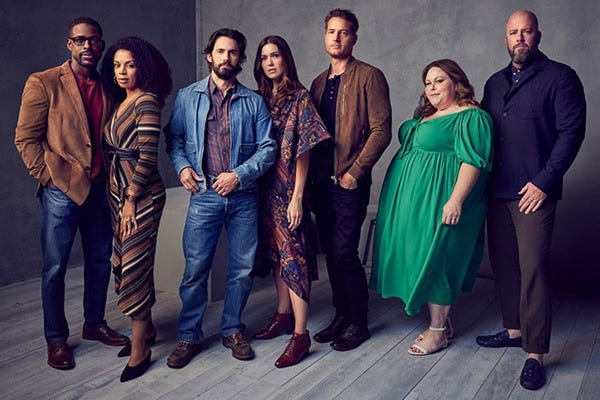
The This Is Us premiere and its success gained the series a significant fandom even before the second episode aired. Fans were continuously loyal to the show, watching diligently week to week through the last season. Because the show protected the viewers from a major aspect of the structure of the show, fans felt committed to the series based on that singular, initial experience. And the reason I’m not explaining it here is because on the off chance that someone reading hasn’t watched the series yet, I simply can’t ruin it for them. (It really is that good.)
The origins of spoiler etiquette
It seems that many, if not all, fandom customs always go back to Star Trek. But before we get there, let’s talk about the word “spoiler.” A pillager might count his/her spoils from a raid; think pirates acquiring stolen riches and gold. Therefore, a spoiler steals a competitor’s chances of finding something for themselves. One of the earliest recorded uses of the word “spoiler” as we know it in the context of fandom in print was in a 1971 piece in the National Lampoon: writer Doug Kenney’s piece entitled “Spoilers” gave away the twist endings of very famous books and films with a sarcastic bent, as you might expect from the humorous publication. “Spoilers!”, he wrote, “What are they? Simply the trick ending to every mystery novel and movie you’re ever liable to see. Saves time and money!” This was a comedy bit, but the satire is evident: reading the ending to the movie instead of seeing it is robbing you of the experience.
Science fiction author Spider Robinson is credited with using the phrase “spoiler warning” when reviewing books for the magazine Destinies. If he was going to give away the ending of a particular novel, he let readers know. And by the late 1970s, the phrase made its way to early electronic communications. The MIT Artificial Intelligence Laboratory hosted a “SF Lovers” mailing list, and during discussions of the first Star Trek movie, the moderator Roger Duffy put spoiler warnings on his compilations of fan discussions. And by the early 1980s, Usenet groups–the earliest fan discussion forums online–are where the term “spoiler alert” first appeared. Its use was in reference to The Wrath of Khan, the second Star Trek movie, of course. And from there, spoiler etiquette online was born. In short, fans have been using the term “spoiler alert” for over forty years, and the word itself has evolved in context: You avoid spoilers so as to not get spoiled.
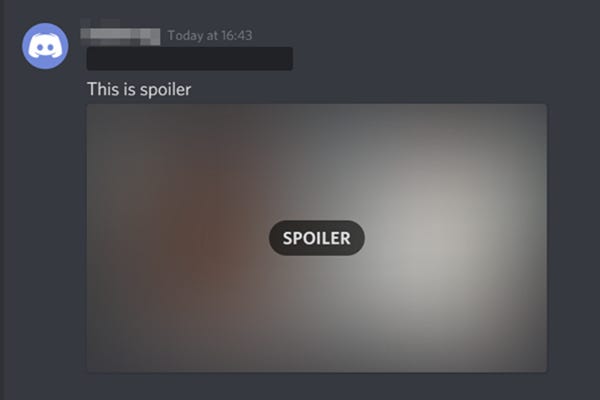
Spoiler etiquette, therefore, was set by the leading voices in fandom: authors, moderators, and general enthusiasts who corralled fan discussion. And fans followed suit, creating a social decorum around protecting fellow enthusiasts and making sure they could be included in discussions without sacrificing their experience of the story. Technology allowed for online discussions; it could also be programmed to help enforce courtesy with regards to spoilers. On Usenet, folks would use “spoiler space,” a method of creating a block of empty lines to push the content down to the next lines, and creating an actual distance between the spoiler and what preceded it. Today, Discord, Reddit, and some social media platforms allow users to use spoiler format, a command that obscures text from folks that don’t want to accidentally see it. And fans can move spoiler-full discussions to different threads and tag them accordingly so readers know what they’re about to access.
Good spoiler etiquette in modern fandom
Aside from using spoiler commands, tagged threads, and announcing “SPOILER ALERT!” in posts and articles, modern fans take spoiler etiquette seriously.
First, they respect the window, meaning, the window of time we give folks to consume the content in the zeitgeist. Streaming platforms have condensed watch times in that someone can binge a full season of a new TV show within a few hours of it being available. In the past we had to wait for network television shows to air week to week, so spoilers were less of a danger; giving folks a day or two to watch a show they might have taped on their VCR or DVR wasn’t a tough ask. The window is a reasonable amount of time that someone might consume a new show that everyone seems to be talking about, and it varies with content. A whole season versus one episode of a show dropping week to week (ahem, like The Traitors) might have different unspoken windows.
I listen to a lot of pop culture commentary podcasts, shows that briefly discuss the pop culture of the moment either day to day or week to week. When it comes to TV shows, whether scripted or reality or competition, these podcast hosts are very protective of the fans’ experience. I’ve often heard a host dance around a plot line of a book, movie or show in order to respect the fan window but also stay relevant to the current cultural conversation while the content is being discussed more broadly across the media spectrum. In other words, they don’t want to be late to a wider cultural momentum that might gain them listens, but they also don’t want to upset fans. Especially if they were able to preview content as members of the media and have had more time to not only consume it but also digest it enough to share their thoughts.
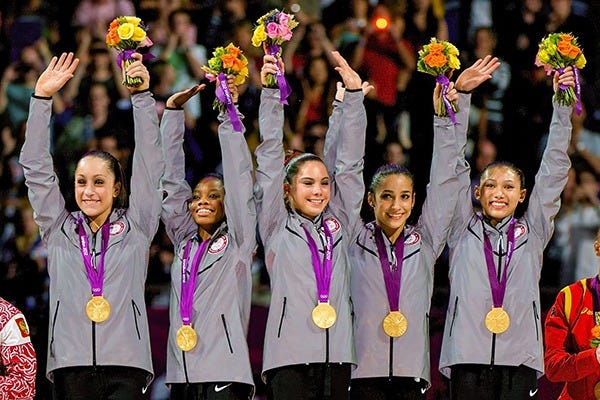
In one particularly upsetting case, I remember being spoiled on the outcome of the 2012 Women’s Gymnastics Team Final at the Olympic Games because of time difference and social media. During those Games, NBC partnered with Twitter for coverage of the Games, which probably made sense at the time: social media networks were changing the way fans viewed and discussed content and events. But the issue they didn’t account for was time difference combined with a lot of voices that could break through the cultural conversation and cannibalize their own delayed, primetime broadcast. It was a disaster: the U.S. Women’s Gymnastics team’s gold medal win–the first since the Magnificent Seven won the gold in Atlanta in 1996–was tweeted in the middle of the day. Fans like me were literally bursting with anticipation to watch at home that night, same as we did as kids in 1996, and the spoiled result I happened to see while at my desk at work was devastating. Knowing the outcome without seeing the competition itself not only robbed me of the ending; it stole the very thing sports fans live for: the emotional ups and downs of a live competition.
That wasn’t all: American swimmer Ryan Lochte beat the most decorated American swimmer Michael Phelps in the 400m individual medley, an astounding moment in sports history that could have been exciting to watch had everyone gotten to see it together. The network was criticized for its own spoiling, as they aired photos and mentions of medal wins before their own taped coverage could air in primetime in the U.S. Swimmer Missy Franklin’s backstroke gold medal was spoiled in a commercial promotion for the Today show, and fans were outraged. The lesson learned was: fans like to view competitions in real time, and more care should be taken in considering where and when your fans are engaging with the experience.
Even vague comments in discussion can be spoilers. I myself have been annoyed at this kind of scenario: when a friend you know is watching already and says something like “Wow, that ending!” Now, you’re going in with an expectation. For this reason, I know some people who don’t even like watching movie trailers or “Next on” previews for episodic television.
At this moment, I am hearing great things about Nathan Fielder’s documentary, You Can See Everything, about Elizabeth Holmes. While tickets in movie theaters are sold out almost everywhere near me, so it might be a while before I can view it, I have noticed that folks who have seen it are protective about the experience. I’ve seen comments like “Go, just go” without much elaboration, and podcasters are being very up front with their listeners about what they will discuss and when as to shield them from spoilers. In modern fandom, gatekeepers tend to take great care in protecting fans from spoilers, and fans take up the charge as well.
The statute of limitations
When is it ok to spoil a show or movie? I have my own barometer, as at the start of this piece I not only spoiled a plot point of Little Women (published in 1868) but the ending of a Friends episode that originally aired in 1997. For me, it’s probably ok to spoil a story written over 150 years ago, and maybe even one written 30 years ago.
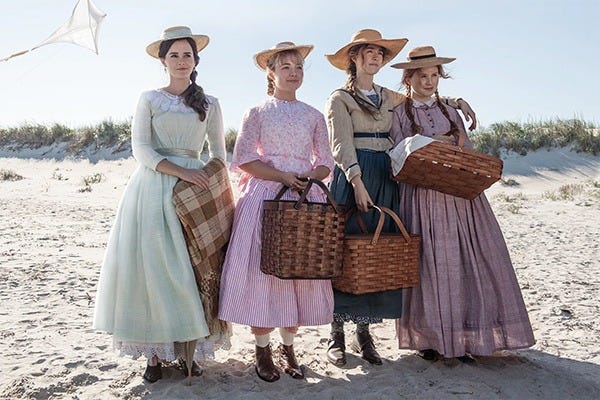
But I couldn’t help but notice that this writer at Entertainment Weekly was sensitive to spoilers for readers of this 2019 piece who were excited about the trailer drop for Greta Gerwig’s adaptation of the classic story. Even though lovers of literature and earlier adaptations (like the 1994 version starring my generational heroes, Winona Ryder, Kirsten Dunst, and Claire Danes) were excited about the new movie, many were coming to the story for the first time and spoiler alerts are always courteous to new fans, even in the next millennium.
I believe the statute of limitations is subjective, especially as streaming platforms make it possible to watch shows from decades ago that are new to us. But that’s all the more reason to abide by general spoiler etiquette, even if you think enough time has passed that talking about a major plot point of a TV show shouldn’t upset anyone. Stories are meant to be consumed in perpetuity; it’s why we write them down, film them, recite them. So while we might consume them over and over as a ritual, there will always be a new fan lurking, unspoiled, ready to appreciate a good narrative.
Want more? Our Discord is where you’ll find everything you need to know about the Remarkist ecosystem including Folkic, our community app and Masslore, our fandom knowledge database! And be sure to hit that subscribe button so you never miss a thing at Rmrk*st Mag!
