




On a rainy Saturday where I had to get one huge household chore done, I put on an eight-episode podcast and got to work. Before long, I was engrossed in the story: a fictional true crime mystery about a group of old friends, a chilling letter, and a decades-old cold case regarding a missing girl. The podcast is The Red Weather, written, produced, and narrated by former Boy Meets World actor (and current Pod Meets World co-host) Rider Strong. I love true crime podcasts (who doesn’t?!) but fiction podcasts never appealed to me. I like to read fiction, and listen to non-fiction in terms of audio entertainment. But because of my affection for Strong’s work, I had to give this one a listen.
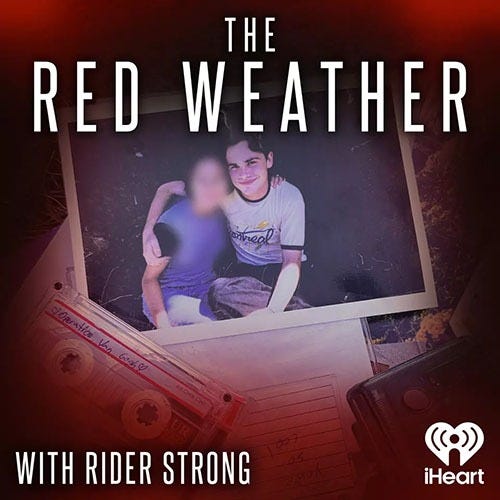
What I didn’t expect was Strong’s inclusion of himself, as a character, in the narrative. The story is fiction, but Rider Strong is a very real person, of course. And if you listen to his Boy Meets World episode recap podcast, or remember stories you read about him in teen magazines as a kid (*raises hand*) you know that some of the details of this narrative–like the location and topography around his family’s home, his own career as a child actor, even the kinds of friends he had as a kid–feel familiar. What Strong managed to do was blend fact and fiction in the most innovative way, where I could relate to the story having known some things about his life he’s talked about in the past. But making himself a character, even teasing the audience that Rider Strong the character might be an unreliable narrator, is genius.
Strong is not the first author to do this successfully. And I would argue that reality shows play with this concept consistently: the people we see on TV are real, but there’s some element of scripted augmentation. The narrative blends fact and fiction. How does writing oneself into the narrative affect an audience, and why does it work?
Character or real person?
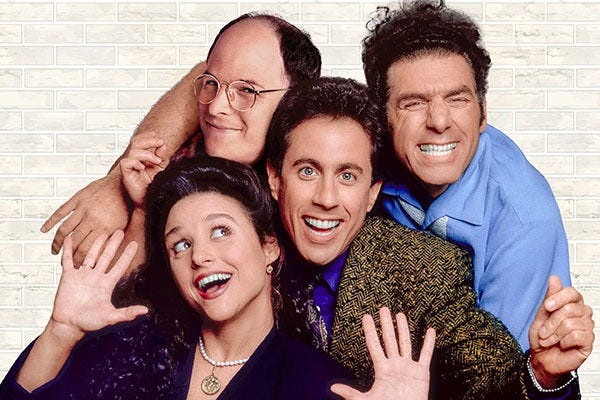
Blurring the line between character and real person is a fun way for insiders to hook an audience. We’ve seen this time and time again with stand-up comedians who create sitcoms out of their on-stage personas, often using their real names. The quintessential example is Jerry Seinfeld. The sitcom Seinfeld proclaimed it was “a show about nothing,” revealed during an episode where Jerry and George conceive of a TV show they want to write. But really, the show was based on Jerry Seinfeld’s stand-up comedy, clips of which bookended the episodes. The character was also an Upper West Side New Yorker with a few close friends, based on real-life friends of Jerry’s (like comedy writer Carol Leifer, who inspired the character of Elaine). The situations play out the way a comic might describe them on stage: humorous and a bit absurd, like what happens when the person ahead of you snags the last babka at the best bakery in town. As a young viewer, I assumed this was a heightened version of Jerry Seinfeld’s actual life, and it introduced me to his comedy.
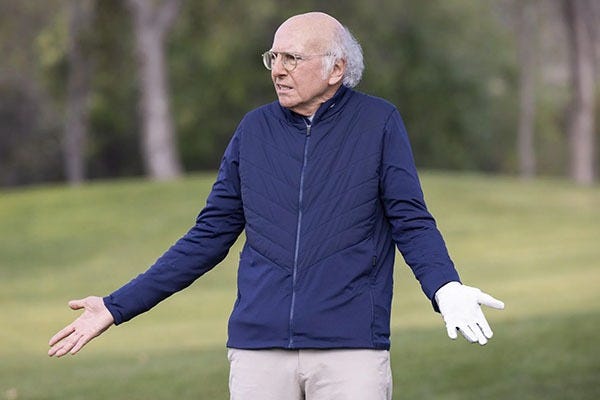
Seinfeld co-creator Larry David also uses his real name and industry status in his show, Curb Your Enthusiasm, a massive hit that has folks coming back again and again. Based on a one-hour mockumentary from 1999, Curb highlights the minutiae of everyday life and is largely improvised around an outline. But the character of Larry David, much like real-life David, is a well-known co-creator of Seinfeld. Just as Jerry Seinfeld’s comedy might have attracted an audience to the sitcom to see a version of the comic, Larry David’s influence on Seinfeld might have brought viewers to Curb to get a comedic view of the impact of his work.
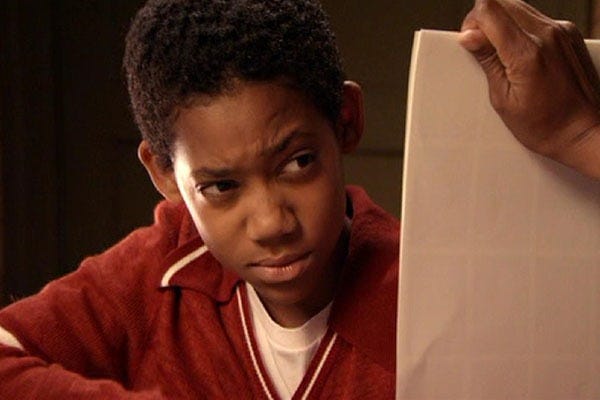
Seinfeld and Curb focus on the absurd and mundane, portraying heavily heightened experiences of those comedians’ lives. But other comics have taken a different approach to sharing their lives on screen. Everybody Hates Chris is a sitcom in which comedian Chris Rock narrates a semi-autobiographical story of his childhood in voiceover as we watch a young Chris navigate growing up in Bedford-Stuyvesant, Brooklyn in the 1980s. The format feels a lot like The Wonder Years, but with a heavily comedic overtone.
A more recent version of this kind of storytelling is Overcompensating, a comedy conceived of and written by comedian Benito Skinner. Skinner wrote the comedy series based on his own experience in college of coming out as gay. The series closely follows his real life making a best friend in a female classmate, who becomes the first person he comes out to. Real moments from their friendship play out on screen between Benito and his co-star Wally Baram as best friends Benny and Carmen: stealing a campus golf cart, an awkward makeout session, and telling her he is gay in a Domino’s parking lot. These are all moments he says actually happened, which makes them even more meaningful in the series.
Alter egos and inspired by real life
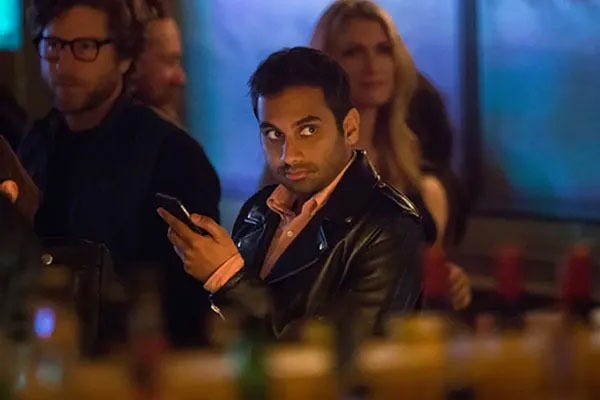
Comedian Aziz Ansari is known for his role on Parks & Recreation, but his stand-up has always featured stories about his immigrant family and life growing up as a first-generation American. He drew on these experiences to write and star in Master of None, a comedy-drama that follows Dev Shah, an actor living in New York City who dates, eats great food around town, and hangs with friends as they navigate life together. The characters are based on–and in some cases played by–Ansari’s own friends, and his parents are played by his real life parents. For fans of Ansari, seeing his parents on screen is a real treat, as they have gotten to know them through his stand-up over the years. So while the situations and characters are fictional, the show feels very closely connected to Ansari’s own life.
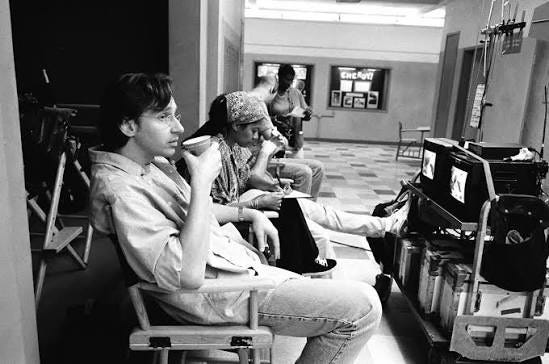
Writer, actor, and director Paul Feig created the show Freaks & Geeks based on his own nerdy childhood growing up in suburban Michigan. He admits that while there is a bit of himself in every character, Sam Weir and his friends were based on his own painful and anxious experiences with his high school friends. He had always wanted an older sister, so he created the perfect older sister in Lindsay Weir, played by a young Linda Cardellini.
Judd Apatow produced Freaks & Geeks and has supported many writers and actors in all of his projects. One was Girls, created and written by Lena Dunham. Dunham, in her mid-twenties, set out to write stories about the real post-collegiate girls who live and work in New York City. These are the real, younger generation of women who aren’t granted what Sex and the City promised, but are on different planes financially and professionally. They balance this while they struggle to navigate all of their messy relationships and sexual encounters.
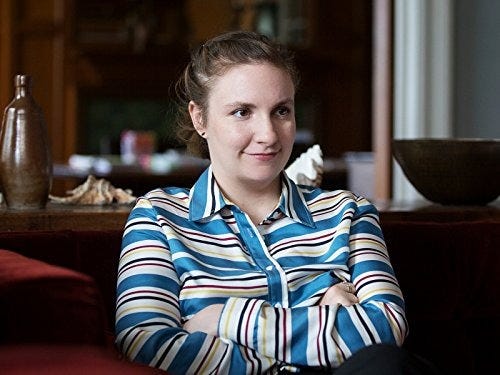
In the first episode, Lena’s character Hannah tells her parents that she aspires to be a writer. “I don’t want to freak you out,” she says, “but I think that I may be the voice of my generation. Or at least a voice of a generation.” The line turned out to be prophetic, as Dunham herself is considered a voice of the millennial generation for having created and written a show that resonated with so many. The show, as detailed in her memoir Famesick, drew so heavily on happenings in her own life, that it seems unreal. Examples range from a painful mishap with a Q-tip that ended up in an episode to Lena’s struggle with Obsessive-Compulsive Disorder, which her character Hannah also experiences.
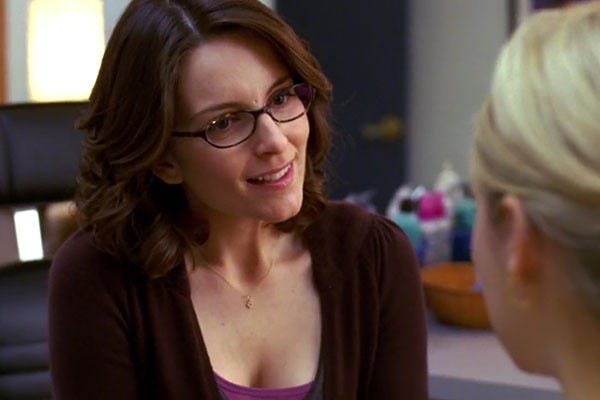
In a less literal interpretation, Tina Fey, well known for her work on Saturday Night Live, created 30 Rock, a heightened, comedic, and often absurd version of her life as a head writer for a weekly live comedy sketch show. Not only does 30 Rock offer a glimpse inside what it’s like to write and produce a show like Saturday Night Live, some scenes of 30 Rock were filmed in and around 30 Rockefeller Plaza where SNL indeed does take place. Any fan of SNL could watch 30 Rock and feel like they were getting a behind-the-scenes look at the real comedy sketch show.
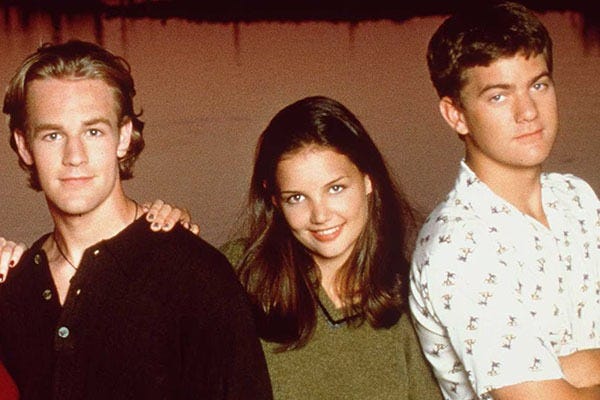
You might be surprised by this, but the writer of the box-office smash Scream and a handful of its successful sequels also created Dawson’s Creek. After the bidding war for his script for the horror movie, film and TV writer Kevin Williamson pitched a series for Columbia TriStar drawing on his own experiences as a teen living near a creek in North Carolina. While the setting of the show was moved to a fictional coastal town in Massachusetts, ironically the series itself was filmed in Wilmington, NC. Williamson has said that Dawson was based on himself: a teen obsessed with movie-making and Steven Spielberg. His friend Fannie, a girl who lived near his house and would visit by boat and sleep over in his bed, was the inspiration for Joey. The character of Pacey was inspired by a real friend named Pacey. Watching the show, something that always struck me was how it felt like a retrospective, a memory. Turns out, I was right: it was Kevin Williamson’s.
Why it works
I had no idea who Benito Skinner was when I saw promos for Overcompensating on Prime Video, but the series, while laugh-out-loud funny and at times completely ridiculous, is so touching that I knew there had to be something more there. When I learned that Skinner’s comedy and the character of Benny was born out of his closeted young adulthood–and his closest friends and collaborators were all playing the other major roles in the show–I felt much more connected to the series as a story about friendship. I watched it several more times and I’m thrilled that a new season is coming soon. The series hooked me first, but the real Benito behind the character Benny made me interested in more of his stories. Now, I will likely watch whatever he lends his writing to.
It works in reverse as well. When the characters are based on folks we already are familiar with, we might approach the material as fans already. Fans love an entry point that is easy for them to grasp, and we are more likely to follow some of our favorite creators to their various projects than not. And if that project offers a glimpse into the person they are in real life, we feel more connected than we might have been otherwise. It’s specifically meaningful for an insider to bring fans into their world through a fictionalized version of themselves, where they can keep a healthy distance from revealing too much while still telling great stories that reflect their lives.
Even if they’re not creating versions of their real selves in fiction, an author can convert their insider credibility into both an avenue for consumers to enjoy it and narrative authority within the story itself. They lived it, so we can believe the character they created. Lena Dunham actually was a millennial writer, so I can believe Hannah Horvath when she claims she is a voice of her generation.
Insiders inspire by sharing themselves
A few weeks after listening to The Red Weather, I listened to it in its entirety again. I was still stunned by Rider Strong’s convincing ability to write himself into a fictional mystery narrative, one where he plays investigator. It is so engrossing that if Strong started investigating real crimes in audio form, I wouldn’t be the least bit surprised. But while the story was fiction, what I absorbed from it was something much more meaningful than a great audio adventure: an expansion of a worldview from an artist I’ve been a fan of since I was 12 years old. That history I have as a fan is completely responsible for my wanting to listen in the first place, and my knowledge of some of the details of his real life only enhanced my experience.
Authors are often told, “write what you know.” I believe that this works because authenticity is difficult to manufacture and almost immediately detectable. There’s nothing worse than a story that doesn’t feel true to its author, like they’re phoning it in. Inspiration comes from connecting with a story, and to connect, a writer must be authentic on some level.
So next time you’re watching a series you connect with, read a book that is immersive, or listen to a podcast that hooks you, think about the insider’s perspective: the authenticity that they bring to the work might be the very thing that keeps you engaged.
Want more? Our Discord is where you’ll find everything you need to know about the Remarkist ecosystem including Folkic, our community app and Masslore, our fandom knowledge database! And be sure to hit that subscribe button so you never miss a thing at Rmrk*st Mag!
