



There’s a classic ride in Walt Disney World: Spaceship Earth, in EPCOT. Visitors take a slow-moving buggy through the humongous golf ball-looking iconic structure in the park, and on the journey they learn about the origins and evolution of written communication. Judi Dench narrates as you ride, sharing how the ancient Phoenicians developed common alphabet for trade, a written language that not only led to economic boom but the flourish of art, philosophy, mathematics, science, and culture across the Mediterranean. But then Rome falls, and the Library of Alexandria burns, taking all of the knowledge of human civilization with it. It’s a dramatic scene, made visceral by a specific campfire odor that guests get to experience (and often cannot forget).
Every time I ride, I feel a specific sadness for all of that loss, because what precedes this scene is community: animatronics of philosophers convening in an open air amphitheater to share and discuss what they think and know. After the fire scene, the Dark Ages set in, and we see scenes of monks in monasteries in absolute solitude, painstakingly copying texts by hand, and preserving what’s left of the written word. After the fall of Rome, the civilized world will have to find its way back to the kind of community and connection it once had—at least until Gutenberg invents the printing press.
Today, new knowledge, art, and entertainment is always available and coming fast and furious. Even since I was a kid, new TV shows, movies, and books were available all the time, and we could go to any library or video or music store to browse and chat with others about new content.
Now, when it comes time to decide on something to watch or listen to, our streaming platforms deliver exactly what they think we might click on according to our algorithmic history. They have a knack for presenting the exact thing we want to watch up top without discovery. We don’t have to browse or even ask friends what to watch; social media is an algorithmic recommendation feed. We might be lulled into a sense of community if we think the things we are seeing are what everyone sees, especially if we interact with other fans around content. But is this really building community?
Before the inundation of recs coming at us from our phones, browsing used to be discovery-based: you could walk into a music, video or bookstore and wander for hours, looking for something to pique your interest. I still love to do this in the library or a bookstore. But when I need a book to take on vacation, I need an action plan. I want to take something that matches the vibe I’m feeling, is the appropriate length, and available in the format I feel is most convenient. For that, I’m either searching “best books to take on vacation” online, or looking to my networks–whether it be friends or folks I follow on Instagram–for ideas.
Recommendation lists come in two forms: editorialized and decided for us, or fan/community-led. Recommendation culture is a fandom’s way of building canon, either with or without institutional authority. You might be getting your recommendation from a highly reputable news source with an editorial board, or a fan community on Discord. Who is doing the recommending, and how does this help communities form around different canons?
Fans love lists
We’ve all been there. We see the article: “Best ‘Insert-Your-Fave-Show-Here’ Episodes: Ranked!” and immediately we click on it. We might get halfway through the list when we realize we are agreeing and disagreeing along the way. We have thoughts. So we get to the bottom and either comment on how right or wrong the ranking is, or share with friends with a “can you believe this?!” note on our social media posts and in text chats.
Fans get excited about lists. And when we see a “best of” list, or a “complete list of…”, it’s an invitation for us to contribute our own opinions. In minutes, we are in community with other fans who agree or disagree, or start to debate the validity of the list. What starts as an archive becomes a conversation–and maybe even leads to new, different archives.
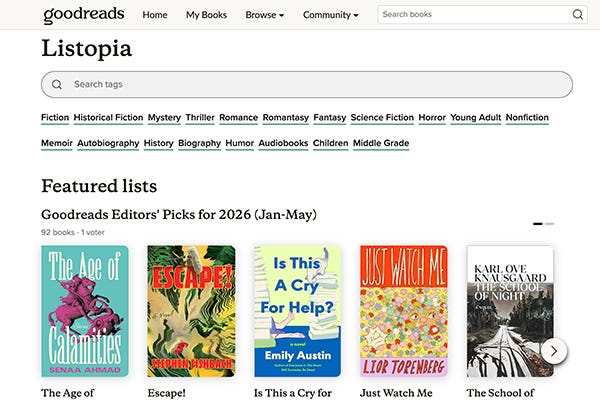
The popular book reviews and social media site Goodreads has been a powerhouse for readers who love lists since the late 2000s. Users can create their own “want to read” bookshelves, and share them with others. Since the dawn of time, we ask our immediate friends and family for recommendations for everything from movies to watch to best restaurants to try in a new city. Taking the book recommendation list digital was a game changer for fans. From these lists, fans can join groups organized around genres and interests and find community that way.
Goodreads also created Listopia, a crowd-sourced, interactive manner of building themed book lists around genre. Instead of a list curated by editors, Listopia puts the archival power directly in the hands of fans. They can vote on and curate themed lists that consistently change based on who is voting. Listopia is a completely fan-driven, dynamic archive that communities of fans can build around.
Trust over taste
Recommendations are, of course, reflective of taste. The taste of a publication’s editors will determine what recommendations go on any list or in any review. And individual fans will build their recommendations around their own tastes. But taste isn’t the sole reason why others go to them: it’s trust.
Vouching for a piece of content is often a high stakes endeavor in any community. Recently, a friend recommended a book to me that she really loved and had a personal connection to; when I read it and didn’t feel particularly moved, I felt bad. I didn’t want to mention I’d finished it because I knew she would ask my thoughts. When we trust the recommender, and don’t like what they choose, it can be unsettling. This is different from healthy debate about a work; disagreeing and agreeing on certain aspects of any content with a fan community is partly why some folks join fandoms in the first place. But recommendations come with weight that reflects all parties’ identities.
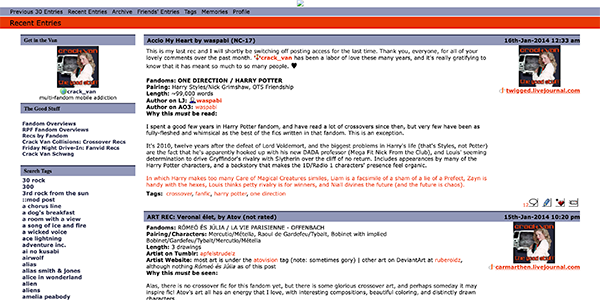
In the fanfiction community, recommendations are taken extremely seriously. Since the very first appearances of fanfic in the early days of the Internet, recommendations, or “recs” have been part of the culture. Historically, LiveJournal and Tumblr blogs were destinations for rec communities. A 2000s-era rec community called Crack Van existed on LiveJournal. Since it was multi-fandom, moderators would recruit folks from different fandoms to compile primers on those fandoms as their resident experts. Each month different volunteers would “drive the van,” offering readers overviews and rec lists to help new fans discover content. Sadly, Crack Van no longer exists.
The Rec Center is a modern, flourishing rec newsletter compiled by co-creators and fandom journalists Elizabeth Minkel and Gavia Baker-Whitelaw. What Minkel and Baker-Whitelaw bring to fans is trust. Minkel is the co-editor of Fansplaining, a media outlet devoted to all things fandom culture. Baker-Whitelaw is the co-host of a weekly pop culture podcast, Overinvested. Both bring a wealth of professional experience as well as their own fandom that allows their audience to trust their recs.
Rec culture in fanfiction is so important to the communities because they are built on trust. Trust that fans won’t just use forums to promote their own work. Trust that they’ve read what they are promoting and tagged all the appropriate warnings and descriptors. Fanfic communities are helpful to those seeking new fandoms to get into, and recs and rec lists keep these spaces safe for new fans.
Shared canon and community
All communities eventually share a language. It can be actual language and shorthand, along with traditions and norms. In any given fandom, you’ll find at least one common understanding, whether it’s every Gilmore Girls fan understanding the meaning of “Oy with the poodles, already!” or Marvel fans knowing to stay in the theater beyond the credits for an additional scene.
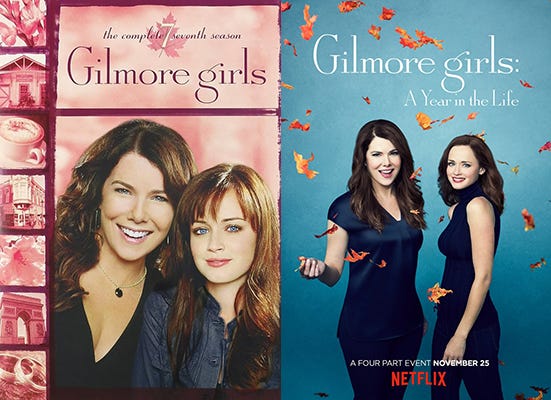
In the Gilmore Girls fandom, there’s much debate over canon: some fans refuse to acknowledge the seventh season as the creators, Amy Sherman-Palladino and Dan Palladino, had left the show and had nothing to do with its writing. Then there are those who don’t count the Netflix revival because they didn’t feel it fit the series well. Any fan’s position on both is subjective, but many die-hard fans likely are aware that there is public contention with both.
This Reddit thread asks whether Season 7 or A Year in the Life is more “headcanon,” and users debate in the comments. Canon is subjective to the community’s individuals and how they want to categorize the work. But these discussions in and of themselves help build community over shared understandings of canon. As evidenced by a single Reddit thread, the comments are diverse, but everyone is in the conversation.
Similarly, fandoms create rec list canon. If you’re into horror films there’s likely a basic list of movies that many fans agree are must-watches. Same for classic films, comedy TV shows, or a type of music. “Best of” lists might be largely undisputed, even if the individual content pieces can be debated separately amongst fans. Fans of science fiction and fantasy as genres might put Star Wars on every must-watch list, while fans of the franchise itself might argue the merits of every film, or whether they even belong to the science fiction over fantasy genre or vice versa.
When community fractures
Sometimes, recs act as a wall between fans who consider themselves “real fans” versus fans who maybe aren’t as well-versed in the content. There’s a popular meme that comments on the “name 5 songs” genre of fan-policing, and it goes like this: Someone says they like a band, or wears merch associated with it, and a bigger fan immediately says, “oh you like that band? Name 5 songs of theirs.” It’s dismissive and usually used to assert dominance over what they deem a “lesser” fan. This is where community building breaks before it starts: rather than view this opportunity as invitation to offer a rec list of the best songs a new fan might want to know, the “bigger” fan puts up a wall instead.
With any kind of community, exclusion is a risk factor. When we go to concerts, are we looking around at those who can sing every word with the band? Or are we appreciating that all levels of fans can attend and enjoy the music? How often have you assumed that knowing the catalog might make someone a “better” fan than someone who just is there for the vibes?
Gatekeeping, and “real fan” litmus tests like knowing every data point of every episode, or knowing all the creators’ names, or obscure lore associated with a franchise can fracture a community. There is also elitism amongst fans, like those who read the book before the movie. Fandoms also can have a way of pushing “correct” theories and ships, and call out those who might not have the specific narrow interpretation that most fans in the space agree upon.
And there’s hierarchy: fans who got into something through a casual gateway versus fans who have been around for years. We saw a lot of discourse when Taylor Swift started dating Travis Kelce, sparking a new wave of female football “fans” who were showing up to catch a glimpse of Taylor. And it was evident during the Heated Rivalry fandom craze that folks were showing up to hockey games for the first time, and shipping the actors from the series in real life to a detrimental degree.
Ownership is real when it comes to fandom, because fandom is tied to our identities. I’ve been listening to and seeing musician Jason Mraz live since his very first album was released, and even at that, I was “late” to the fandom of local coffee shop goers who saw him play an open mic night every week in San Diego, CA in the early 2000s. But as a longtime fan, I watched audiences grow over the years, and when he recorded the song “I’m Yours,” a delightful song he had only played live, it catapulted his popularity. Now I had trouble getting tickets to shows! And it’s similar when a team starts winning and picks up “bandwagon” fans.
Gatekeeping might be used as a way to build walls instead of trust. But trust is vital: new fans need recommended content from established fans to fully join a fandom community. When trust is withheld or weaponized, community breaks down too.
Looking beyond fandom
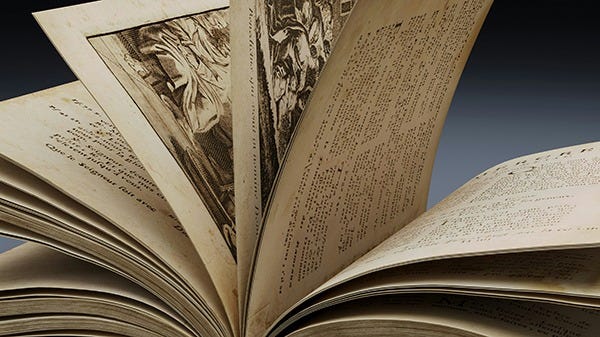
Rec culture has bigger implications beyond what communities experience in their fandoms today. It serves as a bridge to future societies that form around any given fandom, culture, or idea. This month, journalist Rose Horowitch published a provocative essay in The Atlantic titled “The End of Reading is Here”. In the piece, she opens by delighting this EPCOT enthusiast in describing the Library of Alexandria, once the most significant collection of intelligence—just as the Spaceship Earth ride taught me as a kid. The works of Aristotle and Homer were among its holdings, and it was the site of humanity’s greatest intellectual achievements to date. But, the Library was tragically lost to fire, and historians have spent centuries trying to piece together what happened. Even though that fire smell sticks with me, it turns out that Disney Imagineers might have simplified history a bit in their attraction.
In an interview with NPR about the article, Horowitch posits that perhaps it wasn’t just a fire that destroyed the Library, but years of neglect from the community. She argues that the Dark Ages didn’t start after the Library burned as we all have come to understand it; the Dark Ages had already started because the community had lost interest in the collection of knowledge they had, leaving it vulnerable to disappearance.
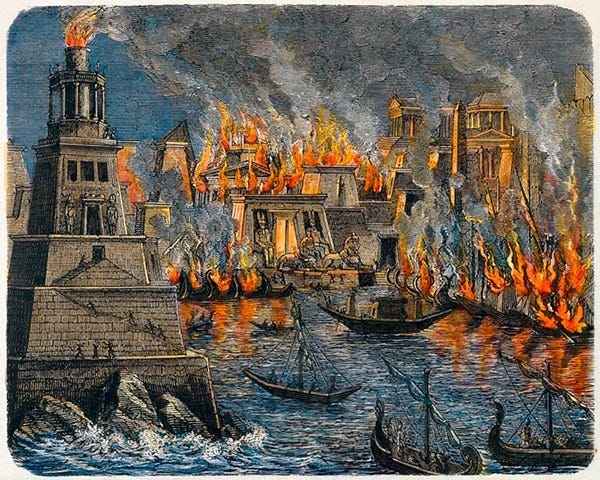
This is a rather dramatic rejection of archival knowledge with far-reaching consequences that we can feel the repercussions of today. The Library of Alexandria was the center of community, art, and knowledge in its day. And today, we might see ourselves in our own version of Dark Ages, scrolling our algorithms instead of building communities around sharing recs. While the Library was a center of discovery akin to GenX and millennial individuals strolling around their local Blockbuster, the Dark Age that followed the loss led to fracturing communities. I think about this all the time when I let my Netflix app tell me what I should watch instead of talking to others about the last interesting thing they binged.
Consistent honing, upkeep, and sharing lists are how they survive. Even if they change as fans contribute, like on Goodreads’ Listopia, constant care and input from the community keeps those lists alive. Much like a library maintains an evolving record of knowledge for future generations to reference, recommendation lists generated within fandoms–and the communities that form around them–help those fandoms evolve and thrive.
Want more? Our Discord is where you’ll find everything you need to know about the Remarkist ecosystem including Folkic, our community app and Masslore, our fandom knowledge database! And be sure to hit that subscribe button so you never miss a thing at Rmrk*st Mag!

Great job on this article, Diana. I really miss my Remarkist collaborators. I need to try to get back in there.