



One of the most fun things about Stranger Things is its 1980s-inspired nostalgia. It’s exciting to see the dated and somewhat analog technology in the series, which helps propel the plot and gets into the hearts and minds of viewers who actually remember that time. Music of the time also plays a huge factor, with Metallica and Kate Bush–icons of the 80s–playing a significant role in Season 4. The 80s fashion is not only hilarious to see if you lived through the 80s, but also tells important stories about the characters and how they see themselves. In fact, fashion brands have been partnering with the series for years for specific drops to capitalize on the retro theme.
But the best 1980s references come from the media and pop culture of another time in the show’s cinematic storytelling. The Duffer Brothers are on record explaining that their love of 80s movies, which they grew up watching and became part of their lives in deep, meaningful ways, inspired their original idea. The pitch? “What if Steven Spielberg directed a Stephen King book?” You have to admit, even if you’ve never watched the show, that’s a sticky hook. Both Stev(ph)ens have declared themselves as fans of the show. The Duffer Brothers admit that Stranger Things is an ode to their childhood, to the stories that they loved–both on screen and in books and comics and music, as well their real lives with friends playing role playing games.
We put together a list of some of the show’s 1980s references, which can serve as a watch guide for extra content if you want to understand more of where the Duffer Brothers are coming from. There are many more references than we were able to name here, but it’s worth doing a rewatch to see what Easter eggs for other films and TV shows you can pinpoint! Which of these influences have you picked up on? Tell us in the comments!
E.T. the Extra-Terrestrial
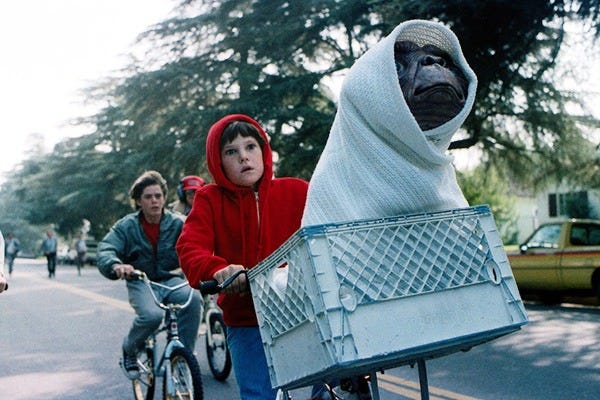
One of the most obvious influences on Stranger Things is E.T. the Extra-Terrestrial, shaping everything from the show’s emotional core to its visual language. The show mirrors the film’s blend of childhood innocence and supernatural mystery, centering on a tight-knit group of kids whose loyalty and bravery drive the story. The immediately recognizable imagery, like flashlight beams cutting through the woods, kids racing on bikes, and government agents in hazmat suits directly echo the iconography of Spielberg’s film. Even Eleven’s dynamic with the boys parallels E.T.’s bond with Elliott: a misunderstood outsider taken in by children who protect her from the threatening adult world. And Eleven’s makeovers? Reminds us of a certain alien getting the dress-up treatment.
The Goonies
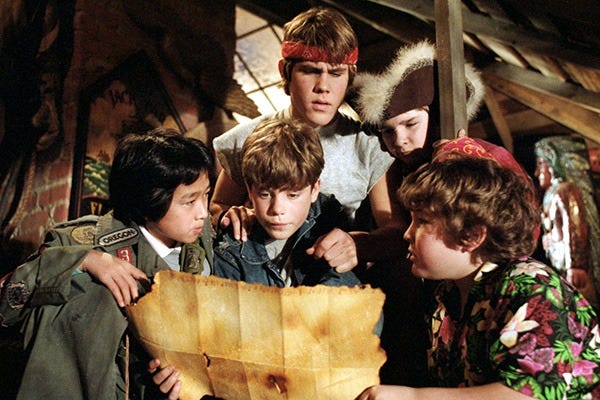
It shouldn’t come as a surprise that Spielberg’s The Goonies heavily shaped the Duffer Brothers’ approach to Stranger Things, especially since the show cast Sean Astin, who starred in the movie, in Season 2. Stranger Things is, at its heart, about a ragtag group of friends that somehow find each other despite their differing personalities and age differences between the younger and older teens. All of the kids are dedicated to friendship, adventure, and heroics–their combined strength rivals that of their actual superhero friend, Eleven. The Duffers clearly draw on The Goonies’ balance of humor and banter, danger, and camaraderie, as the kids navigate threats that adults either can’t see or won’t believe.
Stand By Me
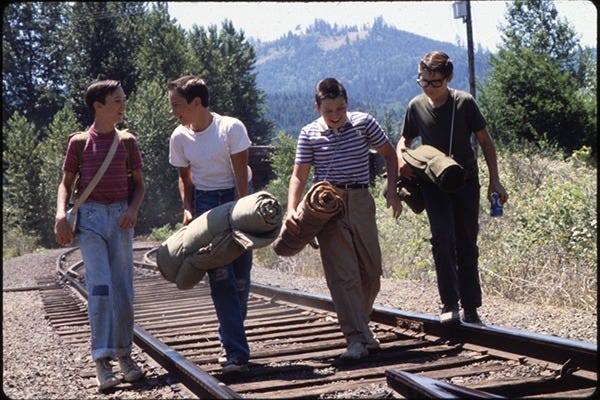
Stephen King’s Goonies-like film, Stand By Me is a key influence on the Duffer Brothers and Stranger Things, particularly in its depiction of childhood friendships facing real-world dangers. Parallels include the small town setting that seems mundane but nevertheless poses extraordinary threats, and the kids must rely on each other to stay united when dealing with a very complicated, adult situation. The Duffers borrow the film’s bittersweet awareness of childhood’s fleeting nature, creating moments that feel intimate and emotionally resonant amid the show’s supernatural chaos, as the boys reevaluate their friendships and even fall in love.
Firestarter
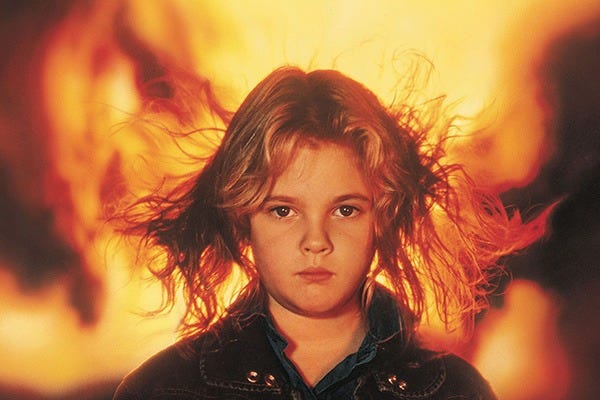
Young Drew Barrymore starred as a young girl with psychic abilities–specifically pyrokinetic powers–in Firestarter. As a result of her powers, she is hunted by a secretive government agency (sound familiar?). Stranger Things’ depiction of shadowy organizations and places like Hawkins Lab reflects the menacing corporate and government forces in Firestarter, and the pressure on Eleven as a girl who is mostly innocent reflects the film’s themes. Stranger Things shows a consistent tension between innocence and extraordinary power, showing how children can be both vulnerable and formidable when exploited by adults. A poster for the film even appears in Season 3 of the series.
Poltergeist
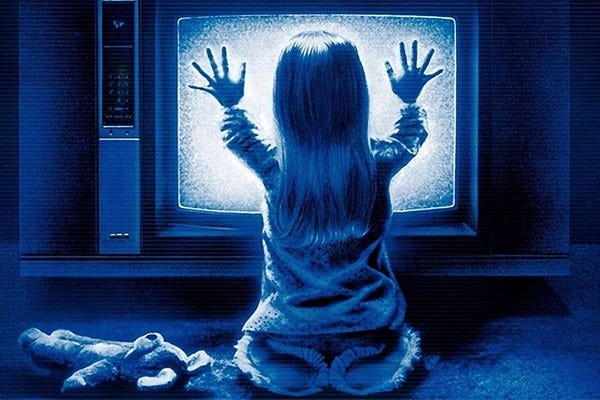
One major influence on the Duffer Brothers and Stranger Things is the film Poltergeist, particularly in how it blends suburban normalcy with creeping supernatural horror. In the movie, a seemingly ordinary home is invaded by otherworldly forces, turning familiar spaces into sites of tension and fear, just as the show does when it shows us the Upside Down versions of Hawkins or uses ordinary things–like lights–as an indication that something unnatural is lurking. Like Poltergeist, the series balances terror with the emotional stakes of family and friendship, showing how ordinary people—especially children—must confront extraordinary threats. Joyce even surprises Will with tickets to see Poltergeist in a scene, an overt nod to the movie that inspired the Duffers so much. Other homages abound: the teens use bedsheets tied together to connect through a portal to the Upside Down just as the characters in Poltergeist use a rope to explore the other dimension. Even Nancy and Mike’s nuclear family makeup directly mirrors the family in Poltergeist. And the signature line from the movie, “They’re heeere” absolutely shows up in the series.
Gremlins
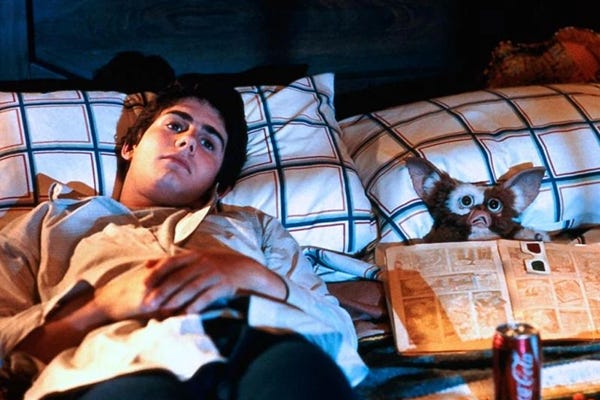
Like some of these other films, Gremlins blends horror, humor, and small-town chaos, a tone the show absolutely emulates. A direct homage occurs in Season 2 when Dustin adopts a baby demodog, not knowing it’s a monster, and names it Dart. Just as Billy in Gremlins adopts a cute Mogwai, he has no idea what wrath it can unleash under certain circumstances. For Dustin, things go from bad to worse when the demodog grows rapidly, and starts wreaking havoc–like killing his family cat. Christmas lights, iconically used in Stranger Things, might also be a nod to Gremlins, as the Mogwai is a Christmas gift.
Dungeons & Dragons
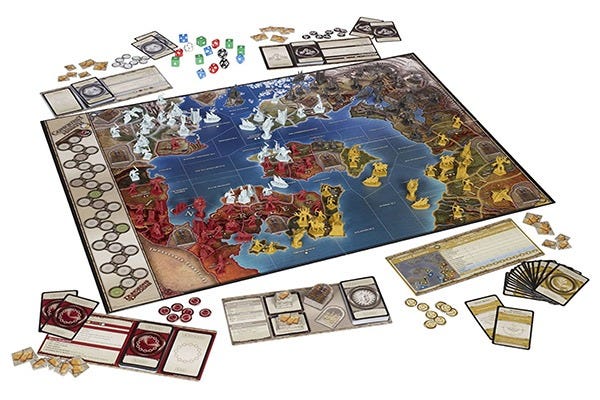
The entire series is heavily influenced by the tabletop role playing game, Dungeons & Dragons. The game, which the Duffers are intimately familiar with, not only shapes the show’s monsters but the very way its characters understand the world around them. Mike, Will, Dustin and Lucas’ D&D campaigns provide a framework for interpreting the supernatural—giving names like Demogorgon, Mind Flayer, and Vecna to creatures that defy explanation. They bring more folks into their party in the series the way they would a D&D campaign, or join others like Hellfire Club, which is a clever way of introducing new characters into the series. Beyond monster lore, the game’s emphasis on teamwork, imagination, and friendship mirrors the dynamics of the Hawkins kids as they strategize, problem-solve, and face real-life threats with the same collaborative spirit they use at the table.
Dark Souls
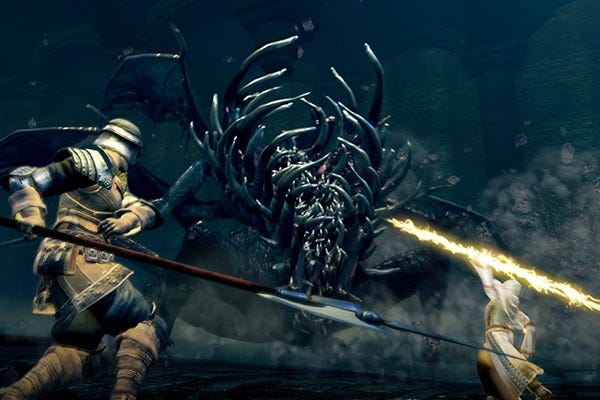
The video game Dark Souls depicts a bleak, decaying world defined by ruin, rot, and eerie stillness. In the same way, the Upside Down is an environment that feels hostile, ancient, and unsettlingly alive. The show’s creature designs, especially beings like the Mind Flayer or the skeletal, corrupted look of Vecna’s realm, echo the game’s blend of body horror and gothic fantasy. The storytelling in Stranger Things also parallels Dark Souls in the way its lore is fragmented across seasons: clues are scattered, mysteries are layered, and meaning emerges through slow discovery rather than direct exposition.
John Carpenter films (Halloween)
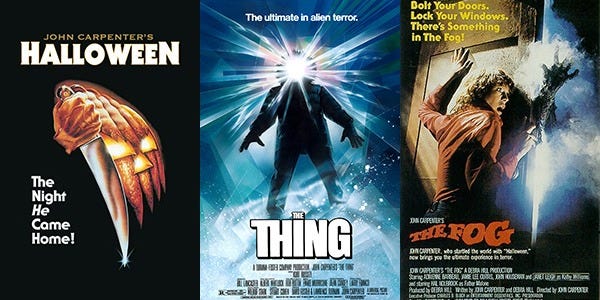
Stranger Things borrows a stylistic and tonal influence from John Carpenter’s films like The Thing, Halloween, and The Fog. Carpenter’s mastery of minimalist horror is emulated in the Duffers’ approach to tension: slow-building, atmospheric, and anchored by an unseen or shape-shifting threat. The show’s suspense is driven by a sense of creeping dread, rather than horrors every minute. The show’s use of wide shots, heavy shadows, and practical-style monster effects echo Carpenter’s visual language, while its iconic synth score pays direct homage to his signature musical style. The themes of paranoia, isolation, and mistrust that dominate Carpenter’s films permeate Hawkins, especially in moments when the characters feel completely alone.
Cold War conspiracy theories
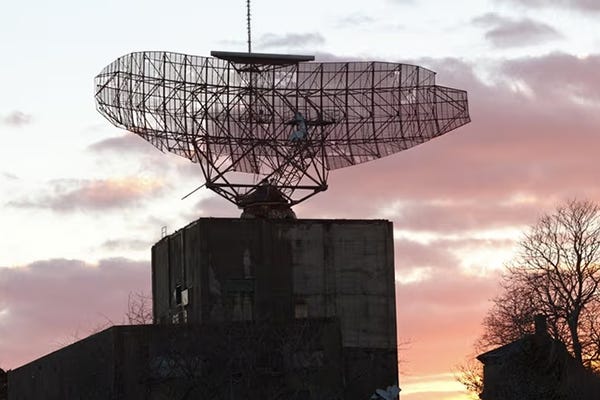
Having the show set in the 1980s grants the show a fantastic real world angle to play off of: Cold War conspiracy theories that abounded during the time. The overall feeling of conspiracy is woven deeply into the fabric of Stranger Things, shaping the Duffer Brothers’ vision of a world where government secrecy, psychological warfare, and shadow operations lurk beneath the surface of small-town America. The show draws on the era’s real anxieties—fear of Soviet infiltration, and mind-control experiments like MKUltra, which appears in Dr. Brenner’s past as Hopper uncovers. The belief that clandestine agencies operated with unchecked power to create Hawkins Lab and its morally ambiguous scientists seems plausible for the time. In fact, the show was originally based on the Montauk Project, a conspiracy theory involving a military base in Montauk on Long Island in NY. Later called Camp Hero, it is believed that mind control experiments were done on children throughout the 1970s and 80s at the base. These conspiratorial undercurrents give the series its paranoid edge, blurring the line between legitimate danger and whispered rumor as characters uncover hidden experiments, unknown technologies, and government cover-ups.
Satanic Panic
Stranger Things’ obsession with an atmosphere of fear, suspicion, and moral hysteria against a backdrop of small town Americana is palpable. In Season 4, the community of Hawkins is rocked by the death of an innocent, beautiful cheerleader, and since Eddie Munson, an eccentric three-time senior student with long hair was present at her death, he is immediately blamed and goes on the run. The town grows suspicious of his “Hellfire Club” and misunderstanding it as the nerdy D&D club that it is, they assume it’s flirting with evil forces. An angry mob forms, led by a popular, clean cut high school basketball star. The storyline fits well into the Satanic Panic of the 1980s, where society feared unseen, malevolent forces and Satanic rituals corrupting children and destabilizing communities. Heavy metal music with “hidden messages” and gaming that dealt with dark themes (like D&D) were absolutely seen as threats. The Satanic Panic had so many cultural implications, from childlike superstition (you weren’t a child of the 80s if you didn’t try your hand at a Ouija Board at a sleepover) to dangerous widespread propaganda, unfair investigations, trials, and wrongful convictions. While viewers know that the monsters in the show are not real, by weaving in the very real cultural anxiety of the era, Stranger Things captures both the literal and symbolic fear of evil lurking and moral panic which pervaded the era of the Duffer Brothers’ childhood.
Want to do more with your fandom? Our Discord is where you’ll find everything you need to know about our fandom-forward ecosystem at Remarkist! Don’t forget to follow us on Instagram, tumblr, and Spotify for more storyworld content—and hit that subscribe button so you never miss a thing at rmrk*st Mag!
