



I was devastated when I saw the news: Gilmore Girls would be leaving Netflix on June 30, 2026. I immediately felt a gut punch. Since Netflix began streaming the show in 2014, its fan base has fundamentally changed. Netflix not only brought a broader audience to a beloved franchise, but it gave it a new lease on life, becoming so popular that Netflix released a four part miniseries sequel, Gilmore Girls: A Year in the Life. More than that, the streaming of Gilmore Girls on Netflix led to tons of other media, like think pieces and podcasts about the show, and small-town events all over the U.S., which reshaped its relevance in pop culture. For a show that never received many awards or significant attention during its run, its existence on Netflix changed its legacy. And, because it was readily available, here at Remarkist we built our very first franchise-long watch party around it with fans tuning in together every night from different timezones to watch all seven seasons and the miniseries.
What is personally fascinating to me is that I felt the loss even though I own all seven seasons on DVD–and I have since before streaming platforms were even invented, much less ubiquitous. My DVD box sets are in fantastic condition despite being well-used; each disc was watched by me at least 20 times over the course of a decade (and before my DVD player stopped working). I have the hard copy of the original media in my possession, so why was I feeling such a loss when it disappeared from my emotional-support streamer?
We have never had so much access to entertainment in history. We don’t have to go to the video store on a Friday night to rent a single movie (or hope they have the one we want in stock), we don’t have to be home during “Must See TV” to catch an episode that airs in real time, and we can find a TV series from 30 years ago on a streaming platform and watch it right away. And if we are still at a loss as to what to do with our free time, we have nearly unlimited access to social media entertainment, e-books and audiobooks, and music–all from portable devices we can take anywhere at any time. But we still feel precious about the things we love. When One Tree Hill was booted from Netflix in 2017, fans threatened to boycott the platform, and even started a petition.
As I watched Gilmore Girls on Netflix over the last decade, my eyes would always pan over to my DVD collection, displayed in my living room. If streaming the series allowed me to enjoy it easily at any time, the physical media offered proof it was mine. Like any work of art you might hang on your wall, displaying my DVD set is more reverent than practical. And in a world where we’ve moved from physical media to digital, hard copies have taken on new meaning: they are at once artifacts and symbols of what we can control and curate as fans.
Physical media: a testament to our devotion
One thing I hear folks talking about a lot is the loss of monoculture in the digital age. It used to be that we had a limited amount of channels, movie releases, and radio stations deciding what we consumed on a daily basis. And, since there wasn’t much to choose from, it seemed we were all fans of many of the same things. Now, entertainment and fandom is a choose-your-own-adventure where no two people have the exact same content menu. Our social media algorithms are all tuned to our specific interests, our streaming accounts analyzing what we consume, for how long, and our ratings. It seems like we have more control than ever: we can choose what we want to consume at any time from anywhere, because there’s so much.
But the reality is that even though the content platforms have changed how we consume and how much there is, they’re still in charge of what we watch and listen to. Gilmore Girls is one of Netflix’s most-streamed shows, and yet it left the platform and showed up on Prime and Hulu. Consumers cannot choose which platforms buy the rights to which properties, so we are still beholden to them. But when you buy a DVD, you own it forever.
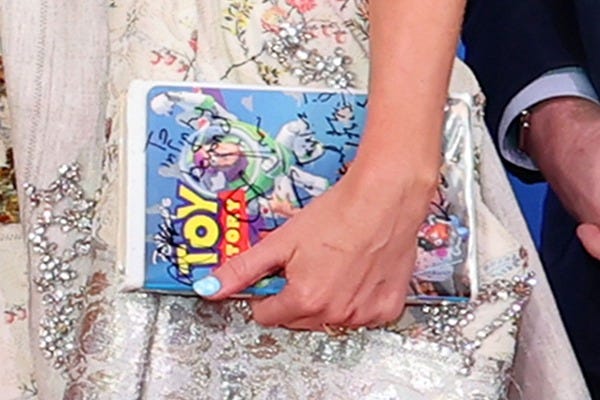
Taylor Swift famously brought her VHS copy of the original Toy Story to the red carpet premiere of Toy Story 5, for which she wrote an original song. She had cast members Tom Hanks, Joan Cusack, and Tim Allen sign the relic from 1995. This signaled Swift’s attachment to the franchise since her childhood (she would have been 5 years old when the movie released in 1995), and the physical proof spoke to me as a fan who might approach her in the same way with my original copy of Fearless. She can stream the movie whenever she wants, like anyone with a Disney+ subscription, but she kept that tape and its oversized plastic box for thirty years as a testament to her devotion.
Edits vs the original
Digital media is certainly convenient. One thing I think is really amazing is that independent musicians can write and produce songs and put them up on Spotify or YouTube immediately, and build a following without a record label having to acquire, produce, and distribute their work. The same goes for self-published books and other content creation. But because digital media is easy to distribute, it’s also subject to editing. A TV show can edit out a scene that upset people, musicians can change a word that they didn’t realize was offensive in a track, and all with little effort. But there are moments when this feels confusing for a fan.
In December of 2025, I started to see chatter online that Taylor Swift had changed the words to two tracks on her reputation album, which happens to be my favorite. The 2017 release was a pivotal one for her career, and I pored over every track like an archaeologist excavating the depths of human emotion. So when I checked my streaming service, I heard the change and felt that something had been taken from me. My memory of the lyric, the way it worked for the storytelling, my attachment to it–I felt kind of violated that it had been altered. Once an artist puts something out, sharing it with an audience is an act of co-ownership; a song whose lyrics meant something to them can be owned in an entirely different way by its listener, and in that sense the art becomes the audience’s possession. (Taylor Swift communicated this outright in her song, “The Manuscript.”) I quickly found my reputation CD, relieved that I would always have a copy of the original. The digital version would never be “safe.” I also scoured the internet to see if I could buy a copy of the vinyl, and could not find it anywhere. At that moment I realized the importance of physical media, and hated myself for not making sure to build a vinyl collection for this specific artist. Through the convenience of “owning” digital media, I had forgotten how important it might be for me to collect the actual objects of my affection.
The lost ritual of collecting media
Remember when the iPod came out in 2001? It was advertised as a device that allowed you to carry “1000 songs in your pocket.” That was an astronomical number for a tiny device. We needed to carry a few stacks of CDs to get close, and who needs more than 10 or 15 CDs worth of music on a commute or flight? The point was, technology granted us the privilege of having an excess of content for a fraction of the space previously needed to house it. Illegal music downloading platforms also flourished during that time. There’s an episode of Gilmore Girls where Rory is writing an article for the Yale Daily News about music piracy, and interviews a student about downloading music. In front of her, he downloads an artist’s catalog in a matter of seconds–not because he likes the music but because he simply can obtain it. In an age where anything and everything is available digitally, we might collect what we don’t even need or want.
Having too much to choose from also leads to a paralysis of choice. Who hasn’t sat down in front of their 5 or 6 streaming platforms, or 100+ cable channels, just to claim “there’s nothing on.” When we have to make space for media collecting, we have to make careful decisions. But digitally, we are less constrained. And things do get pretty cluttered.
Across the board, we do a lot of shopping online. But we used to participate in a ritual of acquiring new media, and going to the store to pick up a copy was part of the thrill. As a teen, I loved going to The Wall, a regional music store chain where you could buy CDs and cassettes, maybe some vinyl too. Their famous store policy was that they’d replace any CD or cassette that was damaged, so long as you put their sticker on the case. They played music in the store, and one time I loved what I was hearing so much that I got up the courage to ask the person at the register what it was. The album was Crystal Waters’ Storyteller, and I bought it on the spot. I still have it, because it’s a classic, but also because it is a symbol of my young independence, a marker of my first foray into establishing my own taste. Finding new music or new content was an activity in and of itself; discovery came to those who ventured to find what spoke to them.
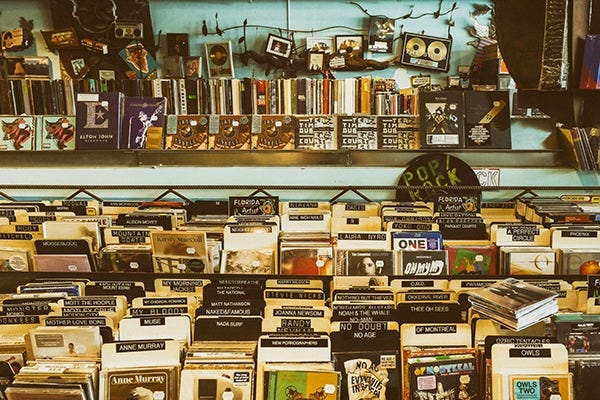
And once you returned home with physical media, you still had to work for it: I think most folks in my generation can viscerally remember the insane difficulty associated with opening a CD wrapper and then tearing off the tape that kept it shut. It was part of the experience. Cracking open a fresh CD and looking at liner notes was a thrill I am still chasing in 2026. And it might be why Taylor Swift sells CDs with gifts inside like a journal, photos, stickers, and jewelry. It’s a throwback to that time when it was exciting to hold the new art in your hands. Content takes up room in our heads, but owning physical media meant it also took up physical real estate, and we constantly had to evaluate if it was worth that price.
Physical media, or emotional receipts?
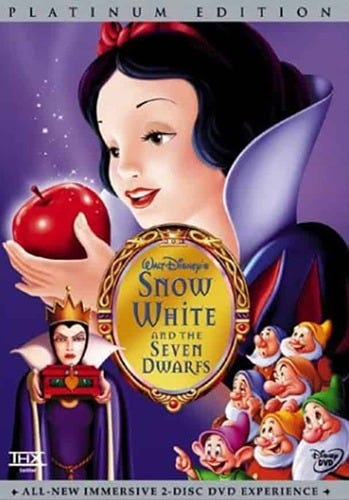
When I was a kid, we were always threatened by the tyranny of the Disney Vault. It was a brilliant marketing endeavor: Disney would decide to release classic animated films on VHS–and later DVD and Blu-ray too–but only for a limited time. They claimed that if you didn’t “bring home the magic” now, you’d never see it again, because the film would go into the Disney Vault–along with your ability to watch it at any time. (You can watch this great mini-doc about the history of the Disney Vault, and the invention of renting or buying home video, on YouTube.) Disney was precious about their content, and rightly so, but in the streaming era it seems hilarious that any content would be locked away for a limited time. But they tapped into a fan’s sense of scarcity that only owning the media outright would remedy. My “Platinum Edition” of Snow White and the Seven Dwarfs “2-Disc DVD Experience” still sits on my shelf, unopened. I remember buying it out of a sense of obligation as a Disney fan, because I felt it was part of my identity to own this foundational, original Disney classic in its anniversary edition. I collected it; I didn’t consume it.
Curating my DVD collection over the years was both a functional endeavor (stuff I wanted to own so I could watch over and over again) and an expression of who I am. I was a kid of the 90s when your coolness could be determined by the size of your VHS collection in your parents’ basement or TV room. And if you were old enough to drive, the giant book of CDs you kept in your car spoke to the exact kind of person you were.
Recently I saw former Boy Meets World actress Danielle Fishel post a video of her husband’s DVD and Blu-ray collection on Instagram, and it took me back to those days when we really valued what our collection said about us as soon as others encountered it. Today, even if I’m reading a book in public, its identity can be concealed if I’m reading electronically. We no longer have to display what we love by the sheer fact of loving it; we can choose what to disclose.
Looking at the many movies on my DVD shelf, I see a snapshot of who I believe I am, the content organized by era of my life: The Gilmore Girls shelf, the Dawson’s Creek shelf, the classic teen movies of the late 90s/early aughts shelf, the concert doc shelf. This is a collection of my tastes, a curation of my personality all in one place.
From the proverbial basement shelf of DVDs, or even a personal book library, we learn about other people in our communities. We can glean from their collections what they’re interested in, or at least what they want us to think. When I saw a giant shelf of DVDs, I immediately thought of the family as wealthy or privileged, especially if they were situated next to a giant screen TV. But I could also make an educated guess about their family vibe by assessing the content itself, how it was organized, and whether it was neatly kept. In short, our collections tell others about who we are.
I’ve recently seen stories dedicated to the bland set decoration of modern TV shows and movies. Every living room looks like a staged real estate listing, a model home. In the 90s and 2000s, we heralded movies with Nancy Meyers kitchens, beautiful spaces that showcased warm, homey vibes. Even spaces that looked like a dreamy coastal home out of a catalog had a lived-in feel, like the floor-to-ceiling bookshelf in Something’s Gotta Give. You’ve Got Mail’s Kathleen, played by Meg Ryan, lives in a beautiful Upper West Side brownstone, but the decor is decidedly personal: books on shelves and on surfaces, haphazard stacks of mail, and mismatched furniture.
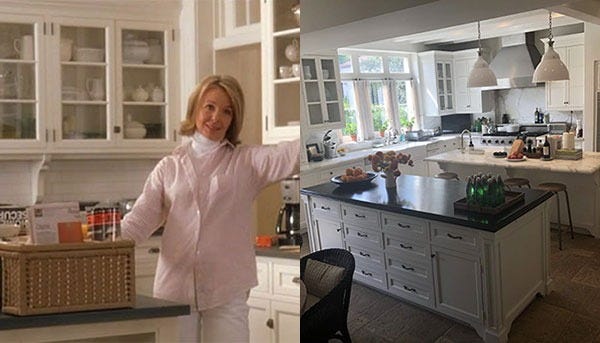
Creators have recently noticed that this kind of personality signaling through set design no longer exists, and it got me thinking: is it because we all want to live in a minimalist space, or is it because we no longer collect things in our homes like we used to, specifically, hard-copy media? And if there’s no media to peruse, what could we possibly know about the characters? The things we curate in our personal spaces tell a story about who we are, but nobody but you is looking at your algorithm on your Netflix homepage.
Choosing what to keep
Thinking back to those home libraries featuring tons of DVDs, VHS tapes and CDs, and recognizing the excess and materialism of the late 20th century, we might have been collecting just for the sake of having the most. We could probably all admit that not every piece of media we owned meant that much to us (or at least not as much as Taylor’s Toy Story VHS did). And I believe that streaming took us far in the other direction: owning nothing, renting everything. But artists have started to release special edition vinyls. Beloved authors are releasing special edition hardcovers of their already-bestselling books. When everything is available all the time to rent, focus has come back to physical media, but only in the most curated sense. Now, we pick and choose what we decide to own with a lot more care, precisely because everything is so available digitally.
Physical media provides proof: proof of taste, devotion, and worthiness of real estate in our homes. While we can consume everything, everywhere, and all at once, the long-loved DVD boxed set will never be sacrificed to your next binge-watch, or pushed out of your algorithm. It will always be yours.
Want more? Our Discord is where you’ll find everything you need to know about the Remarkist ecosystem including Folkic, our community app and Masslore, our fandom knowledge database! And be sure to hit that subscribe button so you never miss a thing at Rmrk*st Mag!
