



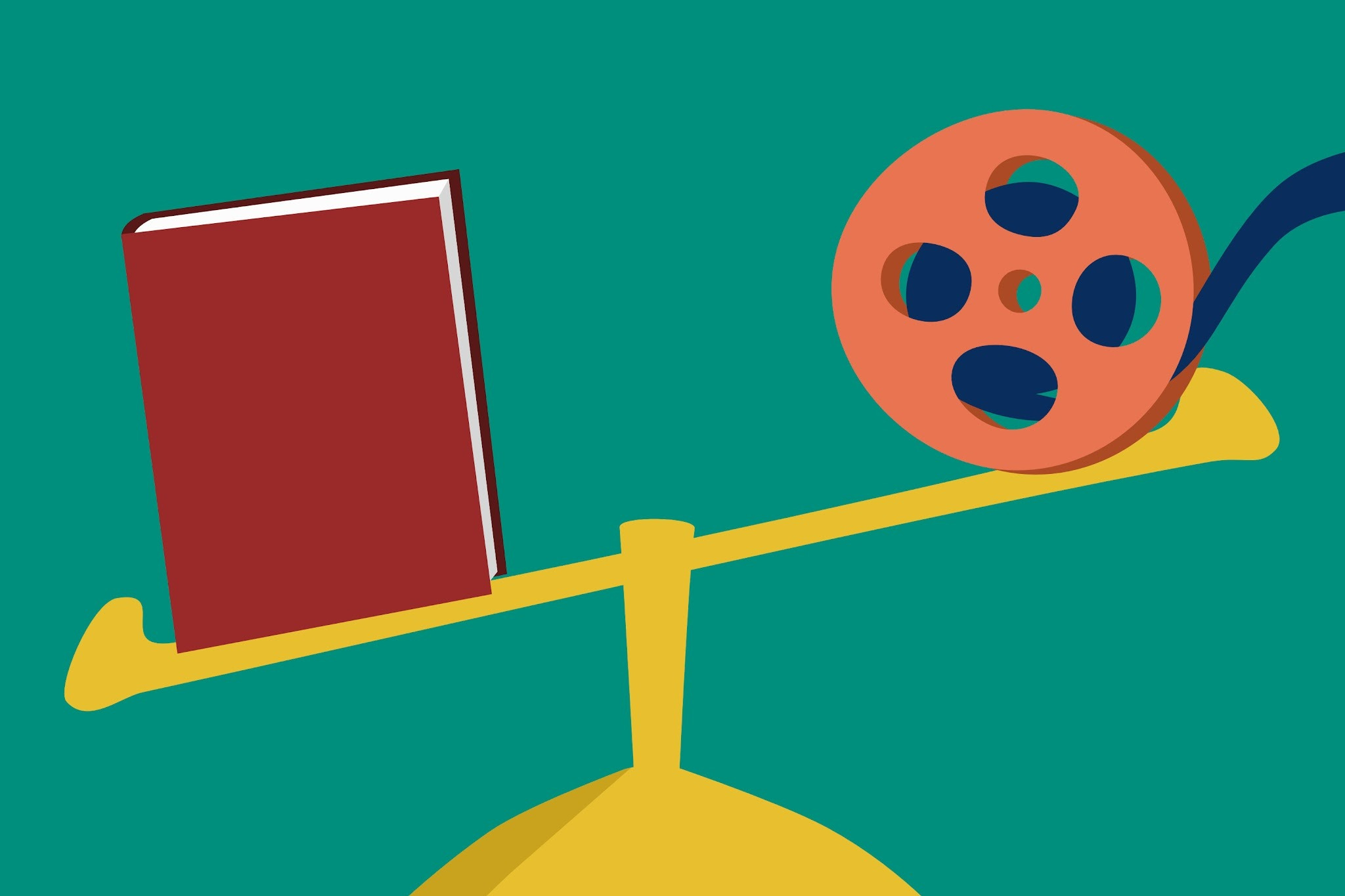
About a decade ago, like thousands of other people, I read The Martian by Andy Weir. It was one of the best books I ever read. Not being a sci-fi fan per se, or a fan of math in general, I was struck by how the book was both heavily informative about the intricate calculations and science behind space travel, but not once did I feel lost. Weir has a knack for making actual rocket science feel accessible for a person who studied liberal arts. The experience of reading that novel was unforgettable. And watching the historic voyage of Artemis II orbiting the moon last week, I honestly felt Weir’s writing set me up to understand exactly what was going on.
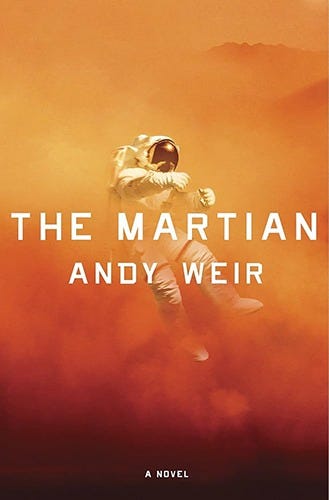
So when the movie version was announced, I was both trepidatious and excited. Yes, I wanted to see an interpretation of what my mind’s eye imagined for main character Mark Watney as he survives on Mars, but could a film possibly encompass the richness of the novel? Matt Damon as the actor in the lead role calmed my fears a bit; Mark has a deeply funny interior monologue which is a delight for the reader, and I felt that Damon could pull that off easily. But what about the scope of it all? When I finally watched the film, it was both amazing and disappointing. Don’t get me wrong: it’s fantastic. But a fantastic film still couldn’t live up to the experience of reading that novel. It fell short.
I didn’t read Weir’s novel, Project Hail Mary, when it was released. But when the film version starring Ryan Gosling came out late last month and made a bajillion dollars, I was worried I wouldn’t have time to read the book before seeing it in theaters, specifically IMAX. I’m usually a strict “book first, then movie” consumer of film and TV adaptations of novels. I have an almost religious devotion to honor source material, and have a deep veneration for authors. But I decided to break that rule this one time: I knew Gosling had worked on this for years, having bought the film rights before the book was even published. And, early reviews from friends were raves. So, I took myself to the movies, going in completely blind. I was absolutely transfixed for over two hours, which flew by. I started reading the novel a few days later, and the overwhelming feeling that came over me was gratitude: I was so thankful that I hadn’t read it before seeing it, because yes! The book is better! At least to me. Not because the film is a lesser product, but because it’s a different product. One I might not have enjoyed if I was looking to compare it to the written word every minute.
Fans’ sense of ownership
When it comes to a book that is beloved by many fans, the news of a movie or series based on the work is a welcome treat. It ignites new interest in the narrative, boosts sales and publicity, and even inspires movie tie-in editions that the publisher might re-issue with new cover art to match the screen adaptation. In short, it’s a big deal, and fans weigh in immediately about casting choices and fanfare around the event.
But fans–especially early fans, those who loved a book before it became a Hollywood entity–have a sense of ownership over the work. The “wrong” cast might feel like a personal affront since the act of reading is so personal. The “wrong” visuals might feel disorienting. But when a project gets adapted beyond a single author’s vision for the masses, the question of who the story belongs to is evident: is it the author or the readers? The filmmakers or the audience? I would argue it’s all of the above, which is sometimes difficult for fans to grapple with.
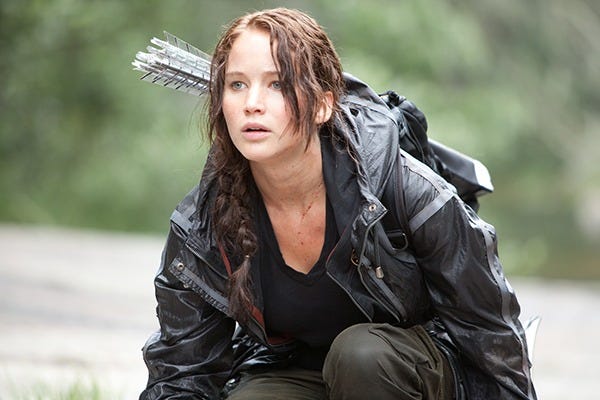
When Academy Award nominated actress Jennifer Lawrence was cast as Katniss Everdeen in the film adaptations of The Hunger Games, fans weren’t thrilled, to say the least. The book series was beloved, and it’s hard to imagine now that the film franchise wouldn’t be just as successful. Fans complained that she was too old to play the role, and her physical features didn’t match the character descriptions. But the film franchise was such a commercial success in the 2010s. In the end, the Hunger Games film franchise delighted readers and pulled in many new fans. Book sales surged as well, and now they have sold tens of millions of copies, including the latest, Sunrise on the Reaping. This prequel has also been adapted into a film due out in November 2026, and fans are already buzzing.
Perceived hierarchy
As humans, we become attached to stories. Whether we see them play out on screen, hear them through audio, or read them in a book, we form a relationship with those stories from the minute we experience them in deeply personal ways. We might feel compelled to share a story with others, find more information about it, or even expand on it by analyzing or writing fanfic. The point is, while stories can have millions of fans, each of those fans experiences it in a deeply personal way. So a book I read and constructed in my mind’s eye as I read it will almost never appear identically to that picture onscreen. And that first version of the story may be the one I’m most attached to (see also: sequels that “don’t live up” to the first movie or spinoff series that don’t quite jive with one’s experience of the first).
When I was in high school and college, CliffsNotes was popular. You know the telltale yellow and black primers: CliffsNotes was a shortened cheat sheet of sorts; if you didn’t have time to do assigned reading of say, Wuthering Heights, reading the CliffsNotes was a (somewhat shameful) option. Or, you could watch a movie adaptation and pray to pass a test. Neither would fulfill the experience of reading the book, your teacher might say. And, they might be right. When you read a book, you experience descriptive language, metaphor and simile, and extended internal monologues of the characters. On film these are presented differently in exposition or scenery, or maybe not at all. Perhaps unfairly, we have culturally regarded the literary establishment as superior for this reason. After all, if it takes a few days to read a book, you can’t possibly expect all of it to show up in a film adaptation. Instead, we have to look at films and narratives as completely different art forms, even if they tell the same story.
What film and narrative fiction can do differently
You could watch a movie alone, of course, but often watching a movie is a group activity. Whether it’s plunking down on the couch with loved ones or actually going to the movies, we experience films together. But reading is mostly a solitary experience. You might listen to an audiobook with a partner, but the reading experience tends to be singular. In a way, a reader is building with an author: the narrative inspires a creative picture in the reader’s mind. I’ve often seen online conversations about dream casting a beloved book; authors are frequently asked this question at book talks and signings. We create as we read.
A film has done that creation for us. And our dream casts rarely come to fruition. But film can do what written word cannot, like have actors communicate via tone or inflection of voice, or tell a story about setting with a sweeping visual or music cue. While when we read we can “hear” a character think, on screen we can watch, or simply know what they’re thinking. A movie or screen adaptation also decides the pacing of the story.
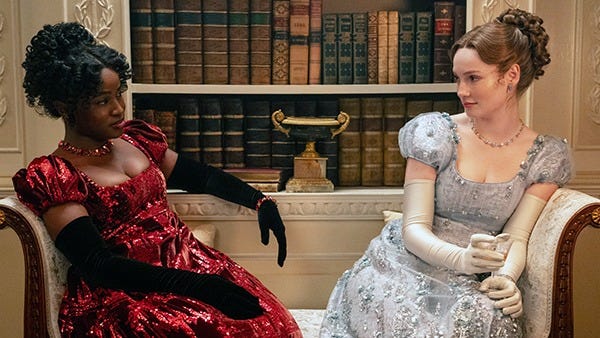
Fans of the Bridgerton romance novels eagerly await each Bridgerton sibling’s love story getting their own season, and fans always have a lot to say about which will be coming out next. When Season 5’s central love story for the character of Francesca was announced, some fans weren’t pleased because it puts off another character’s love story that they have been waiting to see for years. This particular Season 5 pairing deviates from the novel as well in a pretty significant way in introducing a queer love story. While that is something to celebrate, and the change from the books sounds rather exciting, even I share exasperation with fans at having to wait another year to see Eloise Bridgerton fall in love! But what the series has been able to do in its on-screen adaptation is tell a beloved set of stories with a modern view by employing diverse casting, a gender swap for Season 5, and the use of current pop music in classical arrangements to make traditional romance novels feel more accessible.
When the movie really is better
Novels can be special in that they offer rich dialogue, atmosphere and plot twists. But sometimes, a film’s literary source material serves as a jumping off point for a truly spectacular work. Stephen King’s Rita Hayworth and Shawshank Redemption is a powerful early 1980s novella, but the 1994 film The Shawshank Redemption is an iconic, critically acclaimed film and beloved by fans for its deep emotional connection between the characters Andy and Reid played by Tim Robbins and Morgan Freeman.
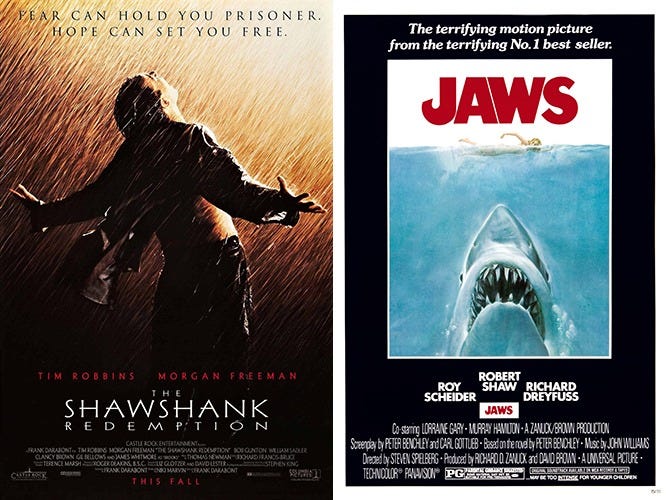
Peter Benchley’s Jaws was a massive success with millions of copies sold, but Spielberg’s film adaptation is of course one of the greatest movies of all time. It’s also regarded as the very first summer blockbuster. The success of both kept the profits rolling in 1975. The novel is, if you can believe it, darker in tone than the film, and contains some subplots that were omitted from the film. The movie version also dives deep (pun intended) into the relationships between Brody, Hooper and Quint, focusing on their differences but also their likability. Plus, would Jaws be the story it is without that iconic music, only made possible by the film? That music is the reason many people are STILL scared of the beach, 50 years later.
There are countless other examples of screen adaptations that are truly incredible and are at least as good as the source material. The Godfather, for one. I truly loved the 2023 film Are You There, God? It’s Me, Margaret, an adaptation of Judy Blume’s 1970 classic. The book was a Gen X/Millennial generation staple for young women, a novel that made millions of girls feel less alone on the journey of growing up. And the film, starring one of our very own contemporary heroes Rachel McAdams, touched a nerve of nostalgia in the best possible way. The film isn’t set in the present day to pull in a modern audience; it generally stays faithful to the book which is now over 50 years old. Setting the movie in the time in which the book was published made it feel connective across demographics of women; watching girls struggle through puberty in the 1970s made the experience of girlhood feel even more universal.
The eternal question: what is story?
In the Gilmore Girls revival, Gilmore Girls: A Year in the Life, Lorelai goes on the Pacific Coast Trail alone in the fourth episode, “Fall.” She announces she’s going to “do Wild” to take a break from her life. She is referencing Wild, the memoir by Cheryl Strayed but also the movie adaptation by Reese Witherspoon, who also starred in it. On the trail, Lorelai meets other women and the resounding question to one another is, “book or movie?” meaning, which was the inspiration for you wanting to do this? It’s a hilarious bit, but perhaps poignant in that it doesn’t matter: they all got there to do the same thing regardless of drawing inspiration from the book or the movie.
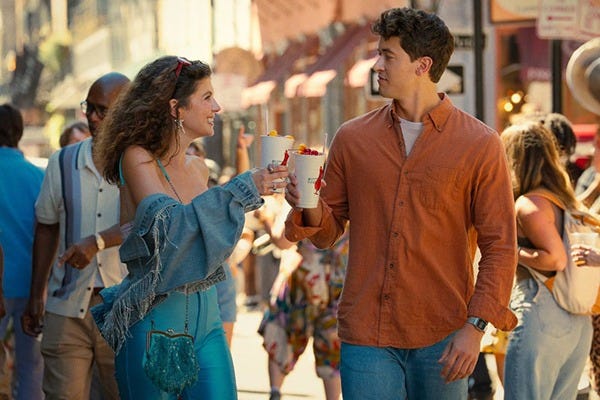
I loved Emily Henry’s novel The People We Meet on Vacation, and so I was thrilled to see a Netflix movie adaptation. Once I saw the movie, which I enjoyed, I saw comments online to the effect that it might have been better as a limited series. When I heard that critique, I fully agreed: the book is about two friends who go on an annual adventurous vacation together, so a series–one episode for each vacation–seemed like a brilliant idea and a more advantageous way to tell a rich story.
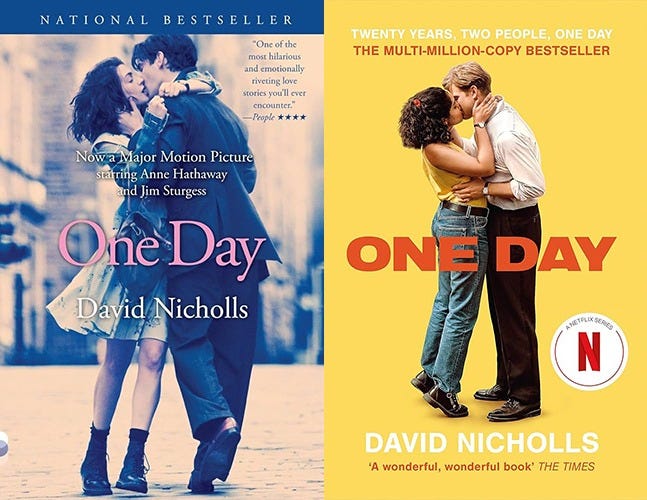
David Nicholls’ bestselling 2009 novel One Day was made into a film starring Anne Hathaway and Jim Sturgess in 2011. Fans weren’t impressed. The story is similar to People We Meet on Vacation in that it takes place over the course of many years, where two friends reunite on the same day every year since their meeting as young adults. So when Netflix produced the story as a series–one episode for one yearly meeting–the result was electric. Fans absolutely loved this adaptation. I was one of those fans, and I still haven’t read the book (another personal rule-break for me). But I was struck by the series, and how each episode allowed the relationships between characters develop, ebb, and flow with the passage of time. By the end, I felt I truly had lived a whole adult life with every major character.
What is a story? Is it just a plot where the CliffsNotes version of a classic novel can get you through a pop quiz? Plot can be translated from one medium to another, with or without difficulty depending on the sequence of action (I was very interested to see how The Martian would show how Mark Watney could grow a potato farm on Mars). Or is it a collection of interior monologues, language, and descriptions of scenic beauty? These are harder to translate literally, but can be put on film through photography, emotional beats, an nonverbal cues between actors. The answer is, all of the above. Stories belong to all of us, and we are lucky to get to experience them in as many ways as we want–even create our own interpretations as we do.
So what’s your favorite book-to-movie adaptation? And what movies/screen versions do you think are better than their literary predecessors? Let me know in the comments and let’s discuss!
Want more? Our Discord is where you’ll find everything you need to know about our ecosystem at Remarkist! Don’t forget to follow us on Instagram, tumblr, and Spotify for more insights on fandom—and hit that subscribe button so you never miss a thing at rmrk*st Mag!
